Literature & Thought · TALE24 REVIEW
The Birthing Tree and the Stories a Community Keeps
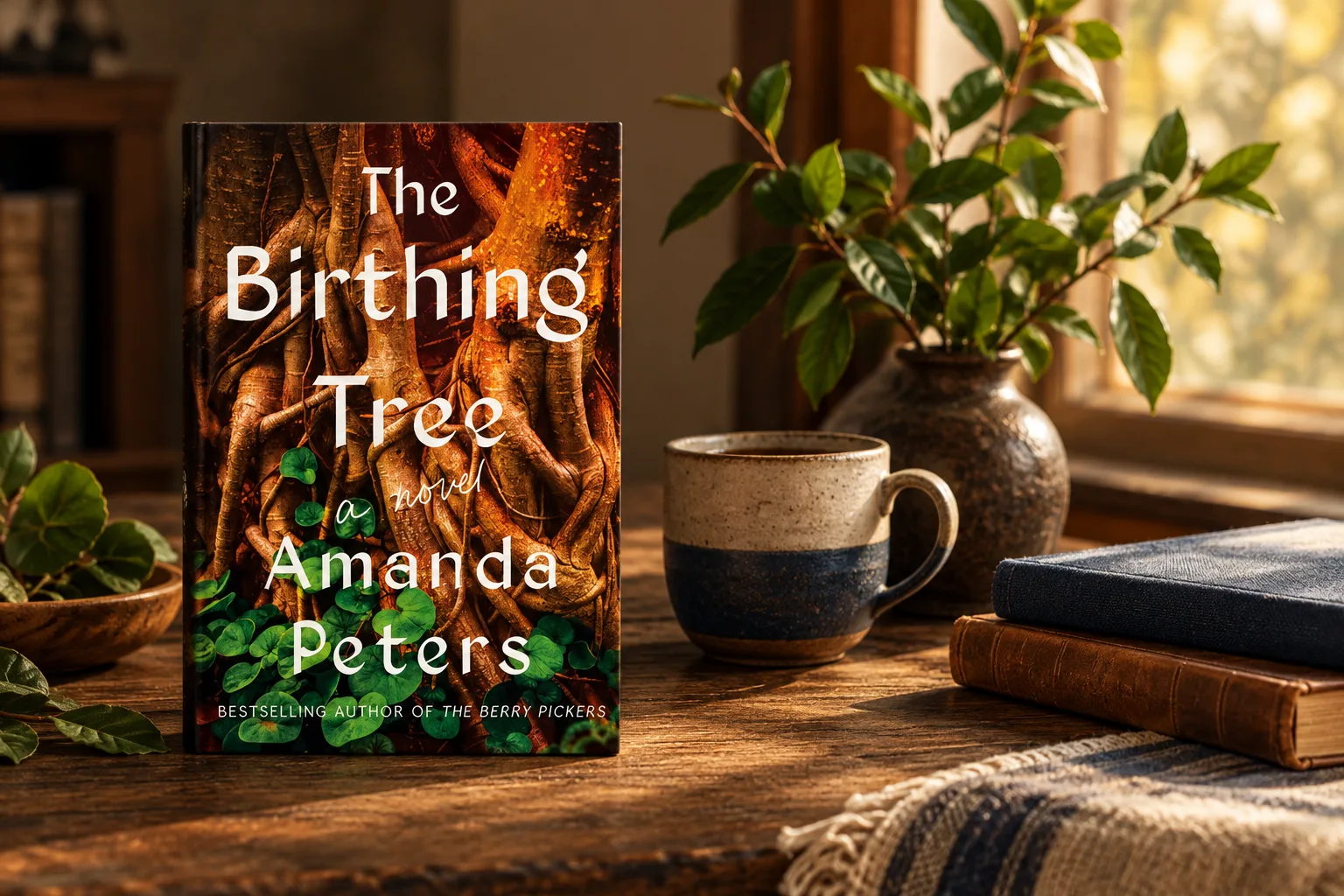
Amanda Peters places a speaking tree at the center of a family history shaped by birth, inherited knowledge, and silence. The novel asks how a community carries its past when the institutions around it refuse to recognize its ways of care.
A distinctive narrative witness; links family memory, land, and women’s knowledge.
The title The Birthing Tree names more than a place where a family story begins. In Amanda Peters’s novel, a tree held sacred by generations of Mi’kmaq women becomes a keeper of memory: brief observations from the tree open most chapters, while the human story moves across decades of birth, departure, grief, and return. The form makes an argument before the mystery is solved. History does not live only in documents or in the recollections of those who remain; it can be carried by land, practice, and a community’s relationship with the living world.
Aliet Paul’s life is shaped by a beginning marked by both intimacy and absence. She is born beneath the tree in a Nova Scotia community; her mother dies giving birth, and her father’s identity is left unspoken. Her grandmother Kiju raises her, passing along medicinal knowledge and customary ways of care. The world around them, however, treats traditional Mi’kmaq midwifery with suspicion and condemnation. That pressure gives the novel’s central conflict a material shape. “Tradition” is not merely a comforting inheritance that a younger generation may choose to keep or discard. It is knowledge practiced among people, and it is vulnerable when institutions decide that another form of knowledge is the only legitimate one.
Peters’s own account of the novel’s beginnings sharpens that tension. In interviews, she traces the image to an unexplained remark from her Mi’kmaq grandmother about a tree near water where women used to give birth. Years later, Peters worked alongside midwives, and the question returned. Peters describes it as mostly fiction, not memoir or ethnographic record. It does, though, clarify why the tree is not simply a picturesque emblem. The author has said she thought of it as kin, caretaker, and collector of stories. Its voice makes a formal claim that a tree can be part of a social world, not a passive backdrop to human events.
That choice is also the book’s most delicate risk. A speaking tree could become a device for delivering wisdom too neatly, or a symbol asked to stand in for a living culture’s many voices. Peters has described working to make its short passages sound wise rather than comic. The stronger question is whether such a voice can hold ambiguity as well as reverence. Early reviews join land, family memory, and women’s knowledge. The tree’s presence can bind those strands, but it should not make them interchangeable. Mi’kmaq culture is not a metaphor for ecological belonging; the novel’s force depends on keeping its specific community and history in view.
The outline of Aliet’s adulthood resists an easy opposition between old ways and modern life. She experiences love and loss, leaves the path Kiju imagined for her, and becomes a nurse trained in modern medicine. Yet the publisher’s account stresses that she carries Kiju’s teachings with her. The pairing matters: professional training does not automatically erase inherited knowledge, and ancestral practice need not be framed as the opposite of care. The sharper conflict is over who gets to name care as credible. When traditional midwifery is condemned and prejudice deepens, a personal history of birth becomes part of a larger contest over authority, memory, and whose expertise is recognized.
Years later, Kiju’s death brings Aliet back to a deteriorating house and a community that has become scattered. Restoration gives the return a practical rather than purely nostalgic center: the house must be repaired, while a family history must also be faced. This is a promising arrangement for a novel about inheritance. Home is not an untouched refuge waiting to welcome the protagonist back; it is a place shaped by loss, silence, and changes in the lives of the people who once shared it. The community’s future is not restored by recovering a single answer. It depends on what Aliet chooses to carry forward and how she renews ties with people and place.
The family mystery supplies momentum, but it also creates a structural tension. A secret about Aliet’s origins can draw readers through a story spanning decades; it can give distant events a common point of pressure. Yet a mystery asks for revelation, while cultural memory often involves gaps that cannot be closed so cleanly. If every silence exists only to prepare a final disclosure, the past risks becoming a puzzle whose value lies in its solution. The more compelling possibility is that a discovery changes how Aliet understands her relations without claiming to repair the harms that produced the silence. That distinction keeps suspense from shrinking the novel’s wider concerns into a single answer.
The book’s intergenerational frame appears especially suited to its subject. Aliet’s story is not simply a return to a grandmother’s wisdom after a detour through modern institutions. It is a negotiation among different kinds of knowledge, different obligations, and different versions of home. The tree’s short openings offer a counter-rhythm to that movement: while human lives depart and return, the tree stays rooted and records time in another register. This contrast can give the novel an unusually spacious sense of memory. The measure of a life is not only what one person can remember, but also what a community continues to practice, protect, or struggle to name.
Peters’s fictional approach matters here. She has spoken about uncertainty over her own right to tell Indigenous stories while not having grown up on reserve, and about her ongoing effort to learn the Mi’kmaq language. Her candor frames the book as a particular act of fiction, not a claim to speak for everyone. Readers should meet it as a particular fictional story, not a substitute for Indigenous voices or a comprehensive account of Mi’kmaq history. The book’s cultural specificity is part of what makes it inviting, and also part of what calls for attentive reading.
The most promising feature of The Birthing Tree is the way it connects a family’s guarded history to questions of care: who receives it, whose knowledge shapes it, and what is lost when inherited practice is dismissed. Its limitation may be the same source of its appeal. A family secret and a personified tree are potent narrative devices; if they simplify the histories they carry, their symbolism could outshine the people and community around them. The publisher and early reviews describe an intimate story of lineage, grief, and reclamation. The novel’s central image remains striking because it asks for more than a solution to a mystery: it asks what a community remembers when one of its witnesses is a tree, and what responsibilities come with hearing it.
EDITOR’S VERDICT
Tale24’s assessment
A distinctive narrative witness; links family memory, land, and women’s knowledge.
Points to considerThe family mystery and speaking tree risk simplifying the histories they carry.
Best for: Readers of intergenerational literary fiction, Indigenous histories, and stories rooted in land and community.
Editorial method: This is an independent assessment informed by the work and its official supporting information. AI tools may assist the drafting process; Tale24 reviews and takes responsibility for everything it publishes.