Literature & Thought · TALE24 REVIEW
Stranger: is living honestly in an absurd world a sin?
Rereading Albert Camus's short novel from Meursault's silence, the strange trial and the sense of distance between people and common conventions.
The style is restrained, the structure is tight and opens up many moral questions beyond its very short capacity
The opening sentence of The Stranger is so famous that it sometimes overshadows the rest of the book. Meursault's mother has just died, but the things that bother the narrator are the car ride, the heat, the coffee, and sleep. He did not present pain the way society expected. It is the lack of a familiar emotional display that makes the reader immediately feel uneasy: is this an emotionless person, or just someone who refuses to say what he doesn't feel?
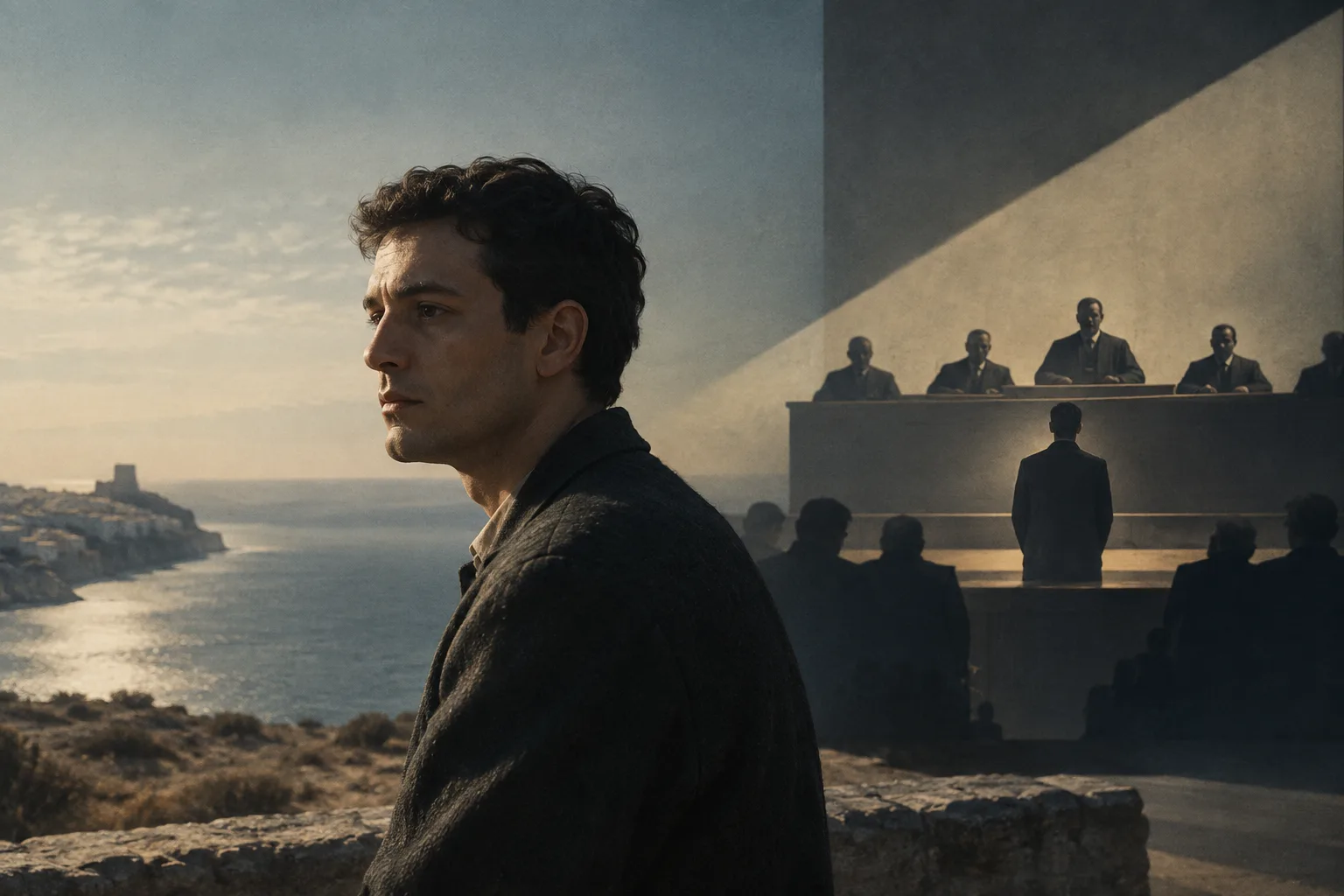
Camus tells in the first person in short, flat sentences with almost no explanation. Meursault notes the light on the sea surface, the sweat on his skin, the smell of the room more clearly than his own psychological motives. That writing style is not poverty. It places us in a consciousness that lives close to the surface of the present, where the body reacts to the world before the mind can construct a story. In many novels, characters act out of ambition, love or hatred. Here, the chain of events was pushed forward again by fatigue, weather, chance and a gun in hand.
The murder on the beach is a point that cannot be made light of. Meursault took the life of a man whom the work refers to only as “the Arab.” The victim's lack of a name indicates the significant historical limitations of the novel, written in the context of colonial Algeria. It is difficult for readers today to accept the use of philosophy of absurdity to blur that asymmetry. The book is at its most powerful when it forces us to confront the emptiness of Meursault's explanation; it weakens if we forget that that emptiness is also created by a colonial order, where some people are deprived of both biography and voice.
The trial part changes the story's direction. Meursault is tried for a death, but the prosecutor spends a lot of time on his mother's funeral. The fact that he did not cry, smoked by the coffin and went to the movies the next day were combined into evidence of a dangerous soul. The court needed a morality tale that was easier to understand than randomness: someone who doesn't love their mother can of course kill someone. From here, Camus shows that community does more than punish behavior. It also punishes people who do not conform to the emotional language that the community uses to confirm that they are normal.
This does not make Meursault a hero of honesty. His indifference hurts Marie, and his ability to live completely in the present also causes him to avoid responsibility to others. To read the book as an exhortation to “let it all go” is to miss its weight. Meursault does not possess a secret of freedom; he is an extreme test. Through him, the reader must ask where the line lies between refusing to pretend and no longer having enough imagination to discern the inner lives of others.
The concept of absurdity arose not because life was completely meaningless, but because people yearned for clear order while the world remained silent. I want death to have a reason, good people to be rewarded, and emotions to be read through gestures. But accident, illness or a too hot afternoon do not follow that moral logic. Meursault upsets the community because he does not provide comforting answers. At the end of the story, when facing the death penalty, he stops hoping for an exception and accepts the indifference of the universe.The conversation with the chaplain is often seen as a moment of awakening. I don't read it as a simple victory of atheism over religion. What is more remarkable is that Meursault first speaks with a fierce intensity, after the whole book is almost just registering. In rejecting a given meaning, he simultaneously realized the value of what he actually lived: the smell of the night, the sky, the sea and very small moments. Death certainly doesn't make every day the same; it is the limit that makes a particular morning irreplaceable.
The Stranger is short but not the kind of book that should be read quickly. The two-part structure creates a mirror: the first part is the bare facts, the second part is society recounting them into judgments. You should pay attention every time sunlight, noise, and fatigue interfere with your character's choices. It is also worth reading more about colonial Algeria and works that retell the story from the side of the murdered. That context does not destroy Camus; it makes the dialogue with the book more honest.
Ultimately, the vitality of a novel lies in the sense of restlessness it leaves behind. We can object to Meursault but still realize that sometimes we also act out our emotions in a formal way to be understood by others. We can condemn a crime but still be suspicious of a court that prefers to judge character rather than clarify behavior. The stranger does not ask the reader for forgiveness. It asks us to look closely at our need to construct a neat narrative around others, especially when their truth is not what we want to hear.
EDITOR’S VERDICT
Tale24’s assessment
The style is restrained, the structure is tight and opens up many moral questions beyond its very short capacity
Points to considerThe character of the victim is erased in the colonial context, requiring readers to add historical perspective
Best for: Readers love existential literature, philosophy and argumentative short novels
Editorial method: This is an independent assessment informed by the work and its official supporting information. AI tools may assist the drafting process; Tale24 reviews and takes responsibility for everything it publishes.