Technology & Careers · TALE24 REVIEW
Fundamentals of Software Architecture: From Code to System Design
Architecture is more than just diagrams; it is the set of characteristics, decisions, and principles that govern the possibility of change.
Covers thinking, architectural features and many system styles
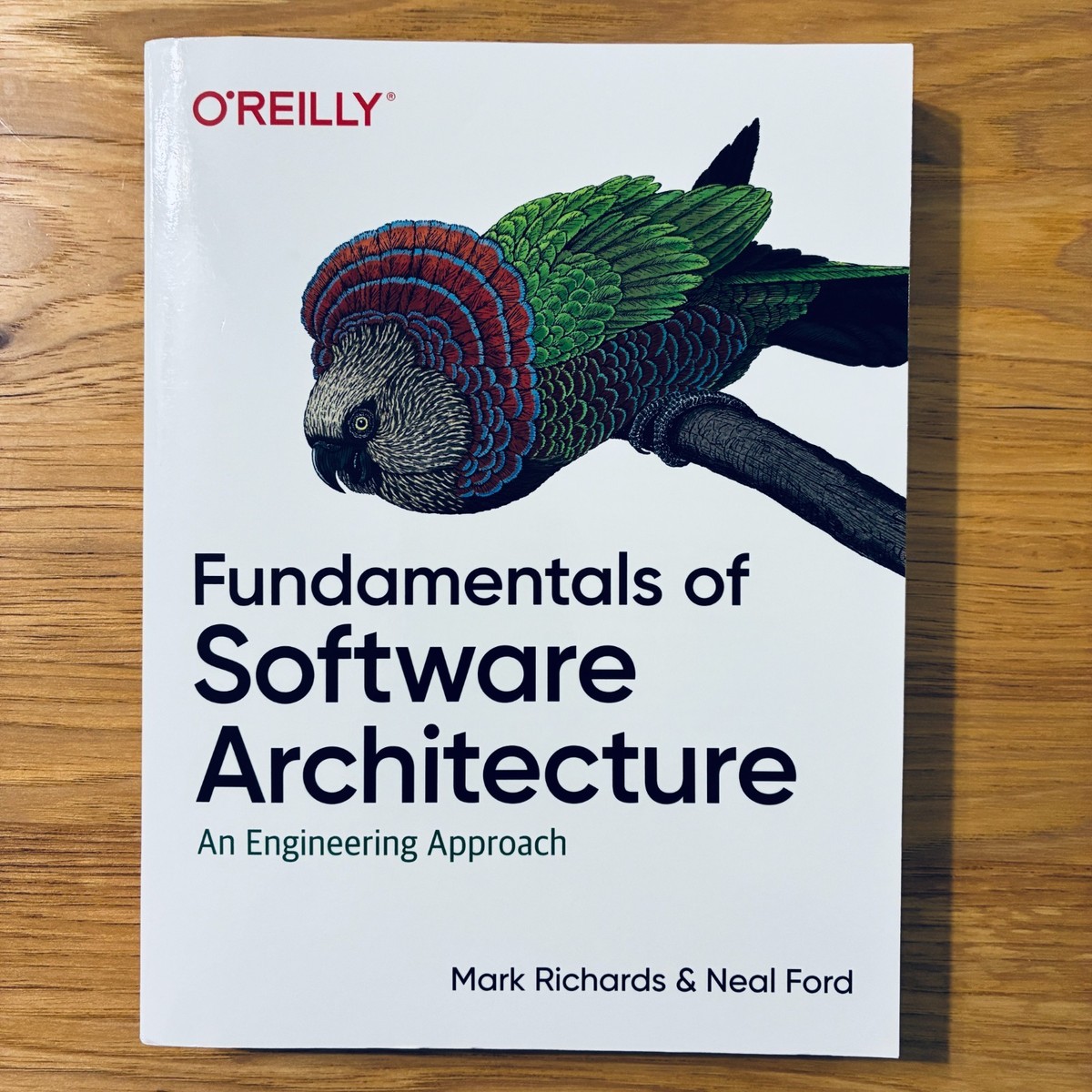
A diagram can show where components sit without revealing why they were separated or what happens when one fails. Fundamentals of Software Architecture: An Engineering Approach, by Mark Richards and Neal Ford, is most useful when it shifts attention from the picture to the decision behind it. The book surveys architectural thinking, modularity, system characteristics, styles, risk, communication, and the work of an architect within a team. Its breadth makes it a strong orientation for an engineer moving beyond a single codebase. It also demands restraint from the reader: a survey can supply questions and vocabulary without deciding the architecture of a real system.
The chapters on architectural characteristics begin with a practical difficulty. Teams can all say that they want a system to be fast, secure, reliable, easy to deploy, and easy to change. These aspirations become useful only when priorities and evidence are attached to them. A service with infrequent traffic may not need the same performance design as a high-volume transaction path; a changeable interface may matter more than a fashionable infrastructure pattern. The book’s framework encourages the reader to specify what quality means in context and to consider how a choice that improves one characteristic may weaken another.
Modularity gives those priorities a shape in code. Components should have boundaries that help a team understand and change the system, but splitting a program into more packages does not automatically make it easier to maintain. A boundary can reduce unwanted dependencies or create a new layer of coordination. Consider a hypothetical booking service whose payment and reservation rules change together. Separating them into independently deployed services might help if distinct teams need release autonomy. It might also make a single booking harder to complete and recover after failure. The right question is what constraint the separation is meant to relieve.
The table of contents ranges across layered, pipeline, microkernel, service-based, event-driven, space-based, service-oriented, and microservices styles. That range is valuable because it discourages treating any one style as the default destination. A reader can compare how a style handles change, scale, data movement, operational work, and communication between components. The names themselves, however, are not a design argument. Saying that a system is event-driven or layered reveals little unless one can explain why its boundaries match the domain and what trade-offs the team is prepared to operate.
The book’s treatment of measurement and governance offers another useful caution. It is easy to announce a desired characteristic; it is harder to know whether the system still exhibits it after months of change. A team might watch response time, deployment frequency, failure recovery, or unwanted dependencies, depending on its actual aims. No single metric proves that an architecture is good. A number can be optimized while the experience of users or maintainers deteriorates elsewhere. Measurements should therefore be connected to the decision they were meant to test and revisited when the product changes.
Risk analysis is most useful before a design is defended as inevitable. For the hypothetical booking service, a team could ask what happens when payment succeeds but reservation confirmation fails, who sees the inconsistent state, and how it is repaired. Those questions may change the preferred boundary more than a comparison of pattern names. The book’s place in that conversation is to encourage explicit risk and decision work; the concrete answer still depends on the team’s data, users, and operating capacity.
Architecture decisions also need a memory. The chapters on decisions, risk, diagramming, and presentation suggest that an architect’s work includes explaining alternatives to other people. A concise record of what was chosen, which constraints mattered, and what might make the choice obsolete can save future teams from treating a compromise as an eternal rule. A diagram can support that explanation if it identifies dependencies and responsibilities rather than merely looking tidy. Neither document replaces testing a design against actual workloads. Good communication makes the assumptions visible enough for others to challenge.
Richards and Ford also include teams, negotiation, leadership, and career development. That scope acknowledges that architecture is rarely produced by one person working alone. A technically attractive design can fail if no team owns a boundary, if a migration cannot fit a release schedule, or if operational responsibility is unclear. Conversely, a less elegant structure may serve a team well while it gathers evidence and develops capacity. Readers should treat organizational constraints as part of the design problem, not as an embarrassment to hide behind a diagram.
The book’s limitation follows from its ambition. A reader who is new to distributed systems may appreciate the map of styles yet lack the production experience needed to judge their failure modes. An experienced engineer may want deeper treatment of a particular style, data issue, or migration path than an introductory volume can offer. The sensible response is to pair the book with system traces, incident reports, code, and specialized references. Its chapters can frame an investigation, but they cannot substitute for examining how a concrete service behaves when traffic rises, a dependency slows, or data must be repaired.
Fundamentals of Software Architecture should leave readers with better questions before it leaves them with a preferred pattern. Which characteristic matters most for this product now? What evidence shows that the present boundary is costly? Who will operate the new design, and what will be harder afterward? The book’s strength is its broad, organized invitation to make such choices explicit. Its value diminishes when the catalog of styles becomes a menu from which to pick a fashionable name. Read as a guide to trade-offs, it helps engineers move from drawing systems to taking responsibility for the consequences of their designs.
EDITOR’S VERDICT
Tale24’s assessment
Covers thinking, architectural features and many system styles
Points to considerThe scope is wide so each pattern has not been delved into as deeply as a specialized book
Best for: Senior developer and new tech lead undertake architectural design
Editorial method: This is an independent assessment informed by the work and its official supporting information. AI tools may assist the drafting process; Tale24 reviews and takes responsibility for everything it publishes.
KEEP READING