Technology & Careers · TALE24 REVIEW
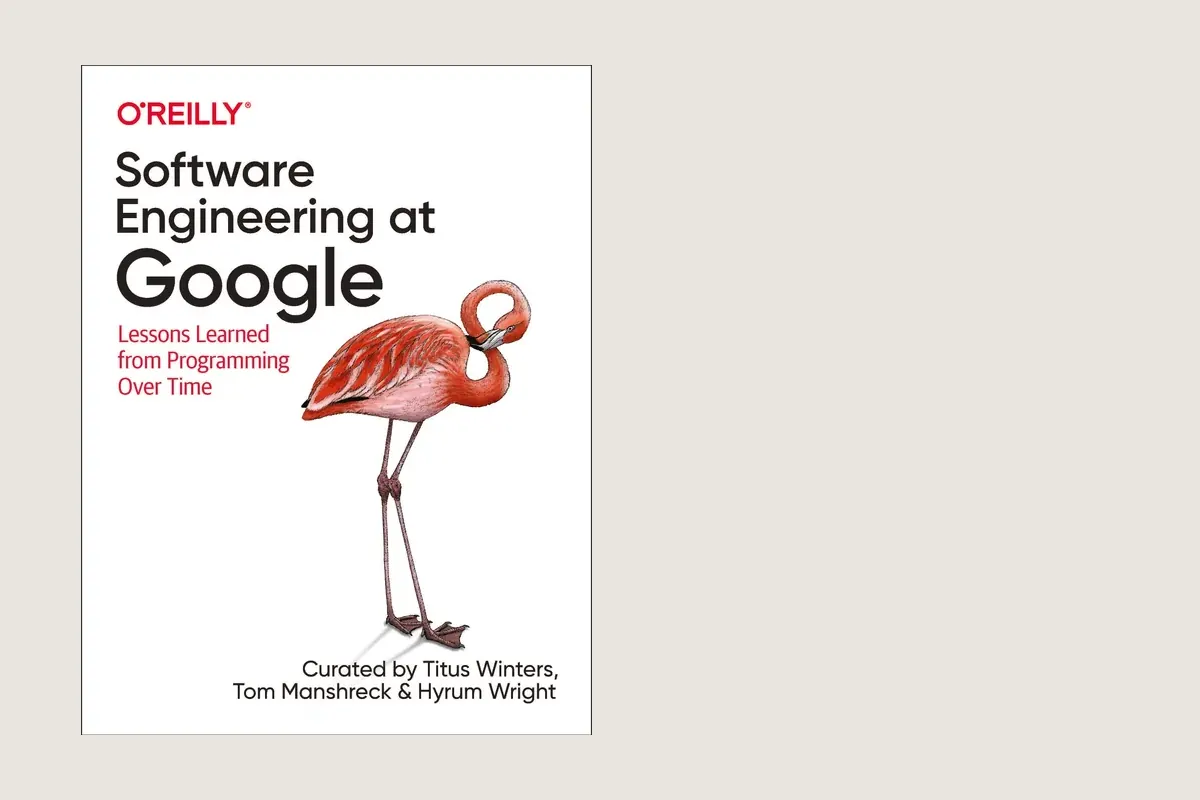
Software Engineering at Google: Building Code to Last at Scale
The difference between programming and software engineering lies in longevity, scale, and organizational trade-offs.
Connect code, tools, and culture across the long-term system lifecycle
Software Engineering at Google expands the question from “does this code work?” to “can the team change it safely over many years?”. As the codebase, number of engineers, and product lifecycles grow, review, testing, ownership, build systems, and dependency management become part of the technical design.
The book's value lies in describing both the social mechanisms and the tools. Learning culture, knowledge sharing and deprecation policies directly affect system quality. However, Google's solution was born on a very special scale; duplicating a process without the same problem will create additional bureaucracy.
Readers should use each chapter as a case study: what is the original problem, what conditions make the solution reasonable, and what is the smallest version that is appropriate for their organization. It is the gap between principles and implementation that makes the book a good discussion material for teams.
The three dimensions of time, scale and trade-offs help explain why good practice cannot be divorced from context. A script that lasts a few weeks doesn't need the same level of testing as a platform that lives for ten years; A team of five people doesn't need the same review process as thousands of engineers. But when software is around for a long time, the cost of understanding and changing often far exceeds the cost of writing the first version. This is where engineering begins to differ from programming exercises.
The code review in the book is not just an error-catching gate. It distributes knowledge, keeps common standards, and reduces the number of components that only one person understands. However, reviews can also become a queue that slows down work if the scope of changes is too large or decision rights are vague. Lessons that can be applied in small organizations are to keep changes small enough to read, describe reasons instead of just diffs, and agree on response times.
The chapters on deprecation and large-scale change make clear an often overlooked task: old software doesn't just go away. APIs, libraries, and conventions accumulate users; Every change requires usage measurement tools, a transition plan, and responsible people. Small companies may not be able to build automated infrastructure like Google, but still need a list of dependencies, owners, and removal deadlines to avoid turning a “temporary” into a permanent foundation.
The book should be read as a repository of case studies rather than a code of law. For each practice, the team can ask: what problems are happening at our scale, what is the current cost, and what is the smallest test that proves the solution is beneficial? The answer is sometimes more automation, sometimes it's just writing a decision document. The most important spirit is to make the system able to change safely over time, not to simulate the shape of a large company.
The open online edition's table of contents makes that breadth concrete: it treats code review, testing, deprecation, time, scale, and team culture as related parts of engineering work. The chapter “What This Book Isn't” is a useful guardrail against reading it as a universal recipe. Its examples come from Google's particular infrastructure and organizational history, and many practices depend on tools or staffing unavailable elsewhere. The reader's task is to extract the problem each practice solves before copying its visible form.
That distinction is useful for smaller teams too. A team may not need Google's build system, but it can still ask who owns a service, how a risky change is reviewed, or how old interfaces are retired without surprising users. Conversely, adding approval steps without a demonstrated risk can slow work and blur accountability. The book is strongest as a prompt for local experiments: identify a recurring failure or maintenance cost, make one proportionate change, and observe whether the system becomes easier to understand and modify. Its durable subject is organizational learning around code, not imitation of Google's scale.
The book's framing is useful because it treats maintenance as part of the product rather than invisible cleanup after launch. A codebase persists through staff changes, new requirements, and dependencies that outlive their original purpose. Practices such as testing and code review create feedback, while ownership and deprecation make change safer for the people who rely on existing systems. The benefit appears over time: a newcomer can understand a component, a team can revise it without fear, and a service can retire an interface without surprising downstream users.
Those practices can also fail when adopted as ceremonies. A review that checks style but not risk may add delay without improving the code. A test suite that nobody trusts can become an obstacle people work around. A deprecation policy without usage data or communication can break consumers despite its formal process. The book's ideas are strongest when tied to an observed problem and evaluated against it. A small team might begin by naming an owner for a neglected dependency or documenting how a critical service is tested, then assess whether the change reduces uncertainty.
Readers should be alert to the book's institutional point of view. Google can invest in shared infrastructure and specialized roles at a scale most organizations cannot replicate. That makes the examples valuable as evidence of problems large systems encounter, but not as proof that the same implementation is affordable or appropriate elsewhere. Translate the underlying aim—safe change across time—into local practices, and be willing to use a lighter mechanism. The book's value is the discussion it enables about engineering economics, not a checklist of tools to install.
EDITOR’S VERDICT
Tale24’s assessment
Connect code, tools, and culture across the long-term system lifecycle
Points to considerMany practices reflect Google's scale, and should not be copied as is
Best for: Tech lead, platform engineer, and organization with a large codebase
Editorial method: This is an independent assessment informed by the work and its official supporting information. AI tools may assist the drafting process; Tale24 reviews and takes responsibility for everything it publishes.
KEEP READING