Literature & Thought · TALE24 REVIEW
Snow Crash: A Virtual World Built by a Franchised One
Stephenson’s Metaverse matters because it extends a physical world already carved up by brands, private power, and contested language.
Energetic satire, inventive settings, and a sharp link between physical and virtual power
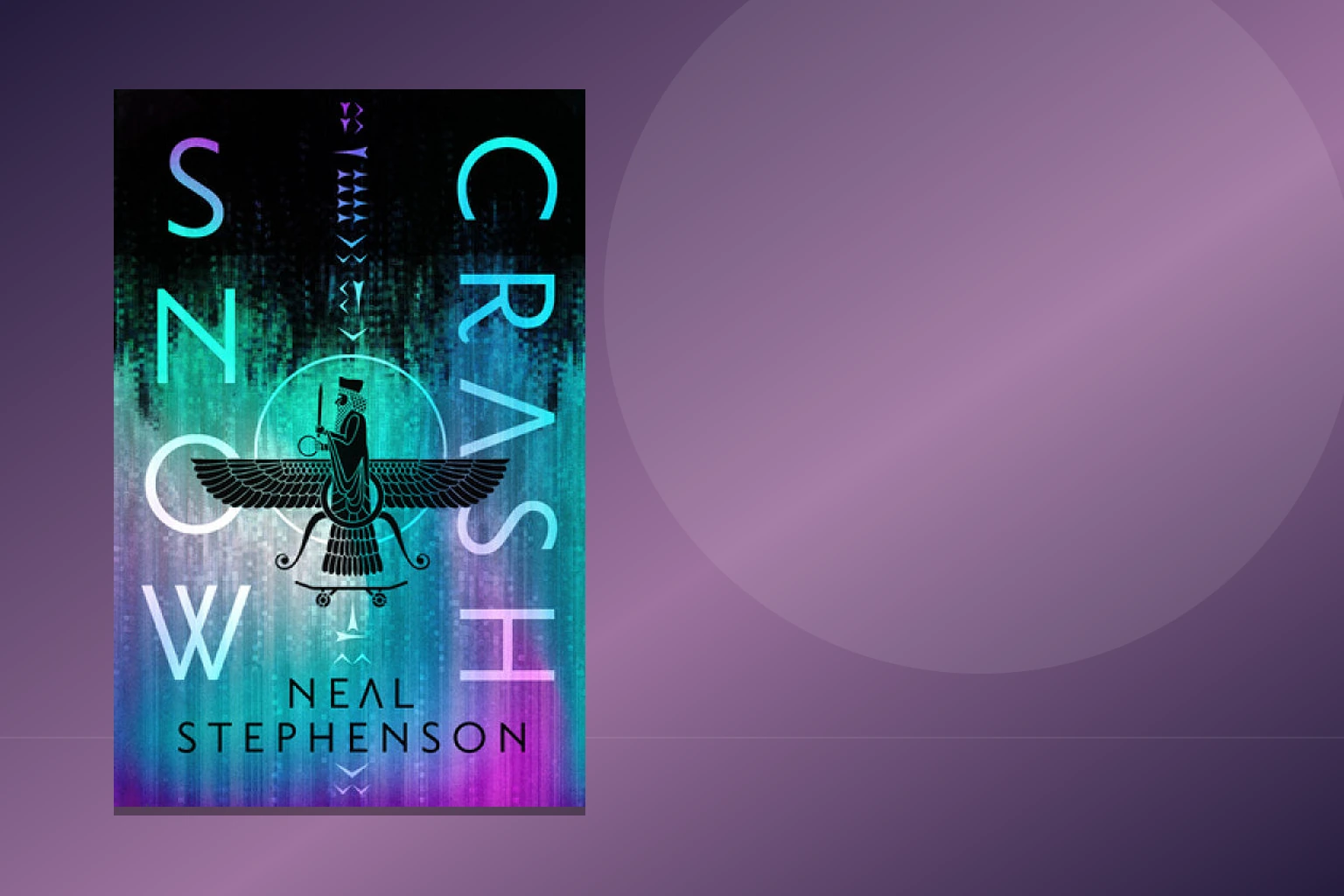
Neal Stephenson’s Snow Crash imagines a future in which the boundary between public life and commercial property has nearly disappeared. Franchises organize the physical landscape of Los Angeles, while the Metaverse offers a second arena for status, performance, and conflict. Hiro, a pizza courier in one world and a formidable avatar in the other, moves between them without leaving power behind. The novel’s joke is sharper than a simple warning that people might prefer screens to streets. Its virtual space grows from a society already willing to package identity and territory for sale.
That relationship gives the book much of its momentum. A reader can enjoy the speed of the courier plot and the spectacle of the Metaverse while noticing that both are systems with owners, rules, and exclusions. Access is not the same as freedom. A digital setting may let someone appear larger, more skilled, or more mysterious, yet the ability to set its terms remains unevenly distributed. Stephenson’s satire works when an absurd detail in one world clarifies an ordinary arrangement in the other. His future feels strange because recognizable commercial habits have been followed further than comfort allows.
Hiro’s investigation into Snow Crash links this landscape to the question of language. The threat reaches across the distinction between information on a screen and bodies in a city, so the book treats communication as something that can do material work. Its excursions into ancient language and speculative theory are among its boldest features. They also ask for patience. The intellectual machinery can interrupt the pace of the adventure, and readers may not find every link equally persuasive. The point is not to mistake the novel’s invented mechanism for a claim about actual linguistics. It is to ask why control over symbols might matter in a world saturated with them.
Y.T., a teenage courier who joins the investigation, helps keep the book from remaining inside Hiro’s virtual expertise. Her movement through the physical city recalls the labor and risk behind systems that appear frictionless to their users. Packages and pizzas still need routes, deadlines, and people willing to cross contested space. That contrast is one of Stephenson’s strongest observations. The Metaverse can feel limitless in description, but the story repeatedly returns to constraints that cannot be clicked away. Bodies must travel, work, and face danger even when their avatars seem to float above it.
The novel’s extravagant names and rapid changes of scale make it funnier than a solemn account of technological domination. A brand can be ridiculous and effective at the same time. A virtual club can be playful and hierarchical. Stephenson’s humor makes these contradictions easier to see without reassuring readers that they can stand safely outside them. This is why the book’s satire has more staying power than its apparent predictions. A product called a metaverse may come and go; the incentive to turn social interaction into a commercial environment is a broader and more durable subject.
It is still tempting to call Snow Crash prophetic because later technology companies borrowed language that resembles its fictional world. That comparison should be handled carefully. The novel did not provide a blueprint for a particular platform, nor does every detail of contemporary digital life fulfill its scenario. Its value lies in an imaginative model of related pressures: privatized space, intensely managed identity, rapid circulation of information, and the difficulty of knowing who benefits from the infrastructure. Reading it only to tick off inventions that came true would make its more unsettling social questions easier to miss.
Stephenson’s appetite for explanation is both an asset and a limitation. The book can pack a chase, a technical idea, a joke, and a speculative history into the same stretch. For readers who enjoy being swept through competing systems, that density is exhilarating. For others, it can feel as though the novel stops to explain its conceptual framework just when the characters are gaining momentum. Its portrayal of violence and its heightened treatment of character can also create distance. The novel is more effective at drawing a network of power than at offering every person inside it equal depth.
That imbalance may be part of why the physical and virtual halves need each other. If the Metaverse alone supplied the book’s meaning, it might become a tour of dazzling interfaces. If the branded city alone supplied it, the novel might settle into one extended joke about privatization. Moving between them lets Stephenson show how a society learns to treat places, words, and selves as things that can be owned or manipulated. The act of moving is itself a form of reading: each environment reveals what the other hides.
The question of who benefits extends to language itself. Terms that sound neutral can conceal decisions about access and authority. In Stephenson’s exaggerated world, a name or a code can shape what a person recognizes as possible. The speculative premise pushes this idea toward a literal extreme, but the social observation beneath it is more ordinary: people inherit vocabularies built by institutions, and those vocabularies influence how they describe a problem. The book is most provocative when it makes that inheritance feel contested rather than inevitable.
Snow Crash suits readers who want energetic cyberpunk, broad satire, and fiction willing to make an argument with its invented world. Its excess is real; the book sometimes seems unable to resist one more system or explanation. Yet that restlessness gives the satire its reach. Stephenson does not merely ask whether a virtual world is convincing. He asks what sort of physical world would make its promises attractive, and what interests might be waiting to manage the escape.
EDITOR’S VERDICT
Tale24’s assessment
Energetic satire, inventive settings, and a sharp link between physical and virtual power
Points to considerDense explanation and deliberate excess sometimes interrupt the story’s momentum
Best for: Readers who like cyberpunk, social satire, and ambitious idea-driven fiction
Editorial method: This is an independent assessment informed by the work and its official supporting information. AI tools may assist the drafting process; Tale24 reviews and takes responsibility for everything it publishes.