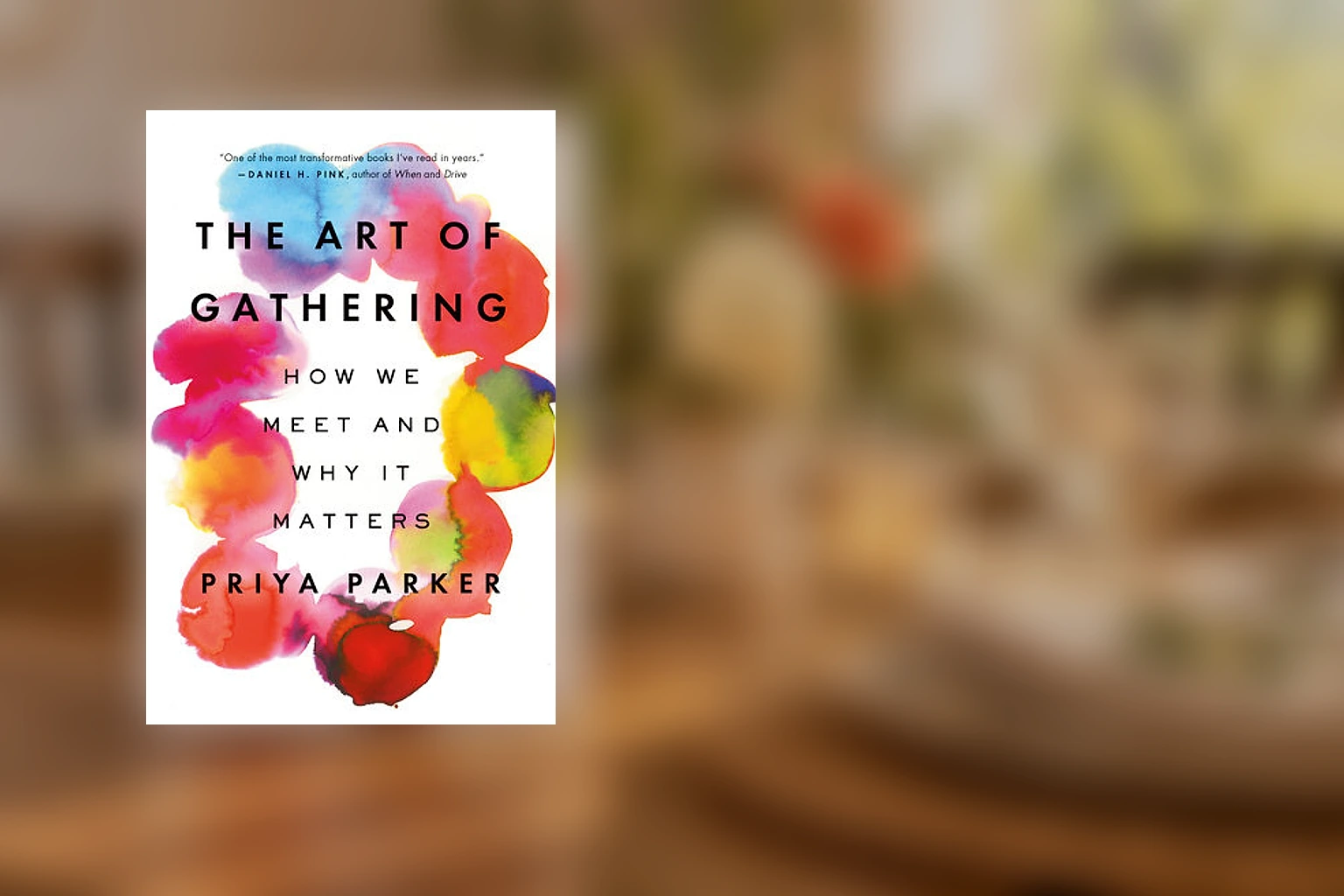
Literature & Thought · TALE24 REVIEW
The Art of Gathering: Purpose Before Protocol
Priya Parker shows how clear purpose and thoughtful hosting can make meetings and celebrations more meaningful than routine formats allow.
Concrete lens for seeing how purpose, invitation, and format shape group experience
A gathering can follow every familiar rule and still leave its participants wondering why they came. Priya Parker’s The Art of Gathering begins from that ordinary failure. Drawing on her work as a facilitator, Parker asks hosts to think about purpose before venue, schedule, or etiquette. The question sounds simple, but it changes how an event is designed. A meeting meant to make a decision needs different boundaries from a celebration meant to recognize a relationship. When the purpose stays vague, convention fills the gap, and the people invited bear the cost in wasted attention or missed connection.
Parker’s subject ranges across work, home, and community life. That breadth is useful because it reveals a common habit: hosts often assume that assembling the right people is enough. Yet an invitation already sets expectations about belonging, obligation, and power. The arrangement of a room can make conversation easy for some people and difficult for others. An opening can establish whether participants are expected to perform, listen, decide, or simply be present. None of these choices is neutral. The book gives readers a language for noticing how a social occasion is shaped before anyone begins to speak.
Purpose is not a slogan pasted onto an event. It is a test of decisions that otherwise seem merely logistical. If a gathering aims to build trust, a packed agenda may defeat it. If it aims to resolve a conflict, unlimited small talk may postpone the necessary discussion. Parker’s framework helps explain why a polished event can feel empty: the form may be impressive while working against the reason people were brought together. Her practical insight is that a host must be willing to make choices, including choices about what the gathering will not try to do.
The host’s authority is one of the book’s most interesting tensions. Parker encourages active hosting, a welcome correction to the idea that a good host should simply provide food or a meeting link and disappear. At the same time, active design can become another way for one person to control an encounter. A purpose announced from above may sound clear while leaving guests little room to define what matters to them. The best use of Parker’s advice is therefore not rigid choreography. It is a more honest conversation about whose needs the gathering serves and how participants can shape it.
This tension matters most in settings with unequal stakes. A workplace meeting can appear open while employees understand that disagreement carries a cost. A community forum can advertise inclusion while holding the microphone, time, and agenda tightly. In such settings, warmth alone cannot create trust. Parker’s attention to invitation and format can help expose these inequalities, but the host must also be ready to alter the underlying distribution of voice. A beautifully designed discussion does little good if its participants have no reason to believe that their words can change anything.
The book is also a reminder that rituals are not automatically stale. Familiar forms can carry comfort, memory, and shared identity. The problem arises when people obey them after the purpose they once served has changed. A recurring family dinner, a team check-in, or a public ceremony may be worth keeping precisely because participants know its rhythm. Parker’s challenge is to ask whether that rhythm still welcomes the people now present. The thoughtful host need not invent novelty each time. Sometimes the most purposeful decision is to preserve a tradition while adjusting one small boundary that has begun to exclude.
The Art of Gathering works best when it treats social design as a responsibility rather than an aesthetic. Its concepts can help a reader prepare for a consequential conversation or understand why an earlier event fell flat. They can also make everyday occasions feel overmanaged. Not every meal needs a declared objective, and spontaneous hospitality has value of its own. The book’s most useful lesson is not that all encounters should be curated. It is that hosts should know when their choices affect others and should make those choices with care.
Parker’s background in conflict resolution gives the argument added weight. Gathering is not merely a pleasant break from individual work. It is one of the places where groups decide who belongs, how disagreement is heard, and what can be done together. A meeting that allows only the quickest speakers to contribute teaches a lesson about status. A celebration that recognizes some forms of labor while overlooking others teaches another. Readers can use Parker’s questions to look beneath the surface of an event and examine the social rules it quietly rehearses.
A useful test after reading is to revisit one recent gathering and describe it from the guest’s position. Was the reason for attending clear? Did the format make participation possible? Did anyone have to guess the unwritten rules? These questions are concrete enough to improve the next event without turning every encounter into a project. They also remind the host that success is experienced by the people in the room, not certified by an elegant plan.
For facilitators, managers, teachers, community organizers, and hosts, the book offers a practical vocabulary with broader ethical consequences. Its emphasis on purpose can make gatherings more coherent; its attention to boundaries can make them more hospitable. The reader should keep room for play, accident, and participant agency alongside that structure. A good gathering is not one in which every moment follows a plan. It is one in which people understand why they are together and have a real chance to take part in what happens next.
EDITOR’S VERDICT
Tale24’s assessment
Concrete lens for seeing how purpose, invitation, and format shape group experience
Points to considerIts deliberate approach can feel too engineered for casual or spontaneous occasions
Best for: Hosts, facilitators, managers, teachers, and community organizers
Editorial method: This is an independent assessment informed by the work and its official supporting information. AI tools may assist the drafting process; Tale24 reviews and takes responsibility for everything it publishes.