Psychology & Skills · TALE24 REVIEW
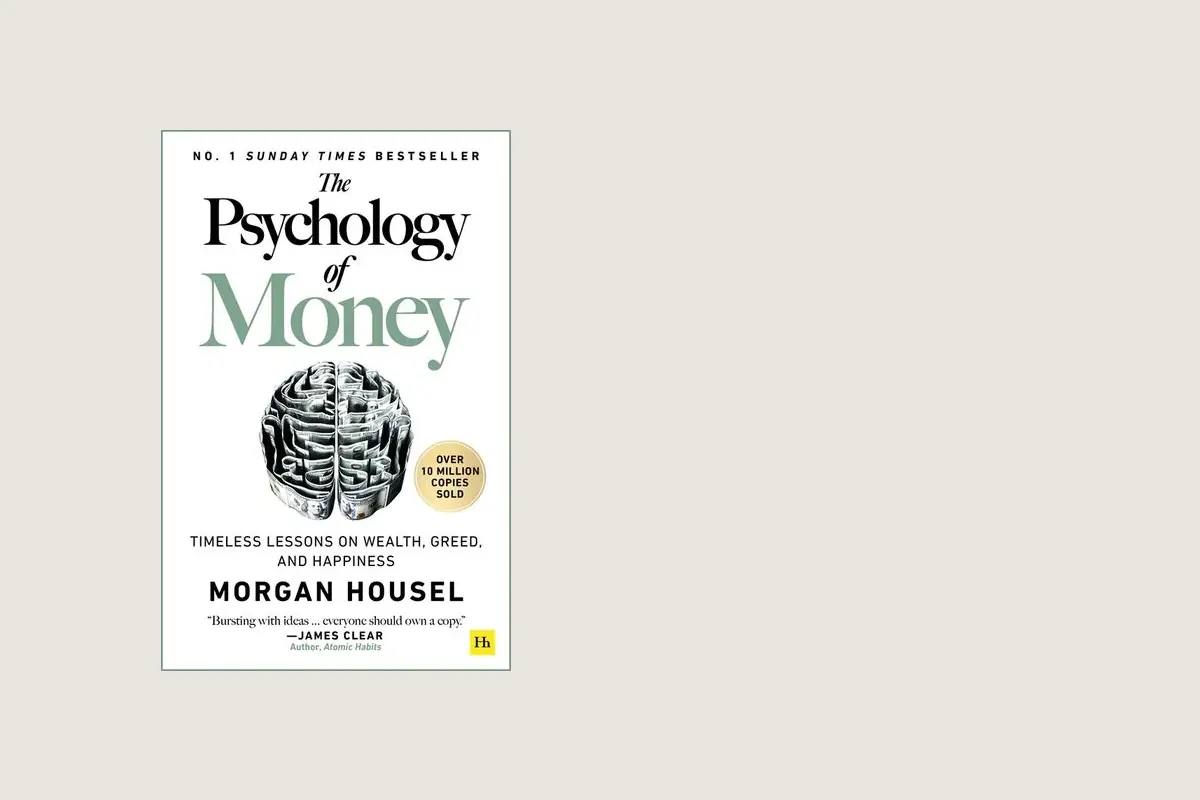
The Psychology of Money: Why Behavior Matters More Than Formulas
An illuminating examination of how emotions, experiences, and circumstances shape every money decision.
Close argument, rich in examples
Money is often presented as a problem of knowledge, but most financial decisions happen outside of spreadsheets. The work puts human behavior at the center: the way we save, invest and take risks is strongly influenced by childhood, era and personal experiences.
The most convincing point lies in the ability to turn seemingly dry principles into relatable stories. The book does not promise a formula for getting rich. Instead, it helps readers build a margin of safety, understand the power of compound interest, and realize that persistence is often more important than a few brilliant decisions.
While some of these points are repeated in many forms, this repetition also reinforces the central message: financial success depends not only on knowing the right thing, but also on the ability to maintain the right behavior over the long term.
Housel's structure is part of the argument. Harriman House describes the book as nineteen short stories about the ways personal history, incentives, pride, and risk shape financial decisions. Rather than building a technical sequence from budgeting to portfolio construction, it returns to a compact set of behavioral ideas from different angles. That makes the book approachable and memorable, though readers looking for a comprehensive financial curriculum will need other sources for taxes, debt, diversification, and jurisdiction-specific rules.
The distinction between being wealthy and looking wealthy is one of the more useful lenses because visible spending cannot tell us whether a person has reserves, liabilities, or room to change course. It shifts the conversation from status to optionality. But this remains a lens, not a universal prescription: income volatility, family obligations, access to financial services, and public safety nets affect what choices are available. A principle such as maintaining a margin of safety has to be interpreted within those constraints.
The book is best used to examine one's assumptions, not to infer market outcomes. A reader might take one chapter's claim, write down what personal experience makes it feel persuasive, and identify what evidence would challenge it. That practice preserves the book's conversational strength while resisting the tendency to turn anecdotes into rules. Its emphasis on patience and survivability is most convincing when paired with concrete knowledge about the reader's own finances and, where needed, qualified professional advice.
The short-chapter format has a trade-off of its own. It makes the book easy to dip into, but the repeated returns to the same principles can feel circular, especially to readers already familiar with behavioral finance. The repetition works best as a deliberate change of angle: one story can make luck visible, another can show how a person's time horizon changes what risk feels tolerable. Readers who want a cumulative argument may prefer to trace one idea across chapters rather than treat each anecdote as a separate rule.
That also suggests a responsible way to apply the book. Before using a story to justify a financial choice, ask whether the same principle would hold under a different income, time horizon, or ability to absorb loss. The author is persuasive about the emotional side of money, but personal narratives are not controlled comparisons and cannot establish what will happen to a particular investment. The enduring value is a vocabulary for discussing behavior with humility: notice what feels safe, identify which risks are survivable, and avoid confusing a fortunate outcome with proof of a sound process.
A useful way to test the book's ideas is to separate a financial result from the decision that produced it. A risky choice can work out well by chance; a cautious choice can still meet an unexpected loss. Looking only at the outcome encourages hindsight, while examining the process asks whether the person understood the downside, had a margin for error, and could continue after a bad result. This distinction is especially valuable in investing, where a short run of success can reward behavior that is not repeatable.
Housel's emphasis on room for error connects several chapters that may first seem like separate observations. A reserve of time, money, or flexibility protects a plan when forecasts are wrong. That protection can look inefficient during calm periods, because unused capacity does not produce a visible return. Yet the ability to avoid a forced sale, make a career change, or wait through uncertainty can have value that a spreadsheet does not capture easily. Readers can ask what forms of optionality matter in their situation instead of treating one savings number as a universal measure of prudence.
The book is less suited to answering what a person should buy, how much debt is appropriate, or how local tax rules work. Those decisions depend on current laws, fees, time horizons, and individual circumstances. This boundary does not diminish the book's contribution; it clarifies it. The strongest reading combines its behavioral questions with current, jurisdiction-specific information and an honest account of constraints. It can help readers notice why they react to money as they do, but a memorable anecdote should not be mistaken for a financial plan or a forecast.
This distinction also makes the book useful beyond investing. Everyday spending, lending among relatives, and career decisions all involve competing ideas about safety, status, and future freedom. The reader need not agree with every anecdote to use it as a prompt: which risks are chosen, which are imposed, and which are being ignored because they are hard to quantify? Those questions make the behavioral lens more humane and less like a set of commandments.
EDITOR’S VERDICT
Tale24’s assessment
Close argument, rich in examples
Points to considerSome ideas are repeated
Best for: People who want to deeply understand personal finance
Editorial method: This is an independent assessment informed by the work and its official supporting information. AI tools may assist the drafting process; Tale24 reviews and takes responsibility for everything it publishes.
KEEP READING