Technology & Careers · TALE24 REVIEW
Clean Code: Reading the Rules with Judgment
A highly influential book on code readability, and one that needs to be put back in a modern context.
Create a strong sense of code readability, naming, and accountability
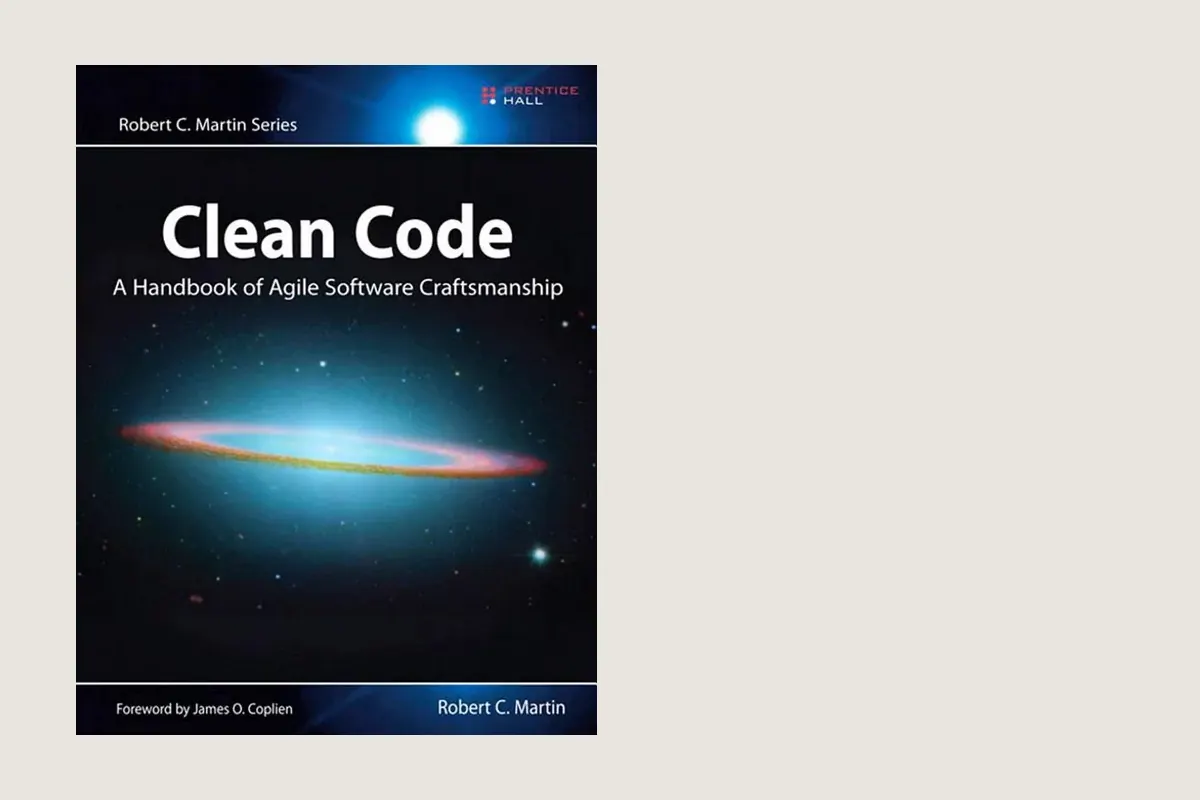
Clean Code has influenced how many developers talk about readability. Robert C. Martin's first edition presents code as something other people must understand, maintain, and change, not merely something a compiler accepts. That insistence remains useful. A confusing name can hide a mistake; a function with several responsibilities can make a small change unexpectedly expensive; weak tests can turn routine cleanup into a risky event. The book's continuing value lies in making those everyday costs visible. Its danger begins when a reader treats every example as a timeless rule rather than as a proposal to examine in context.
The publisher describes a three-part structure: principles and practices, code-cleaning case studies, and a collection of heuristics and smells. That structure matters more than any isolated slogan. It invites the reader to move between a claim and actual code, then ask whether the transformation made the program easier to understand. A team that reads only a list of preferred function sizes or naming rules misses the book's most useful habit: notice friction, make a change, and evaluate the result. The evaluation is the hard part. A shorter file is not automatically a clearer one, and a class with fewer methods is not automatically easier to maintain.
Names are a good place to see the difference between a principle and a ritual. A name should help a reader predict what a value means and how it is used. But adding more words does not guarantee more meaning. A long name can still conceal an ambiguous business rule, while a familiar local term can be concise and precise. The useful question is whether someone new to this part of the code can make a correct change without repeatedly tracing definitions. If not, the team may need a better name, a better boundary, or a better explanation of the domain. A naming checklist cannot decide which of those is missing.
The same caution applies to small functions. Separating a calculation from I/O can create a seam that makes testing and change easier. Splitting a straight-line procedure into a dozen tiny wrappers can instead force a reader to jump across files to understand one operation. Function length is a signal, not a verdict. Consider an order-pricing routine: extracting tax policy and discount eligibility may reveal distinct reasons to change, whereas extracting every assignment into a separately named method may add ceremony without reducing confusion. The book is most useful when it prompts that discussion rather than ending it with a number.
Martin's attention to error handling and tests deserves equal weight. Errors often reveal whether a system's contracts are clear: can a caller distinguish missing data from a failed dependency, and does the code preserve enough context to recover? Tests can make a cleanup safer, but they are not proof that behavior is unchanged if they cover only the easiest paths. A thoughtful reader can use the book to ask which behavior matters at a boundary, what failures are expected, and what should remain observable after a change. These questions travel well across languages and frameworks even when a particular code sample does not.
The first edition appeared in 2008 and leans heavily on an object-oriented style. That context should be stated rather than hidden. A pattern that clarifies a Java codebase may fit poorly in a functional pipeline, a data-oriented program, or a modern language with different conventions. The book also reflects a particular view of comments and abstraction. Sometimes a comment is a symptom of unclear code; sometimes it records why a regulatory constraint or historical decision exists and cannot be inferred from the implementation. Removing the latter because comments are supposedly bad would discard valuable knowledge. The choice depends on what the code itself can express.
The case studies are valuable as exercises in judgment, though readers should not assume that every final form is the one their team should adopt. Compare the before and after versions with a concrete change request: which one makes it easier to alter a pricing rule, add a failure mode, or trace a production incident? Ask colleagues unfamiliar with the example what they understand. This is more informative than judging the diff by how closely it matches a style guide. Readability is a relationship between code, task, language, and reader. It can be investigated, but it cannot be measured solely by the number of lines.
There is also an organizational limit to the book's individual-craft focus. A developer can improve a module and still be constrained by release pressure, unclear ownership, missing product decisions, or a legacy interface that other teams depend on. Clean code requires time for review, tests, and follow-through. Managers who use the book to demand perfection from individuals while leaving those constraints untouched have learned the wrong lesson. A practical adoption plan is to choose one recurring maintenance problem, agree on what better code would make easier, and revisit whether the change helped after several releases.
Clean Code remains worth reading because it gives teams language for quality that is otherwise easy to postpone. Read it selectively. Keep the insistence that code serves future readers, take its examples as experiments, and reject the temptation to turn taste into law. The strongest outcome is not a codebase that looks like a book's examples. It is a team that can explain why a design is easier to change, demonstrate that claim with tests and review, and revise its conventions when experience shows a better way.
EDITOR’S VERDICT
Tale24’s assessment
Create a strong sense of code readability, naming, and accountability
Points to considerSome examples and rules are contemporary and susceptible to mechanical application
Best for: Programmers want to develop controversial code review standards
Editorial method: This is an independent assessment informed by the work and its official supporting information. AI tools may assist the drafting process; Tale24 reviews and takes responsibility for everything it publishes.
KEEP READING