Literature & Thought · TALE24 REVIEW
Home Before Dark: When Family Stories Become Hauntings
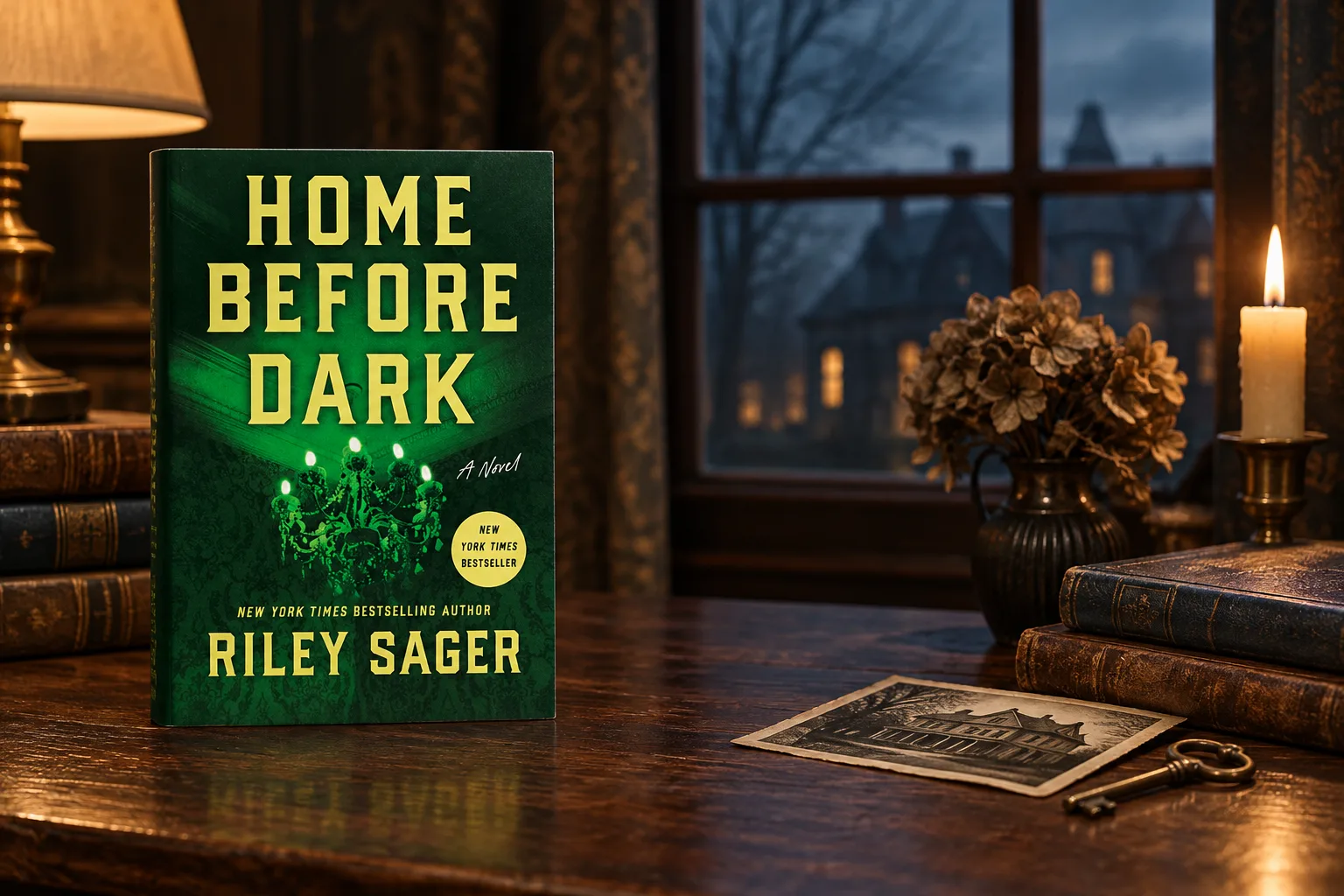
Riley Sager builds a haunted-house thriller around two competing accounts of one family’s past. Its most intriguing question is not simply whether Baneberry Hall is haunted, but how a story becomes believable when memory, publicity, and a house full of secrets pull in different directions.
The book-within-a-book structure makes competing accounts part of the suspense; Baneberry Hall links gothic atmosphere to the question of who controls a family’s public story.
A haunted house is already a machine for turning uncertainty into a story. A noise becomes a warning; an old room acquires a history; the people inside begin to wonder whether the danger is supernatural or merely hidden. Home Before Dark makes that uncertainty its organizing principle. Riley Sager sets Maggie Holt’s return to Baneberry Hall against the account her father published about the family’s brief, frightening stay there twenty-five years earlier. The central tension is not only what happened in the Vermont house. It is who gets to explain what happened, and how much a family’s public story can obscure from the people who lived it.
Maggie inherits the Victorian estate after her father, Ewan, dies. She is a restorer of old homes, but she is also the child made famous by his bestselling nonfiction book, House of Horrors. She was too young to remember the events her father described and does not believe his account of ghosts. Returning to renovate the property for sale brings her back into contact with the house’s past and with locals who remember the attention the book brought to their town. The publisher’s description keeps two explanations in view: supernatural forces, as Ewan claimed, and more ordinary but dangerous secrets. That balance gives the premise its Halloween appeal while opening a sharper question about evidence. A haunted-house story asks readers to interpret what they cannot immediately verify; a family story asks who has been allowed to do the interpreting.
Sager’s most distinctive formal choice is to set Maggie’s present against chapters from her father’s book. In a Publishers Weekly interview, he explains that the second strand transformed the novel into a book within a book, and that he worked to make the two narratives reflect one another in unexpected ways. That account offers a useful lens: the parallel stories are not simply a present investigation plus a block of background information. Each version of the past changes how the other can be read. The reader encounters an already-public story alongside a daughter’s return to the place it describes, so the act of narration becomes part of the mystery. Who is speaking, what can that speaker know, and what interests might shape the account? Those questions extend suspense beyond the next unexplained sound.
The structure also makes memory a practical problem rather than a vague theme. Maggie was a child during the family’s three weeks at Baneberry Hall, while her father turned the experience into a book that shaped her adult identity. The distance between remembered experience and published account is therefore built into the premise. The house supplies physical traces and a history of dark deeds, but objects do not interpret themselves. Nor does a story become true simply because it has been repeated or sold. The gap between a daughter’s limited memory and a father’s confident narrative creates room for doubt without requiring the review to disclose how the mystery ends. Sager has said that he is drawn to familiar genre conventions because they let a reader recognize what kind of story is beginning; his challenge is to use those expectations and then redirect them. Here the recognizable promise of a haunted estate becomes a way to examine the authority of a family legend.
That design places pressure on Baneberry Hall itself. The estate is not merely a dark backdrop: its Victorian rooms, accumulated relics, and local reputation connect private memory to public spectacle. The house has been interpreted for Maggie before she can form her own account of it. When she returns, renovation and investigation overlap; making a property ready for sale also means deciding what its past is worth and whose version can be carried forward. This is a productive gothic setup because the building can hold both atmosphere and evidence without settling the difference between them. The town’s response matters too. The publisher notes that local residents resent the notoriety brought by House of Horrors. That detail broadens the question beyond one family: a sensational book may turn a place into a legend, while the people who live there inherit the consequences.
The strongest case for the novel, then, lies in the relationship between its form and its subject. The alternating accounts make storytelling an active force in the suspense, while the haunted-house conventions give that question an accessible, sharply visual setting. Kirkus Reviews also identifies the uncertainty around Ewan’s account and Maggie’s need to understand her past as compelling elements, and praises the atmosphere. Its notice of anachronistic details in the 1990s setting points to a real limitation for readers attentive to period plausibility: the review describes a professional journalist using a typewriter and Maggie visiting a library, while modern technology appears elsewhere. That friction may interrupt the period texture. It is a more concrete reservation than a general complaint that the book relies on twists, and it should be weighed on its own terms.
Home Before Dark is best approached as gothic suspense about the making of a family narrative, with the supernatural question supplying the pressure rather than the only subject. Its book-within-a-book design gives Maggie’s return a reason to test not just the house but the story attached to it. The available evidence supports a strong premise, a deliberate formal conceit, and an atmospheric setting, alongside a period detail that may strain plausibility. Readers looking for a tightly argued mystery of evidence may want the resolution to carry as much weight as the setup; readers drawn to uncertain memories, old houses, and competing versions of the past will find a richer point of entry. Sager’s interview makes clear that the mirrored structure was intentional, and the critical promise rests on whether that structure keeps complicating the legend rather than merely delaying its answer. The novel’s central appeal is the uneasy interval between a frightening story and proof that it happened.
EDITOR’S VERDICT
Tale24’s assessment
The book-within-a-book structure makes competing accounts part of the suspense; Baneberry Hall links gothic atmosphere to the question of who controls a family’s public story.
Points to considerKirkus notes anachronistic details in the 1990s setting that may weaken period plausibility for attentive readers.
Best for: Readers of gothic suspense and haunted-house mysteries who enjoy stories about memory, family history, and competing accounts.
Editorial method: This is an independent assessment informed by the work and its official supporting information. AI tools may assist the drafting process; Tale24 reviews and takes responsibility for everything it publishes.