Literature & Thought · TALE24 REVIEW
King: A Life and the Cost of Making an Icon Human
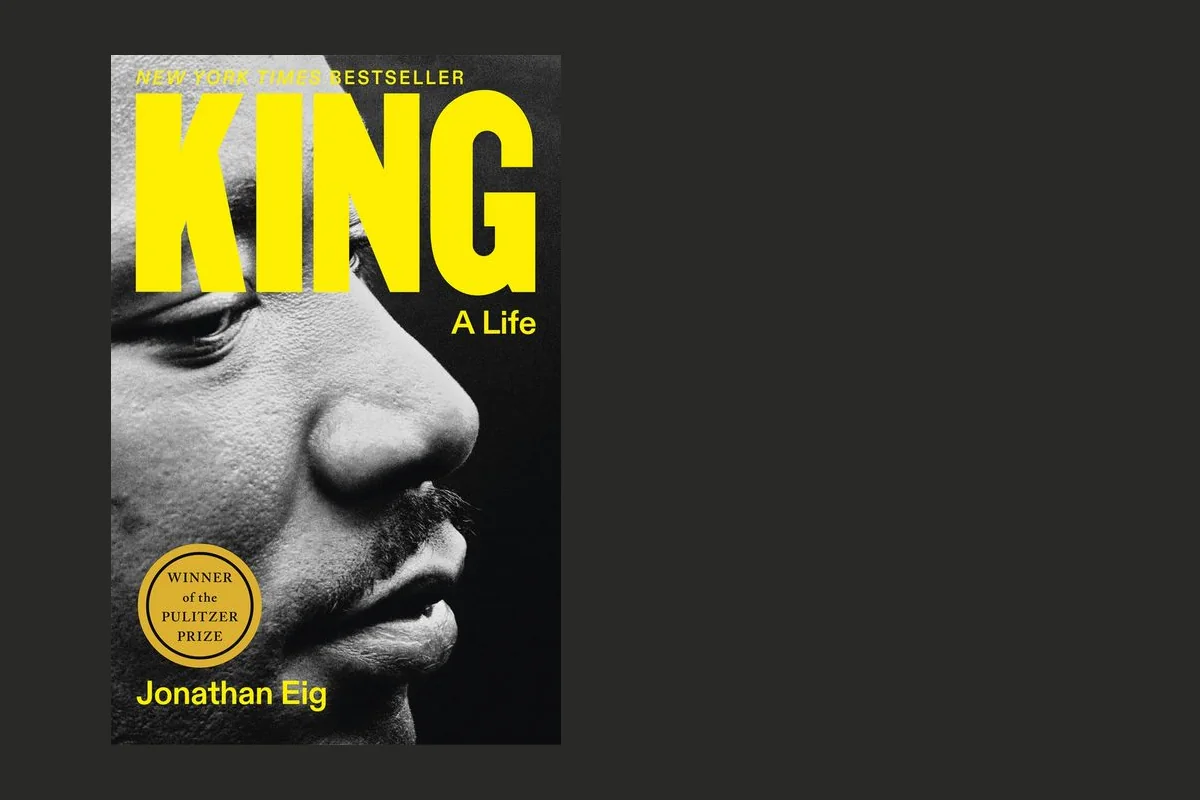
Jonathan Eig’s biography uses fresh archival material to place Martin Luther King Jr.’s public courage beside his private doubts and the collective movement around him.
Broad research, attention to Coretta Scott King and fellow activists, and a human scale for a public figure
Martin Luther King Jr. is often remembered through a few speeches and photographs. Their familiarity can make his political choices appear inevitable, as if courage were a fixed personal trait rather than a practice sustained under pressure. Jonathan Eig’s King: A Life approaches the problem from the other direction. Drawing on new sources, including recently declassified FBI material, the biography presents a leader who was strategic, vulnerable, sometimes doubtful, and never acting alone. The book’s central value lies in resisting the smoothness of an icon. It asks what King’s achievements look like when the uncertainty, relationships, and risks of his life are returned to view.
The Pulitzer board awarded King: A Life the 2024 Biography prize, describing it as a portrait enriched by new sources that explores King’s strengths and weaknesses, including self questioning and depression. The publisher emphasizes his relationships with his wife, father, and fellow activists, and follows his work from the pulpit to Birmingham, Selma, and Memphis. These are not merely details to humanize a famous name. They change the scale at which civil rights history is told. A campaign depends on planning, disagreement, care, and the willingness of many people to enter danger. Biography can illuminate that network even while its title names one person.
The word life in Eig’s title is plain but demanding. A life cannot be reduced to the moment that made someone famous or to a moral lesson drawn afterward. Beginning with family and formation asks how a public voice developed; attending to the later years asks how that voice changed under the demands placed upon it. King’s Christianity, political strategy, and commitment to nonviolent protest were not separate compartments. They met in decisions made amid surveillance, hostility, and conflict within a movement. To follow those decisions over time is to see principle as an active form of judgment rather than a slogan repeated without cost.
The recently declassified FBI files require careful handling. Government surveillance can reveal a great deal about the power used against a dissenter, yet it can also tempt a biographer to adopt the state’s intrusive gaze as the most authoritative one. The responsible question is not simply what the files contain but why they exist and what officials hoped to achieve by compiling them. Eig’s reported use of new archival material offers an opportunity to clarify the environment King faced. Readers should remain alert to the distinction between understanding a person and allowing hostile records to define him. The archive has a history of its own.
The biography’s account of emotional strain also matters. Public memory frequently demands that figures of conscience be morally certain at every moment. Such a demand can make their work seem beyond the reach of ordinary people, while obscuring the toll of repeated threats and exhausting responsibility. The Pulitzer citation’s reference to King’s self questioning and depression suggests a portrait in which perseverance is meaningful precisely because it was not effortless. Doubt does not cancel commitment. It may reveal how much had to be reconsidered and renewed as events changed. That is a more useful account of leadership than the idea of permanent confidence.
Coretta Scott King’s place in the story is another test of the biographical frame. If she appears only as a source of support or a witness to her husband’s greatness, the account repeats the narrowing effect it seeks to resist. The publisher and several professional responses to the book stress Eig’s attention to her political and intellectual life. That attention matters because civil rights history was made through relationships among people with their own commitments, not through a solitary protagonist surrounded by helpers. A biography can remain focused on King while allowing the people closest to him to retain their agency.
The same principle applies to fellow activists and communities. The familiar sequence of campaigns can become a string of dramatic settings for one leader’s speeches. A fuller account should show the organizing work that made those moments possible and the disagreements over tactics and goals that gave them urgency. Eig’s approach, as presented by the publisher, invites readers to place the charismatic public figure inside a collective movement. That does not diminish King’s role. It makes the nature of that role clearer: persuasion, strategy, moral language, and responsiveness to people whose labor and risks could never fit into one biography.
One advantage of a large, researched life is its ability to move beyond a single usable version of King. Public invocations of his name often select the sentences that suit a current argument while leaving aside his criticism of poverty and war. A biography tracing his changing thought can make selective memory more difficult. It can show how a person’s positions developed in response to events rather than presenting them as timeless sayings. That historical texture is valuable even when readers disagree about how to apply his ideas now. Respect for a political thinker begins with allowing his arguments their full range.
There are limits to the form. At 688 pages in the publisher’s listing, King: A Life asks for a substantial commitment. Its intimacy may also lead some readers to focus on personality at the expense of the institutions, local organizers, and opponents that shaped the era. That risk belongs to biography as a genre, not necessarily to Eig’s execution. A reader can use the book well by treating the portrait as an entry into broader civil rights history rather than its final account. The measure of a life is not whether it stands alone but how clearly it reveals the world in which its choices mattered.
King: A Life is most compelling as a challenge to comfortable reverence. The icon is easy to praise because he seems safely complete; the human being is harder to understand because his work involved fear, error, persistence, and dependence on others. Eig’s researched portrait promises a way to take the latter seriously without surrendering the former’s historical importance. The Pulitzer Prize marks the biography’s critical standing. Its lasting use for readers is more practical: it restores the difficulty of choosing justice when the outcome was unknown, and asks us to remember a movement as the work of people rather than the fulfillment of an inevitable legend.
EDITOR’S VERDICT
Tale24’s assessment
Broad research, attention to Coretta Scott King and fellow activists, and a human scale for a public figure
Points to considerIts substantial length and intimate focus require readers to keep the wider movement in view
Best for: Readers of biography, civil rights history, and American political thought
Editorial method: This is an independent assessment informed by the work and its official supporting information. AI tools may assist the drafting process; Tale24 reviews and takes responsibility for everything it publishes.