Literature & Thought · TALE24 REVIEW
The Murder of Roger Ackroyd: How Stories Shape Suspicion
Agatha Christie’s 1926 Poirot novel is remembered for a startling solution, but its lasting craft lies in how it steers the reader toward one account of the evidence. Its village mystery becomes a test of trust: who is allowed to narrate an investigation, and what do readers mistake for neutrality?
The narrator’s position makes reader trust and point of view part of the puzzle; the village setting and clues reward attentive, reflective reading.
The Murder of Roger Ackroyd begins with the ingredients of a classic country-house puzzle: a death, a circle of people with possible motives, a village full of rumor, and Hercule Poirot asked to sort a story from its competing explanations. Yet its most durable interest is not simply the identity of a killer. Christie makes the reader’s confidence in the telling part of the investigation. The question becomes not only what the clues mean, but how the account we receive teaches us to assign meaning in the first place. That approach helps explain why the novel remains a useful choice for a Halloween mystery: its unease grows from the possibility that the familiar voice guiding us through a case may be shaping our attention.
The setup is concise and socially contained. After a widow’s death and rumors of blackmail, Roger Ackroyd is found stabbed in his study. In the small English village of King’s Abbot, suspicion has a limited circle to travel through, and Poirot joins an investigation among people whose relationships and motives overlap. The setting suits the puzzle form: the reader can compare accounts, weigh possible explanations, and try to keep track of what each person might gain. The US publisher calls the novel a classic mystery, while Christie’s own site places Poirot at its center. Those labels are accurate but incomplete. A closed community gives the book more than a tidy list of suspects; it also makes reputation and private knowledge difficult to separate. In a village, gossip can carry information, distort it, and make a suspicion seem settled before anyone has properly tested it.
Christie’s choice of narrator gives that village puzzle its sharper edge. The novel is narrated by Dr. Sheppard, a local doctor who participates in the investigation as Poirot’s assistant. A scholarly chapter on Christie’s use of reader attention notes that Sheppard’s position within the case can invite the reader’s trust and turn suspicion outward toward the other characters. That is a precise formal problem: a narrator can appear to be a transparent record of events while still deciding which details to emphasize, compress, or leave for the reader to interpret. The book’s puzzle therefore concerns the status of testimony. An account may be composed of facts and still guide us toward a mistaken conclusion. This lets Christie make the act of reading resemble detection without pretending that readers possess a neutral view from outside the story.
That design also gives the novel unusual rereading value. The first encounter with any famous mystery is vulnerable to publicity: readers may have heard that there is a surprising solution and begin searching for the mechanism rather than meeting the story on its own terms. But the official Christie centenary feature invites readers to return to the novel and examine how its clues work. That invitation points toward a form of pleasure different from surprise. On rereading, attention can move from “Who did it?” to “How did the narrative arrange what I noticed?” This shift is especially interesting because it asks readers to audit their own habits. We often trust people who seem helpful, knowledgeable, or close to events. We may also assume that a chronological account includes everything relevant. The novel makes such assumptions available for scrutiny without reducing the puzzle to a mechanical trick.
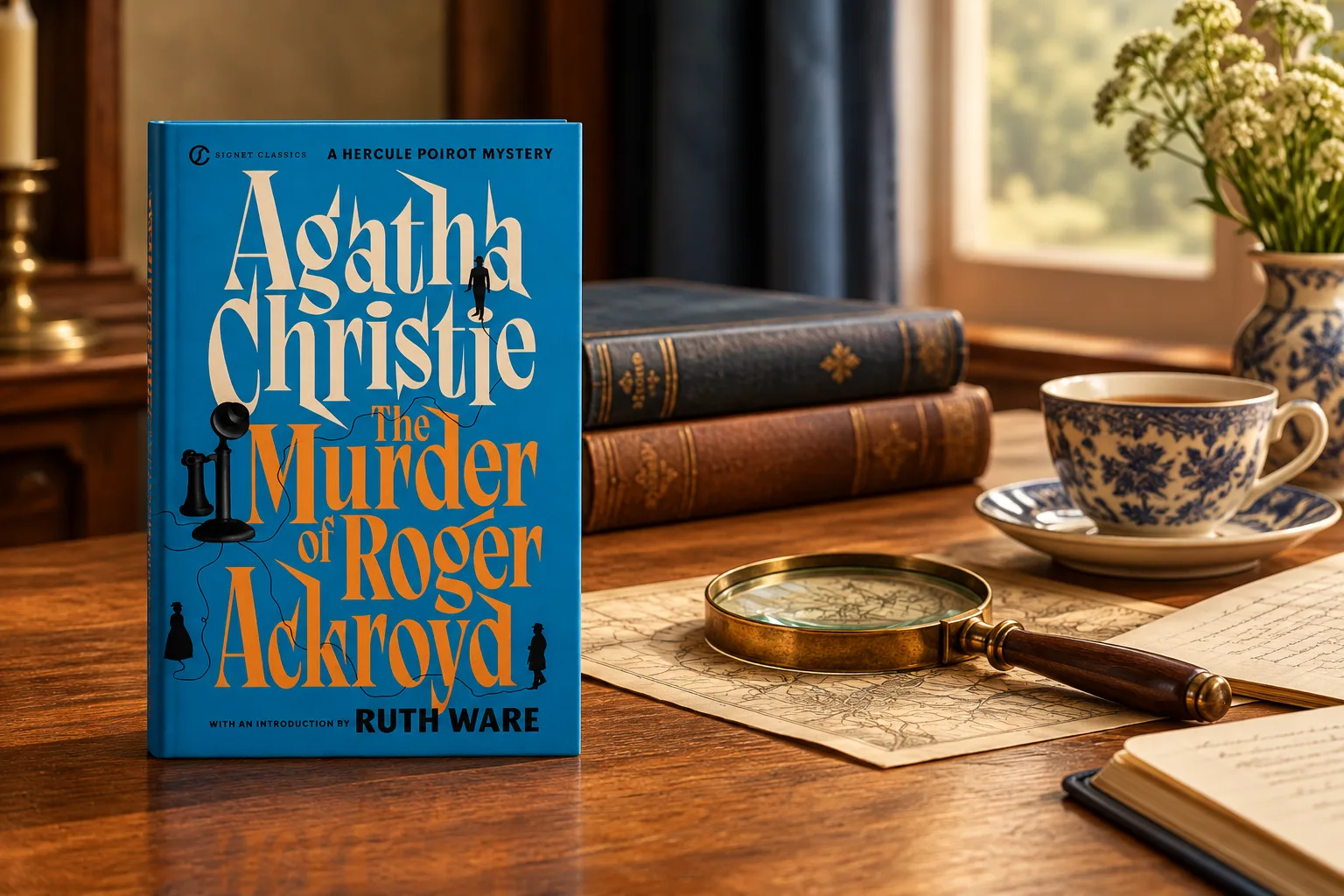
Its historical details contribute texture without needing to carry the entire argument. Christie’s centenary material notes references to electric lighting, a vacuum cleaner, and the popularity of mahjong in the 1920s. These everyday objects and pastimes place the case in a particular period, reminding us that the “classic village mystery” is also a made world with its own contemporary habits. The novel first appeared in 1926, and this US Signet Classics edition was published in 2023 with an introduction by Ruth Ware. In its centenary year, those details offer a timely entry point: the book can be read both as a durable puzzle and as a work shaped by the social assumptions and rhythms of its own moment. There is room for readers to consider how an apparently orderly community conceals private interests, even if this review cannot support broader historical claims beyond the facts described by the publisher and Christie’s official site.
The book’s most significant limitation is intertwined with its achievement. Its reputation for a startling reveal is so prominent that it can become difficult to approach without preconceptions. For a new reader, advance knowledge can change the texture of the puzzle; for a returning reader, the central pleasure may depend less on suspense about the answer and more on studying the route by which attention was guided. That does not make the novel valueless after its first surprise, but it does mean its appeal is not identical for every reader or every reading. Readers who want a fast procedural focused on forensic method may also find that the story’s primary interest lies elsewhere: in narration, motive, and the interpretation of testimony. The ending should remain unspoiled, especially because marketing the twist too loudly can narrow the experience before the book begins.
The Murder of Roger Ackroyd earns its classic status most persuasively when treated as a study of how stories control suspicion. Its village, suspects, and Poirot investigation provide the familiar pleasures of a detective puzzle, while Dr. Sheppard’s position inside the case makes the reader examine what “fair information” actually means. The strongest critical claim supported by the available evidence is about form: Christie turns narrative perspective into part of the clue system. The book’s celebrated solution may dominate its reputation, but the more lasting question is how readily readers accept an account that seems to help them. That makes the novel suitable for readers who enjoy traditional mysteries and for book clubs interested in point of view, trust, and the ethics of storytelling. It is a compact case for paying attention not only to clues, but to the voice that arranges them.
EDITOR’S VERDICT
Tale24’s assessment
The narrator’s position makes reader trust and point of view part of the puzzle; the village setting and clues reward attentive, reflective reading.
Points to considerIts famous solution can shape expectations before reading, and readers seeking a procedural centered on forensic method may find the book’s interest elsewhere.
Best for: Readers of classic detective fiction, Poirot mysteries, and book-club discussions about narration, evidence, and reader trust.
Editorial method: This is an independent assessment informed by the work and its official supporting information. AI tools may assist the drafting process; Tale24 reviews and takes responsibility for everything it publishes.