Literature & Thought · TALE24 REVIEW
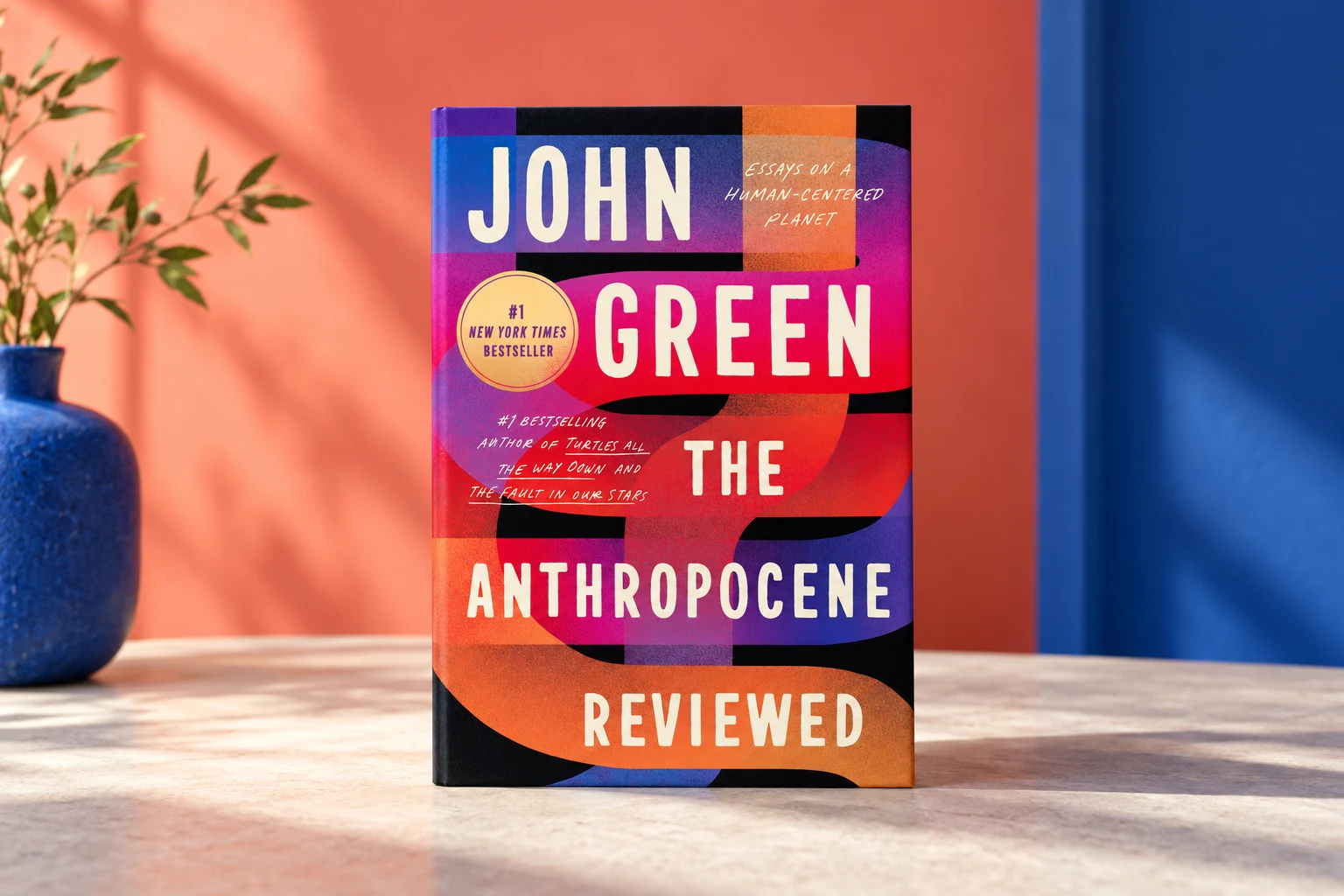
The Anthropocene Reviewed: Rating a World That Resists Scores
John Green's five-star essays turn ordinary objects into questions about memory, responsibility, and connection. Their real force comes when the rating proves too small for the subject.
An inventive essay structure and a moving sense of human scale.
The five-star rating is a strange instrument for judging a life. It is tidy, portable, and indifferent to context. John Green borrows that familiar consumer scale for The Anthropocene Reviewed, a collection of essays on things human beings have made, altered, loved, and survived. The premise could have been a long joke about the absurdity of online reviews. Instead it becomes a way to ask why we want simple verdicts on experiences that change as we do. The stars matter less than the distance between a numerical judgment and the story required to reach it.
Green developed the project from a podcast, and the book mixes adapted material with essays written for the collection. Its subjects vary deliberately. The publisher points to the QWERTY keyboard, a bacterium, and a fast-food breakfast among them. Such a range might look arbitrary until the essay form begins to supply a pattern. The common subject is not the item named in a chapter title. It is the human relation to that item: the systems behind it, the memory it carries, and the way it exposes a person's place in a larger world.
That approach lets Green move between the intimate and the planetary without pretending the two are equal. A mundane object can open onto history, design, accident, or ecological consequence. A personal recollection can reveal how much of daily life depends on other people's labor. The title's geological term may promise a panoramic argument about humanity's impact on Earth, but the book usually proceeds through particular encounters. Its scale is built by accumulation. A world emerges from small things examined with enough patience to stop seeming small.
The best essays exploit the friction between research and confession. Green can give an object a history and then show how that history meets a private anxiety or affection. Neither strand is sufficient alone. Facts without the personal turn would resemble clever trivia; feeling without the facts could dissolve into generalized nostalgia. Together, they make an argument about attention. To know a thing is partly to learn the circumstances that produced it and partly to recognize what we bring to it. The rating at the end cannot contain all of that, and the failure is productive.
The collection's warmth is real, but warmth is not the same as innocence. Green's interests include illness, loss, vulnerability, and the difficult ethics of living amid systems we did not choose. A reviewer of the book notes that an essay on Mario Kart moves toward male friendship and privilege, an example of how apparently light material can bear moral weight. This movement is one of Green's strengths. He does not need every chapter to begin in solemnity for it to arrive at a serious question. The pleasure of recognition can prepare a reader for a more uncomfortable thought.
At the same time, the technique has a predictable rhythm. Once a reader understands that a quirky topic will become a reflection on mortality, care, or human connection, surprise can diminish. The closing score may sometimes feel like a flourish added after the essay's emotional work is complete. Readers who dislike a conspicuous personal narrator may also find the voice too present. These are not flaws that ruin the collection, but they clarify its bargain: Green offers an encounter shaped by his own consciousness, not a neutral encyclopedia of contemporary life.
That consciousness is especially important to the word “reviewed.” A conventional review recommends or warns; this book examines what an object does to the person attending to it. The method can seem indulgent if the personal response becomes the only measure. Green's more persuasive essays resist that temptation by letting the world push back. A piece of technology has designers and consequences beyond his nostalgia. A place has other inhabitants. A cultural habit can be comforting to one group while excluding another. The strongest judgments remain provisional because the object exceeds the judge.
The book therefore offers a useful critique of the medium it imitates. Ratings promise comparability. They invite us to place a breakfast and an illness, a game and a natural phenomenon, on the same neat scale. Green keeps making that promise impossible to fulfill. Context changes the meaning of a star. Pleasure can coexist with complicity; gratitude with grief; beauty with damage. A number is legible at a glance, while the essay asks for time. That contrast gives the collection more than a clever organizing device. It gives the reader a reason to distrust quick certainty.
Some chapters will naturally matter more to individual readers than others. A collection this miscellaneous cannot sustain the same level of urgency on every page, and its emotional register may feel repetitive when read straight through. It may be better approached in intervals, allowing one essay's details to settle before another asks for a different kind of attention. The book's variety is a feature if the reader accepts the pauses it seems to invite.
The Anthropocene Reviewed earns its tenderness by admitting that a human-centered view is both unavoidable and incomplete. We live through particular bodies, friendships, habits, and fears, yet those private experiences sit within histories and environments that will never fit inside them. Green cannot resolve that tension with five stars. His accomplishment is to make the gap visible and worth thinking about. The essays ask us to rate less quickly, notice more carefully, and leave room for the world to remain larger than our verdicts.
EDITOR’S VERDICT
Tale24’s assessment
An inventive essay structure and a moving sense of human scale.
Points to considerThe recurring rating device can feel contrived when an essay has already made its point.
Best for: Readers of personal essays, cultural criticism, and reflective nonfiction.
Editorial method: This is an independent assessment informed by the work and its official supporting information. AI tools may assist the drafting process; Tale24 reviews and takes responsibility for everything it publishes.