Literature & Thought · TALE24 REVIEW
The Creative Act and the Discipline of Paying Attention
Rick Rubin treats creativity less as a professional talent than as a way of noticing. The book is most useful when its invitations to openness meet the realities of practice and constraint.
Generous, accessible reflections on attention, experimentation, and creative confidence.
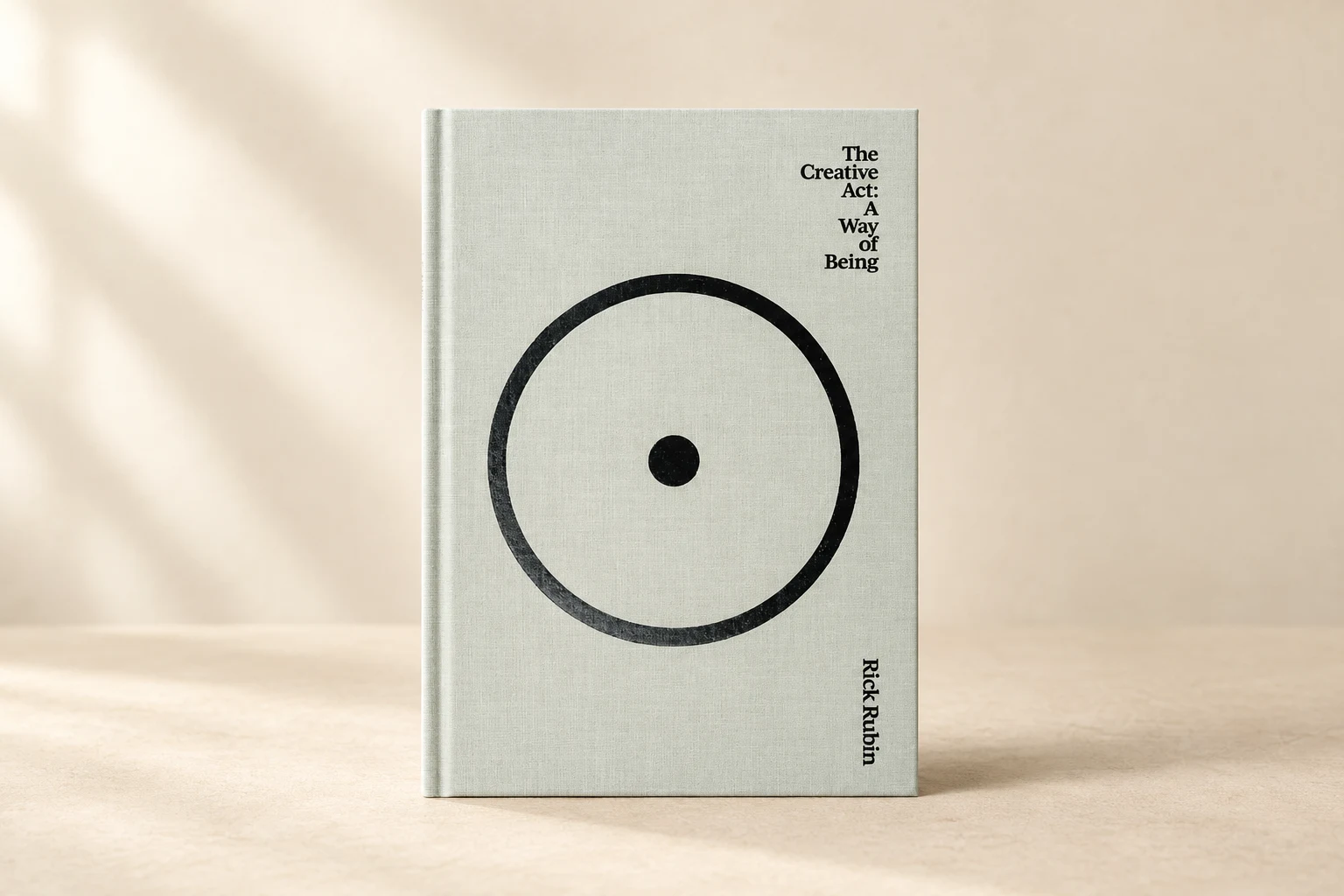
A book about creativity can easily become a manual of tricks: wake early, keep a notebook, silence your phone, repeat until inspiration arrives. Rick Rubin's The Creative Act: A Way of Being has a different ambition. It asks what kind of attention allows ideas to appear in the first place. The word “act” in the title matters, but so does “being.” Rubin is interested in the conditions under which a person becomes receptive to a possibility before there is a finished work to show for it. That emphasis gives his book an unusual openness, and also reveals its central weakness: an invitation to notice is not always a guide to deciding.
Rubin is known for making records, yet the publisher presents this book as a reflection for anyone who makes things. That broad address is more than a marketing gesture. The chapters work through perception, experimentation, taste, uncertainty, and the changing relation between an artist and a work. A reader need not know the music business to follow the argument. The familiar image of a producer imposing a signature sound gives way to an account of listening for what a particular project might become. The focus falls on habits of mind rather than professional mythology.
Its strongest idea is that creativity begins before production. A person notices a connection, a disturbance, or a detail that another day might pass unregistered. Such moments do not automatically become art, but they enlarge the material from which art can be made. Rubin's emphasis on receptivity counters the fantasy that ideas can be summoned by force. It also questions a narrow view of originality. Work emerges from a relationship with what is already in the world, not from an isolated genius generating novelty out of nothing.
The book's short, meditative sections suit this argument. They can be entered between other tasks and returned to later; their form encourages the pauses they recommend. This is a strength for readers who have grown tired of aggressive productivity advice. Rubin does not offer a checklist that promises results on schedule. He makes room for uncertainty, unfinished experiments, and the possibility that an apparently unproductive detour may change the direction of a project. Those allowances can feel freeing to a person whose work has become too tightly measured.
Freedom, however, is not the same as a method. The compressed, aphoristic voice can make a hard-won judgment sound universal. A line about trusting an impulse may be useful to someone trapped by caution and less useful to someone who needs an editor, a deadline, or a budget. Creative work happens inside institutions and material limits. Musicians need time and equipment; writers need revision and readers; many makers have jobs and care obligations. The book sometimes moves past these differences as though an open posture could address them all.
That limitation is especially visible when attention must turn into selection. An artist can gather hundreds of interesting possibilities and still face the uncomfortable work of choosing one. Taste is not merely an inward feeling; it is tested against an audience, a medium, and the work's own emerging demands. Rubin's language is at its best when it encourages a maker to remain curious about an imperfect draft. It is less exact when curiosity must become a decision to cut, finish, or abandon. Those moments require craft and accountability as well as receptivity.
This does not make the book naive. Its practical value may lie precisely in the stage of a project that manuals often neglect. Many people stop themselves before there is anything to revise. They dismiss an unusual thought because it seems too small, derivative, or embarrassing. Rubin offers a patient counterweight to that reflex. His broad definition of creative life also makes the book hospitable to people who do not call themselves artists. Arranging a conversation, noticing a pattern at work, or changing a daily routine can involve the same habit of looking again.
Still, the breadth of that definition needs care. If every attentive act is creative, the word risks losing its ability to describe the special labor of making something public and durable. A private perception and a finished song differ not only in degree but in the obligations they carry. The latter must survive repetition, criticism, collaboration, and time. Readers can profit from Rubin's counsel while remembering that a generous theory of creativity is only one part of a working practice.
The book is best read neither as a set of rules nor as an account of how famous records were made. It is a companion for the interval in which a maker cannot yet see what an idea might be. Its calm tone can make that interval feel less like failure. Even readers who find some of its claims too airy may welcome its refusal to treat every uncertain hour as waste. The most persuasive promise here is modest: we can become more available to the world, and availability gives work a better chance to begin.
The Creative Act succeeds when it changes the reader's posture rather than claiming to solve the work. Its sentences can reopen a closed project or return a distracted person to the texture of experience. The discipline that follows remains the reader's responsibility. Attention may be the beginning of art; revision, limits, and difficult choices carry it forward. Holding both truths together makes Rubin's book more useful than treating it as either a manifesto or a recipe.
EDITOR’S VERDICT
Tale24’s assessment
Generous, accessible reflections on attention, experimentation, and creative confidence.
Points to considerIts aphoristic style can make difficult practical choices sound easier than they are.
Best for: Artists, writers, makers, and readers interested in the habits behind creative work.
Editorial method: This is an independent assessment informed by the work and its official supporting information. AI tools may assist the drafting process; Tale24 reviews and takes responsibility for everything it publishes.