Literature & Thought · TALE24 REVIEW
The Disappearers: Who Gets to Remain Visible?
Eight gay men rehearse a play in Kingston; after an attack, Marlon James turns toward the long work of surviving and being remembered.
A bold multi-voice premise focused on aftermath rather than spectacle
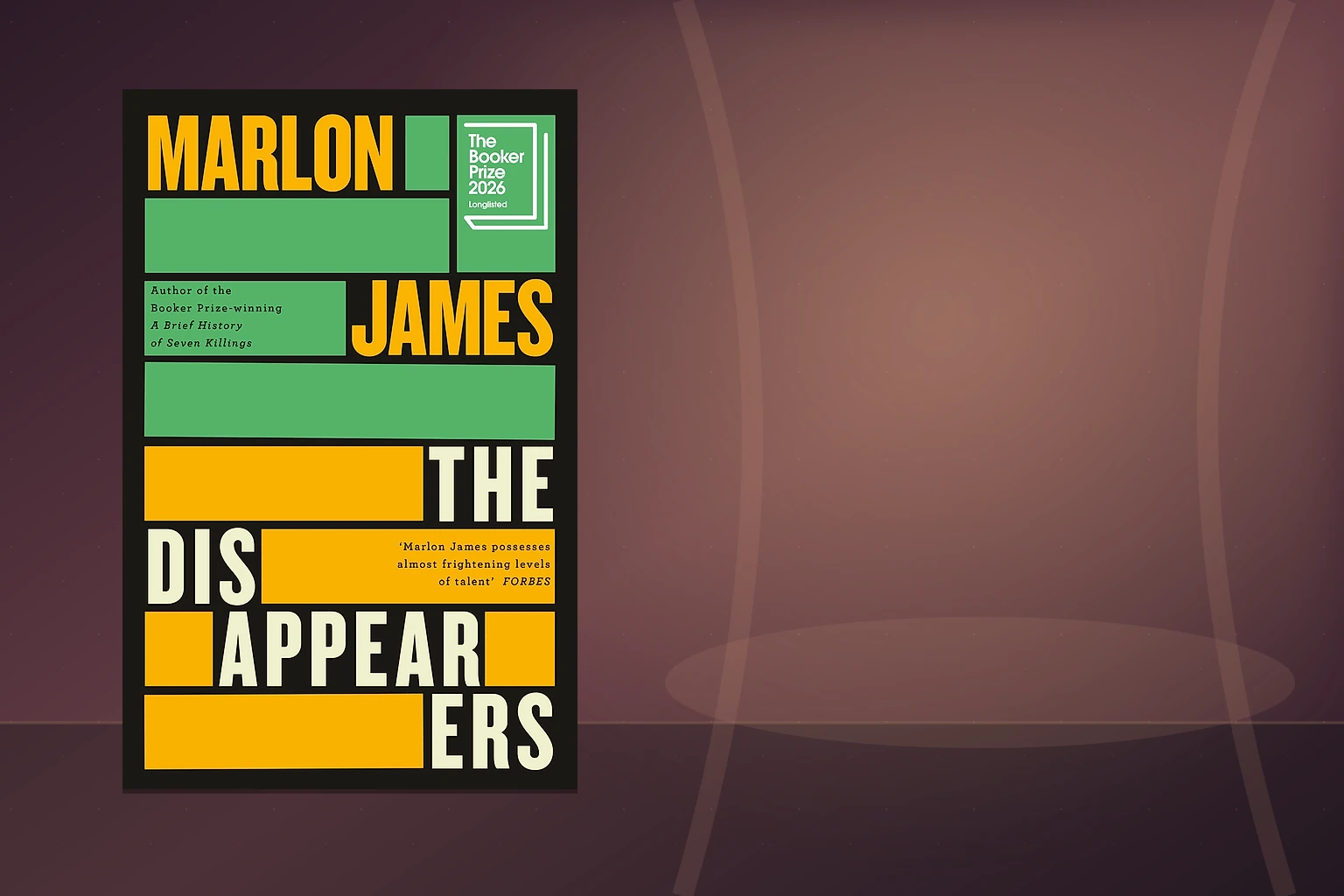
Theater makes a promise that the world outside it may refuse to honor: a person can step forward and be seen. In Marlon James's The Disappearers, eight gay men in Kingston begin rehearsing a play in 1988. The production is billed as Jamaica's first openly gay play, so the act of performing carries unusual public risk. When a mob attacks the group and one man is killed, the novel's central question changes. The story is no longer only about whether the men can appear before an audience. It becomes about how they can continue to exist, and be known, after violence has tried to erase them.
James's choice to begin with rehearsals matters. A theater group joins people who may otherwise have remained strangers. Each actor has a reason for entering the room, and every rehearsal requires some degree of trust: in a text, in fellow performers, and in the possibility that an audience will listen. The source description does not reveal the play's scenes, so there is no reason to invent them. The known setup is powerful enough. A project built around visibility is met with an attack meant to punish that visibility. The contrast gives the novel a structure larger than a single horrific event.
The Booker Prize's account emphasizes what follows the assault. The survivors must recover physically while deciding what to do with rage, fear, and the knowledge that the threat has not disappeared. Some try to ignore what the attack has exposed; others consider retribution. Those responses need not be ranked as brave or weak. They are different ways of living with danger, and each may carry a cost. A novel that grants them separate histories can resist the pressure to turn eight men into one representative experience. Its moral work begins by refusing to make survival look tidy.
James has said a rumored incident inspired the book, while also stressing that the incident had not been proved when he began writing. That distinction is essential. The Disappearers is fiction, not a verified reconstruction of a documented crime. James's stated interest lies in the aftermath, in what a violent episode does to lives that continue beyond the headlines or whispers. Rumor can reveal what a society fears or half acknowledges, but it can also deny people the clarity of a public record. The novel appears to use fiction's freedom to follow consequences that a thin or contested archive might leave hidden.
The title directs attention to more than literal absence. A person can disappear from a shared story when he must conceal a relationship, move away, or make himself less visible to remain safe. An assault can fracture a group even if its members survive. The Booker judges note that one survivor later investigates the fates of the others, a narrative move that turns memory into a form of inquiry. What happened to them is not simply a detective's question. It asks who kept track, who was allowed to remember, and whether reunion can restore anything that violence dispersed.
Form seems suited to that problem. Critical descriptions of the novel mention interview fragments, journal entries, and letters alongside multiple voices. Such materials can convey different levels of distance from an event. A letter may say what its writer cannot say in public; an interview may show what memory has revised; a journal can preserve a feeling before its owner knows its meaning. This is an inference about the form's possibilities, not a claim that any particular document reveals a twist. The larger point is that no single narrator can easily contain a story about people whose lives have been broken apart.
Setting the book across the late 1980s and 1990s also resists the idea that the attack ends when the scene is over. Trauma changes pace as years pass. Immediate danger may give way to decisions about work, intimacy, and whether to tell the truth about one's past. The verified synopsis does not support a list of specific later outcomes, and a responsible review should leave those discoveries to the book. It does support the sense that James is more interested in the long duration of consequence than in using homophobic violence as a brief shock that launches an otherwise conventional mystery.
That emphasis makes the novel demanding. The described assault and death may be difficult for readers who need distance from traumatic material. James's ambitious, multi-voice approach may also require patience from someone expecting a single linear investigation. These are meaningful considerations, not flaws to wave away because the book reached an award shortlist. A story about endangered lives should not be sold as pain for spectacle. Its value depends on whether the men retain their differences, humor, and agency as the narrative confronts what has been done to them.
James won the Booker Prize in 2015 for A Brief History of Seven Killings, and The Disappearers was shortlisted for the 2026 prize. Those honors explain the attention around this new novel, but they do not supply its critical meaning. What makes its premise compelling is the connection between a public performance and a private aftermath. The men prepare to speak together; violence scatters them; an account of their lives has to be assembled from what remains. The novel's challenge is to honor that distance without treating any person as only a symbol of loss.
The Disappearers will interest readers prepared for a serious, expansive novel about queer life, social hostility, and the work of remembering. It offers the prospect of suspense, but the deeper pull is ethical: when a community makes visibility dangerous, what forms of attention can help people remain more than the event that wounded them? James's subject is not merely the night of the attack. It is the long argument over who gets to have a future, a history, and a name that others will speak.
EDITOR’S VERDICT
Tale24’s assessment
A bold multi-voice premise focused on aftermath rather than spectacle
Points to considerThe account of homophobic violence may be difficult to read
Best for: Readers of ambitious literary fiction about queer history and survival
Editorial method: This is an independent assessment informed by the work and its official supporting information. AI tools may assist the drafting process; Tale24 reviews and takes responsibility for everything it publishes.