Literature & Thought · TALE24 REVIEW
The Names: Three Futures, One Difficult Choice
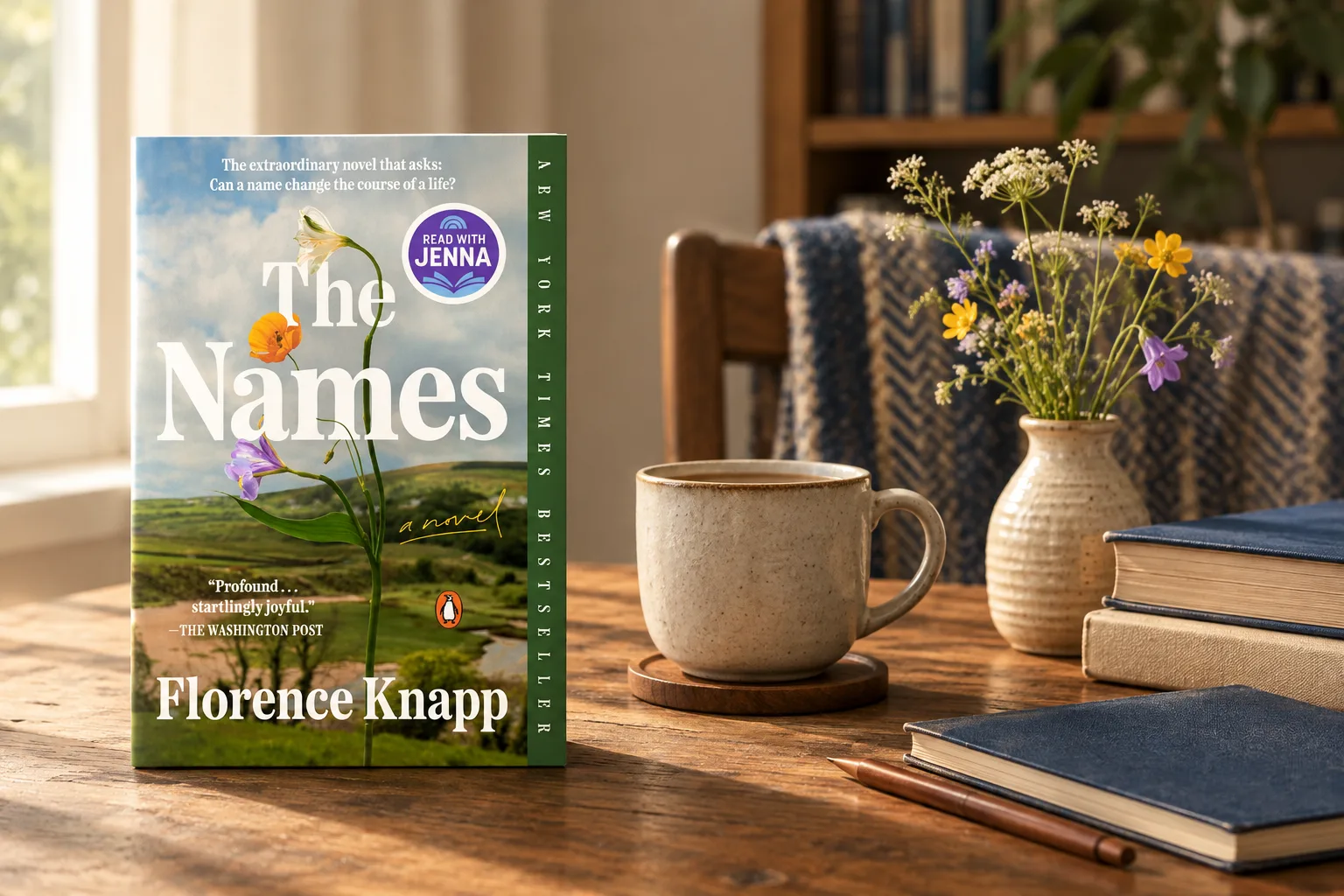
Florence Knapp traces three futures from one decision about a baby's name. The novel asks what a choice can change when a family is already living under coercion.
An inventive three-path structure that examines family, agency, and the long reach of control with care.
A name can be a gift, an inheritance, or a demand. In Florence Knapp's The Names, it is all three before a child is old enough to answer to it. In 1987, Cora goes to register her newborn son while her older daughter, Maia, accompanies her. Cora's husband, Gordon, expects the boy to carry his name. Maia proposes Bear; Cora has Julian in mind. The novel follows the three lives that grow from those choices. Yet the question that gives the book its force is not whether one word can determine a future. It is how much freedom a choice can carry inside a household governed by fear.
The alternative paths make a familiar domestic scene newly difficult to read. Naming a baby normally invites speculation about identity and possibility. Here the decision also measures Gordon's power over his family. To use the name he wants is not simply to honor a parent; to choose another name is not automatically to escape him. Knapp's premise refuses the comforting idea that one brave gesture could by itself repair a violent marriage. Cora's options are real, but they are constrained by the person who will react to them. That tension keeps the book's speculative structure rooted in an ordinary and frightening form of control.
Each chapter moves forward in seven-year steps and returns to the three versions of the family. The gaps matter as much as the divisions. Readers see consequences accumulate without being offered a complete record of every intervening day. A decision can look decisive at the registrar, then become only one pressure among many as the years pass. This structure asks for comparison, but it also resists a tidy experiment. Families do not consist of a single variable. Age, chance, other relationships, and the children's own developing choices change what any one name can mean.
Maia's presence at the beginning is especially important. She has an idea about her baby brother, but she also lives within the conditions that make Cora's decision dangerous. A version of this story concerned only with the son's eventual identity might turn mother and daughter into instruments for explaining his fate. The three-track design gives a reader reason to keep asking about both of them. Who has room to speak? Who learns to anticipate anger? Who gets to describe a family's history after its members have survived it in different ways? Those questions give the premise its ethical depth.
Knapp's form also unsettles the language of empowerment that often surrounds stories of difficult decisions. It is tempting to rank the names as though one were courageous, another submissive, and the third a compromise. Such a ranking would reduce a woman facing abuse to the quality of a single act. The novel's branching possibilities invite a more careful question: how do acts of care, accommodation, and defiance operate when none can guarantee safety? The same decision may mean one thing to Cora, another to Maia, and something else to the child who inherits it. The book's interest lies in those unequal meanings, not in awarding a prize for the best choice.
There is a risk built into this design. When three futures are arranged around a clearly stated question, characters can begin to seem like demonstrations of an argument. Kirkus Reviews noted that the novel can feel didactic even as it praised the thoughtfulness of its plotting. That reservation deserves attention. A reader may occasionally sense the structure explaining what to notice before the characters have had space to surprise them. Still, the method has a purpose: by refusing a single authorized outcome, Knapp makes uncertainty part of the reading experience. The apparent neatness of the opening gives way to less manageable lives.
The book's treatment of domestic abuse calls for the same caution. A parallel-life story could use harm as a device to make each timeline more dramatic, or imply that the right word would have prevented it. The premise, as described by the publisher and professional reviews, points in a more serious direction. Gordon's behavior is a condition under which the family makes choices, not a puzzle for the child or his mother to solve. That framing matters because it keeps responsibility with the person exercising control. It also allows the family's changing relationships to matter beyond the question of whether any one future counts as a happy ending.
The repeated leaps across decades broaden the novel's view of identity. A name can be spoken with affection, used to assert ownership, rejected, or reinterpreted. It may begin as somebody else's wish and become part of a person's own account of himself. The reader's movement among Bear, Julian, and Gordon makes that process visible without proving that language alone creates character. What changes across the versions is not only a label. It is the network of expectations and memories that gathers around it. Knapp turns a simple act of registration into a way of asking who gets to shape a life story.
This is an emotionally demanding novel, and its three-part movement may be less inviting to readers who want one continuous plot. Its rewards come from holding incompatible possibilities together. The book asks readers to care about people who have no single, stable future on the page, then to notice how easily an observer might mistake one outcome for destiny. The result is a family story with a speculative frame rather than a lesson in how to choose correctly. Cora's decision matters. So do the forces around it, and so do the lives that continue long after the form has been filled in.
EDITOR’S VERDICT
Tale24’s assessment
An inventive three-path structure that examines family, agency, and the long reach of control with care.
Points to considerThe deliberately comparative design can feel didactic and asks readers to track three timelines.
Best for: Readers of literary fiction drawn to family stories, alternative lives, and serious portrayals of domestic abuse.
Editorial method: This is an independent assessment informed by the work and its official supporting information. AI tools may assist the drafting process; Tale24 reviews and takes responsibility for everything it publishes.