Literature & Thought · TALE24 REVIEW
Pham Quynh's Buddhist Survey: From Research to Public Lecture
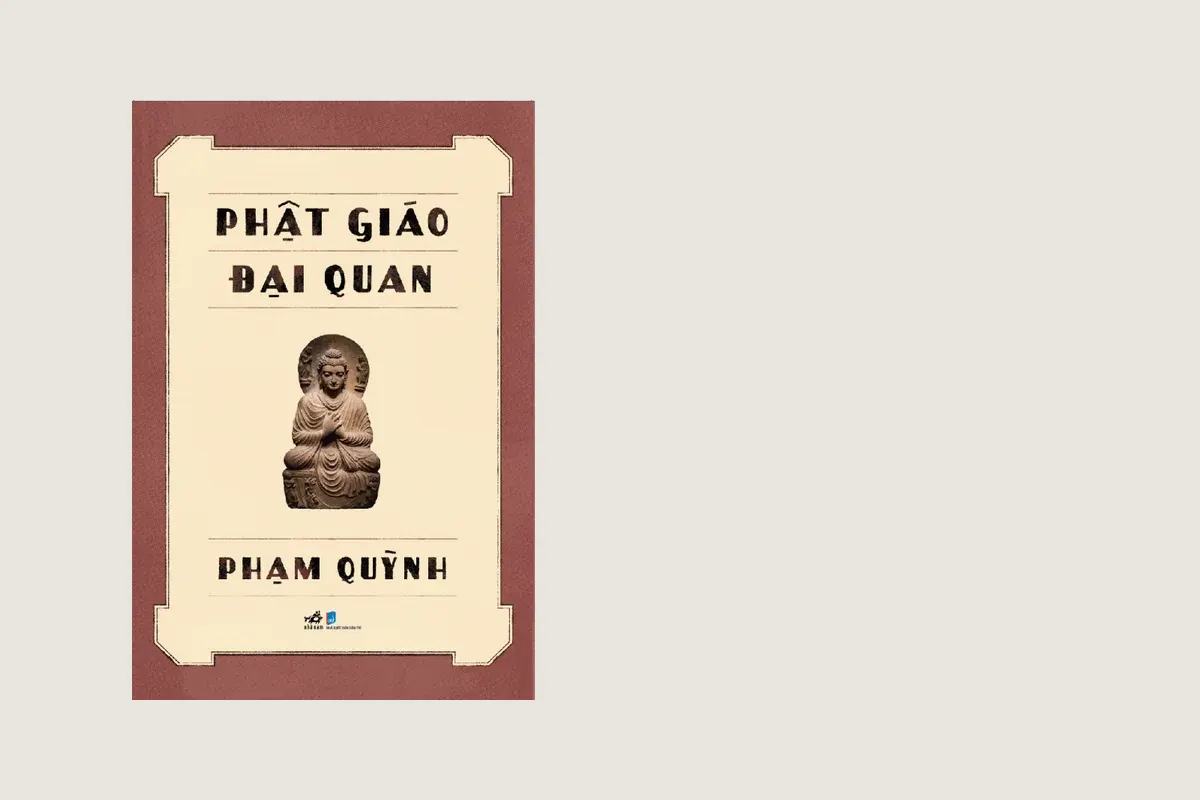
Pham Quynh's Phật giáo đại quan moves between research, public lecture, and print. Its 1924 preface helps explain the audience and ambitions of this early Vietnamese account of Buddhism.
Connecting the history of Buddhism with modern Vietnamese intellectual history
A study of Buddhism written in the early twentieth century has two layers of value. The first layer is the story about the history of formation, spread and basic ideas of Buddhism. The second layer, equally interesting, is how a Vietnamese intellectual in the transitional period tried to use new methods and languages to reread Eastern traditions.
Reading the work today requires keeping a historical distance. Some generalizations may no longer be relevant to contemporary research, but those limitations show how Vietnamese academic life has moved. The storytelling style helps make thoughts less dry and at the same time reflects the desire to bring academic knowledge to a wider public.
Tale24 considers this a document that should be read in parallel with modern Buddhist works. Comparative reading both respects revitalizing values and avoids turning a nearly century-old text into the final authority. More importantly, it helps readers realize that the history of ideas is also the history of how we learn to ask questions.
A historically responsible reading has to keep two questions apart: what the book says about Buddhist history, and what its own publication tells us about Vietnamese intellectual life in the early twentieth century. The publisher presents Pham Quynh's work as an introduction to Buddhism's history, spread, key ideas, and cultural influence. That description helps identify the book's scope, but it is a publisher summary rather than independent confirmation of every historical claim. Readers should compare its account with recent scholarship and with primary materials from the periods it discusses.
This distinction is especially useful when an older work uses a confident, synthetic voice. A clear narrative can make a complex tradition accessible, yet it can also smooth over differences among schools, regions, languages, and historical communities. Instead of asking whether the book is simply “right” or “outdated,” readers can mark which claims are descriptive, which are interpretive, and what evidence each relies on. They can then ask how the author frames Buddhism for a modern Vietnamese audience and which questions that framing foregrounds or leaves aside.
The book is therefore most valuable as both an introduction and a historical document of interpretation. Its limitations should lead to comparison, not dismissal; its readability should not turn it into a final authority. Pairing it with contemporary academic work and sources closer to the periods under discussion lets the reader appreciate its place in the history of ideas while checking its account against a wider record.
There is also a difference between an accessible overview and a specialist history of a tradition. An overview can introduce concepts and a broad chronology, but it may not have room to explain disagreements among historians or the diversity of Buddhist institutions and practice across Asia. Readers interested in doctrine can look for scholarship on particular schools and textual histories; readers focused on Vietnam can add studies of local institutions and the ways religious life changed under specific political and social conditions. Those are related questions, but they are not interchangeable.
This distinction helps make the book useful without asking it to do work it was not designed to do. When a passage makes a broad claim, readers can note whether it describes an idea, a community, or a historical development, then search for evidence at that same scale. A statement about a major intellectual trend, for example, needs more than a biography or a publisher's description to establish how widely that trend was shared. The habit of checking scale is a simple way to avoid turning one writer's perspective into the voice of an entire period.
Read in this way, the book offers two routes into discussion: a route through Buddhist history and a route through the modern history of Vietnamese scholarship and public writing. Neither route ends at this volume. Its most productive contribution is to give readers questions they can carry to newer studies, while leaving room to revise an older synthesis when better evidence or sharper distinctions become available.
The title's historical angle can be extended by asking what an introduction does when it brings a religious tradition to readers outside specialist scholarship. It selects a route through a large field, explains unfamiliar terms, and decides which questions deserve emphasis. Those decisions are part of the work's intellectual setting. Studying them can show how a writer understood the task of public education and how older scholarship negotiated inherited traditions with modern forms of argument.
That inquiry should avoid projecting today's disciplinary boundaries backward. A writer from an earlier period may move among history, philosophy, moral commentary, and cultural criticism in ways that current academic publishing separates. Rather than evaluating every passage against the format of a contemporary textbook, readers can ask what kind of work the author intended and what audience could have encountered it. They can then compare the author's method with newer scholarship that has access to different debates, evidence, and research conventions.
Pham Quynh's own preface, dated April 1924, supplies a more precise frame than a modern sales description. He distinguishes an earlier research article in Nam Phong from the more accessible lecture he prepared for Hanoi's Tri Tri association, then explains how that lecture became a book. The sequence matters because a work addressed to a public audience makes different explanatory choices from a specialist study. Its concision is partly a relationship with listeners. The preface also gives readers a document against which to test claims about the author's purpose, rather than projecting a modern academic ideal onto him. This does not verify every historical statement in the book, but it makes the discussion of method and audience answerable to a primary text.
The difference between intellectual history and religious history is useful here. The former asks how concepts were interpreted and circulated by particular writers and institutions; the latter may focus on communities, practices, texts, and changes in belief over time. A short work can touch both without fully covering either. Pairing it with a focused modern study allows readers to see where its synthesis remains illuminating and where it needs qualification. This approach respects the historical importance of Pham Quynh's writing while keeping claims about Buddhism answerable to a much broader body of evidence.
EDITOR’S VERDICT
Tale24’s assessment
Connecting the history of Buddhism with modern Vietnamese intellectual history
Points to considerSome generalizations need to be updated with contemporary research
Best for: Readers are interested in Pham Quynh, Buddhism and the history of Vietnamese thought
Editorial method: This is Tale24’s original analysis of the published material and attributed criticism. The sources and evidence limits are listed below.
READING AND RESEARCH
Sources and scope
The discussion of method and audience is checked against Pham Quynh's April 1924 preface, available in a public transcription. It does not claim to verify every historical statement in the complete book.
Sources checked November 5, 2026.
KEEP READING