Literature & Thought · TALE24 REVIEW
Feeding Ghosts: Drawing the Gaps in Family Memory
Tessa Hulls traces three generations of Chinese women through exile and inherited trauma, using the graphic memoir form to make family memory visible and uncertain.
An ambitious family scope and a visual form suited to fragmented memory and historical distance
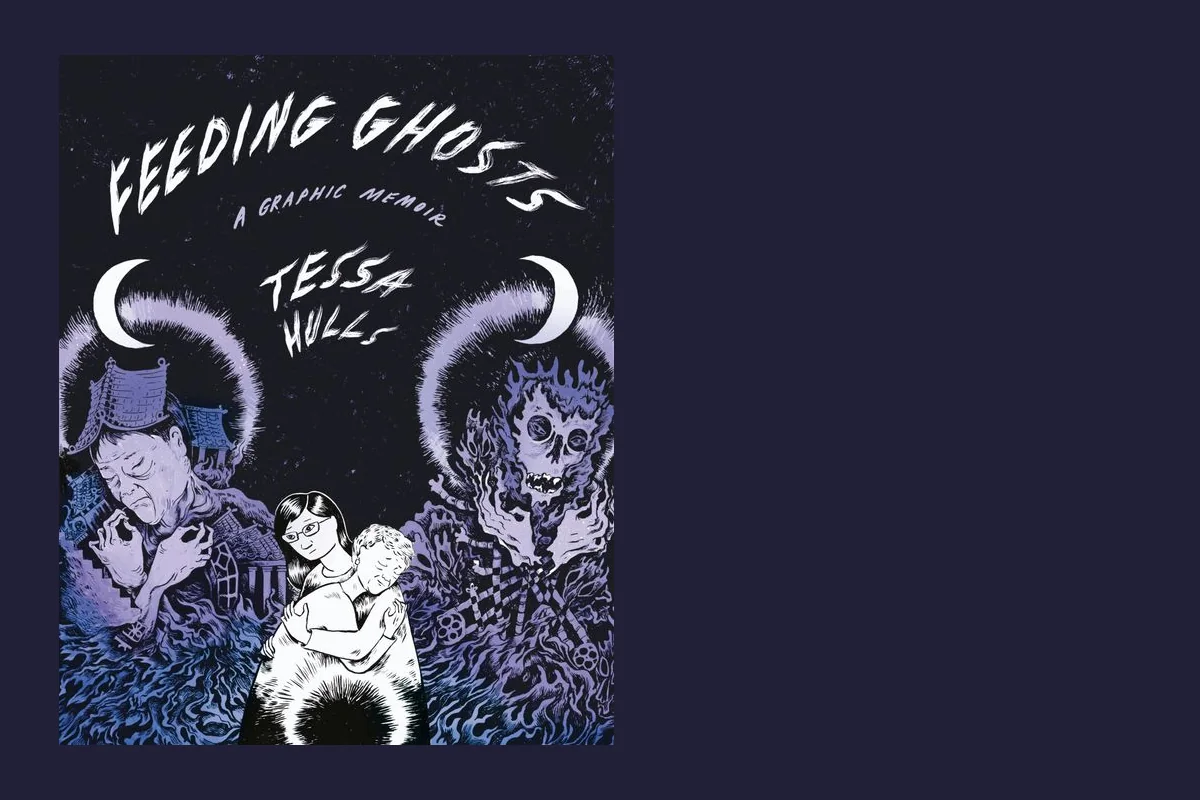
Family stories often arrive as fragments: a photograph without a date, a remembered warning, a parent’s silence, a version of an event that changes with the teller. Tessa Hulls’s Feeding Ghosts: A Graphic Memoir takes that instability seriously. Its subject is three generations of Chinese women, including Hulls, her mother, and her grandmother Sun Yi. Its graphic form matters as much as its family scope. Images can place a face beside an absence, or let a page hold competing times without forcing them into one settled account. The book’s promise is not to make an inherited past perfectly knowable. It is to show the work involved in approaching it.
The Pulitzer board awarded Feeding Ghosts the 2025 prize for Memoir or Autobiography, noting that its illustrations bring three generations and their inherited trauma to life. The publisher describes Sun Yi as a Shanghai journalist who fled to Hong Kong after the Communist victory of 1949. She wrote a memoir about persecution and survival, then experienced a severe mental breakdown. Hulls grew up amid the consequences for her grandmother, her mother, and herself. These public descriptions establish a family story shaped by political rupture and private suffering. They also warn against treating either dimension as a simple explanation of the other.
The title suggests a difficult form of care. Feeding a ghost might mean keeping faith with someone who is gone, or trying to satisfy an absence that cannot be filled. In a family narrative, the obligation to remember can sustain a person and exhaust her at the same time. Hulls’s stated journey back toward family history follows years of travel and distance. That movement gives the memoir a useful tension: leaving can be a survival strategy, but so can returning to ask questions. Neither response is evidence of insufficient love. A serious account of inheritance must make room for the different ways people manage what they have been given.
Sun Yi’s own writing adds a striking layer. Hulls is not simply recovering an unrecorded ancestor; she is responding to a woman who made a public account of her life. A memoir inside a memoir raises questions about authority. What does a granddaughter receive from an earlier act of testimony, and what remains unavailable despite it? A published narrative can preserve events while leaving later family members with the emotional aftermath. It can clarify a political history and still leave the intimate meanings unsettled. This distinction helps keep the book from becoming a neat detective story in which one document finally explains everyone.
The graphic memoir is particularly apt for such questions. Prose can state that memories overlap, but sequential images can make overlap a property of the reading experience. A reader must move through space as well as sentences, noticing what appears beside what and what a panel leaves outside its border. The Pulitzer citation’s attention to the illustrations is therefore more than praise for decoration. The visual form can register the limits of an archive and the force of imagination without pretending that the two are identical. The reader is asked to notice how a family past is constructed, not merely to receive its conclusions.
That formal possibility carries an ethical risk, too. When the record is incomplete, a visual narrative can make an imagined scene feel unusually concrete. The strongest approach is one that lets the reader sense uncertainty rather than hiding it behind seamless reconstruction. Hulls’s project, as described by its publisher, appears concerned with discovery as a process. The value of that emphasis is that it respects people who cannot be fully recovered as characters in a descendant’s story. History asks for evidence, while memoir asks what an uncertain history has done to a living person. A graphic page can hold those demands in productive tension.
The book’s account of trauma should likewise be approached with precision. The phrase intergenerational trauma can become a shortcut, as if a family’s choices and disagreements all followed automatically from a single wound. Feeding Ghosts seems more interesting when read against that simplification. A political upheaval changes lives, but each generation encounters its consequences under different conditions and with different resources. Hulls’s grandmother, mother, and Hulls herself do not occupy interchangeable positions. Their differences are part of the story. A family history gains force when it allows those differences to remain visible rather than presenting inheritance as a fate no one can revise.
The mother-daughter relationships invite the same care. Children often inherit a parent’s protective habits before they understand the fear behind them. Parents may also find that protection becomes control when circumstances change. To describe that dynamic fairly is to resist turning one person into the cause of another’s pain. A memoir can show love, frustration, silence, and dependence together. That complexity is especially important when mental illness enters the narrative. It should not be used as a plot device that explains away a woman’s intellectual life or historical choices. Sun Yi’s work as a journalist and writer remains part of who she was.
Readers looking for a general history of twentieth-century China will find a more particular undertaking. The historical events matter because of their pressure on this family, yet the book’s organizing question is what descendants can know and carry. That focus gives the memoir its intimacy but also limits what any one family can represent. The same is true of its visual strategies: they may ask readers to slow down and tolerate gaps instead of offering the smooth forward motion of a conventional prose narrative. For those willing to read attentively, that friction can be a strength rather than an obstacle.
Feeding Ghosts deserves attention because it treats remembrance as an activity with consequences in the present. A daughter or granddaughter may preserve a story, question it, redraw it, or decide where its authority ends. The Pulitzer recognition points to the scale of Hulls’s achievement, but the deeper appeal lies in the book’s refusal of an easy cure for inherited pain. Its graphic form gives shape to what can be seen and what must remain uncertain. The result is a family memoir that asks a broad question without flattening its people: how can we make room for the past without asking the living to disappear inside it?
EDITOR’S VERDICT
Tale24’s assessment
An ambitious family scope and a visual form suited to fragmented memory and historical distance
Points to considerIts emotional intensity and shifting generations may demand slow, attentive reading
Best for: Readers of graphic memoir, family history, migration, and intergenerational memory
Editorial method: This is an independent assessment informed by the work and its official supporting information. AI tools may assist the drafting process; Tale24 reviews and takes responsibility for everything it publishes.