Literature & Thought · TALE24 REVIEW
The Dignity of Work Meets Its Hard Limits
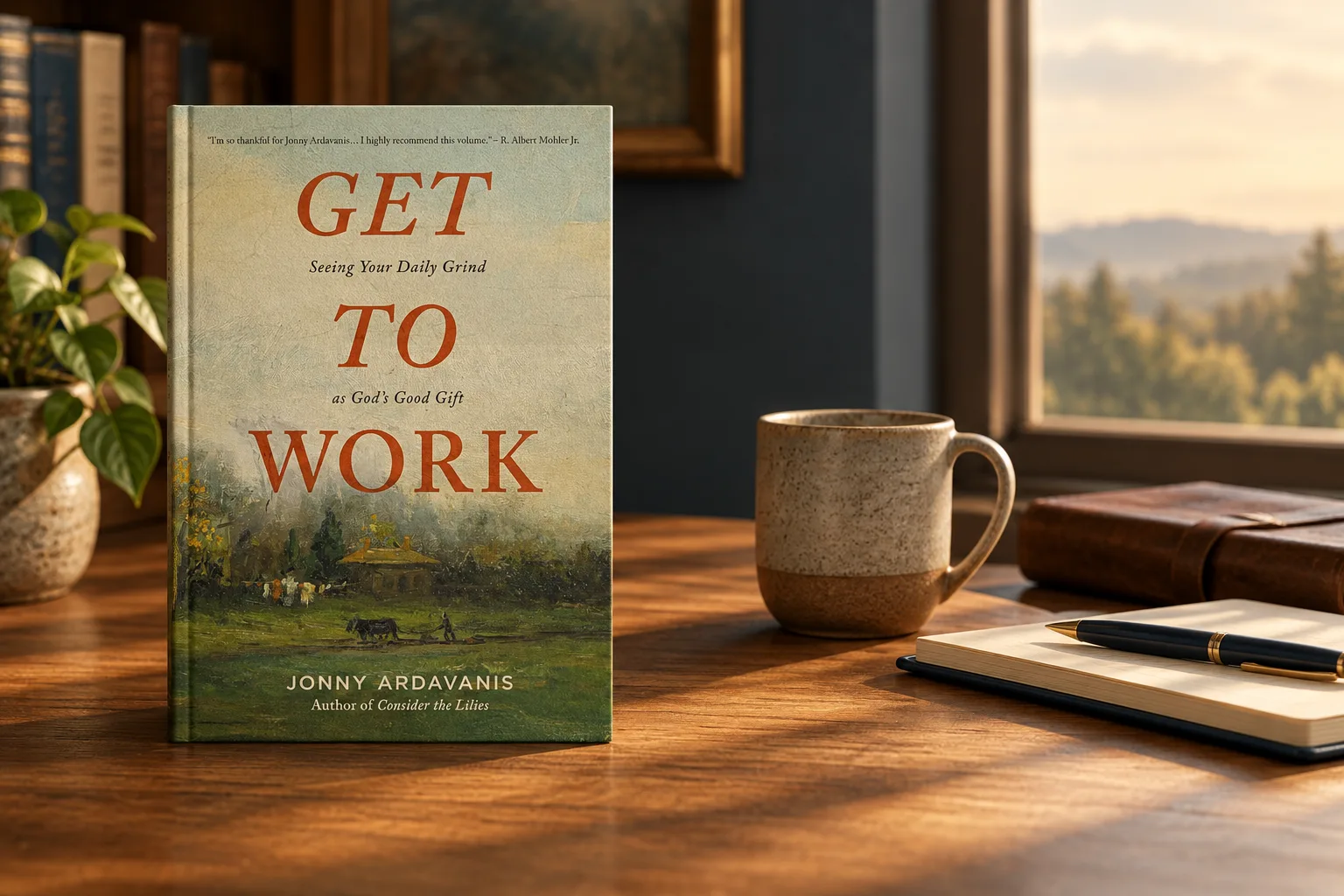
Jonny Ardavanis frames everyday labor as a gift and pairs diligence with Sabbath. Two sharply different reviews reveal the book's central test: can a theology that honors work also account for the people with little power to shape it?
Presents a coherent Christian framework connecting creation, ordinary vocation, service, and rest; challenges both status-based work and achievement as identity.
“Get to work” can sound like a command issued to someone who is already tired. Jonny Ardavanis wants the phrase to mean something more generous: work is part of human dignity, not merely a burden to endure or a ladder on which to measure personal worth. The claim is familiar in Christian writing about vocation. The more demanding question is whether a call to receive work as a gift can make room for people whose jobs are exhausting, precarious, or beyond their control.
The public description of Get to Work sets out a creation-to-Sabbath framework. Ardavanis begins with God as creator and presents human labor as a way of reflecting that creative purpose. He then turns to the distortions of work: pride and identity built on achievement at one extreme, passivity and meaninglessness at the other. His answer is to work with enthusiasm, excellence, integrity, and love for one’s neighbor, while keeping rest within the picture. That structure gives the book a clear theological spine, and it avoids treating work-life balance as a mere scheduling trick.
The reach of the argument is one of its most appealing features. Publisher materials explicitly address readers from plumbers and executives to stay-at-home parents. That sweep pushes against a familiar hierarchy in which paid, prestigious, or visibly creative work receives the most respect. A Christian account that locates dignity in service rather than status can help a reader see care, maintenance, and routine tasks as consequential. The point is not that every task feels meaningful in the moment. It is that a person’s contribution cannot be measured only by salary, title, or public recognition.
Ardavanis has explained this premise in interviews around the book’s release. On Chris Fabry Live, he describes work as present in the biblical story before human beings enter it, and frames daily labor as participation in a wider purpose. That starting point makes the book’s argument more than a motivational slogan: it asks readers to consider what their understanding of work says about human nature, creation, and dependence on God. It also helps explain why the book gives attention to both effort and rest. If labor is part of creaturely life, so are limits; Sabbath should not be a medal handed out only after enough output.
A second review helps clarify how the book develops this thesis. Writing for Patheos, Michele Howe describes an eight-chapter progression through work, rest, diligence, and worship. She emphasizes the author’s insistence that a work ethic affects the whole person and praises the book’s practical encouragement for difficult workplaces. Her response is notably warmer than Publishers Weekly’s advance assessment. That difference is useful: the two reviews agree on the book’s recurring concern with diligence and rest, but disagree about whether its treatment feels fresh and sufficiently practical.
Publishers Weekly’s review, published ahead of release, is the sharper test of the book’s balance. It recognizes Ardavanis’s effort to hold together the goodness of work, the danger of making it an identity, and the need for silence and Sabbath. Its objection is that the case for diligence feels familiar, that warnings about laziness take too much space, and that the proposed remedies for overwork and burnout remain superficial. This is more than a complaint about originality. It points to a problem of emphasis: when a book repeatedly warns against idleness, readers may wonder whether exhaustion receives the same moral and practical attention.
That distinction matters because a theology can dignify workers while still leaving the organization of work unexamined. Someone may be burned out because they are overcommitted, but also because their employer controls their shifts, a household depends on multiple jobs, a caregiver cannot simply step away, or unsafe conditions make every hour costly. Calling labor a gift does not make those constraints disappear. Nor should a person’s inability to rest be treated automatically as a failure of spiritual discipline. The strongest version of Ardavanis’s premise would use Sabbath to set a limit on demands, including demands placed on workers by institutions and by themselves.
The available public materials do not let us settle how fully the complete book answers that challenge. Howe’s review says the book offers practical hope; Publishers Weekly finds the burnout guidance thin. The author’s interviews clarify the intended theological framework, but an interview is not a substitute for examining how each chapter handles the harder cases. The disagreements therefore deserve to remain visible instead of being flattened into a claim that the book is either a comprehensive burnout guide or merely a sermon about laziness.
This essay is a source-informed assessment, not a claim of firsthand reading of the complete text. It draws on the publisher’s description, Ardavanis’s release interviews, and two published reviews that reach different conclusions. That boundary matters. The available evidence supports a careful judgment about the book’s central idea and its reception; it does not support invented chapter scenes, quotations, or a verdict on every practical recommendation.
On that evidence, Get to Work is most promising as a theological reframing of ordinary labor. It challenges both the belief that only high-status work matters and the belief that professional success can supply a person’s identity. Its insistence that rest belongs within a faithful life also resists the idea that people must optimize themselves without end. These are worthwhile claims, especially for readers whose jobs feel invisible or spiritually disconnected.
Its limitation, as reflected in the critical response, is the risk that exhortation outruns empathy. A call to diligence is most persuasive when it can distinguish chosen disengagement from fatigue, and when it gives people language for naming harmful conditions rather than asking only how to endure them. Readers seeking a biblical vocabulary for vocation may find Ardavanis’s framework helpful. Those looking for concrete workplace strategies or a developed account of power, pay, and burnout should pair it with writing that addresses those subjects directly. The book’s best promise is not that every grind is good, but that work can have meaning without becoming a measure of the worker—and that meaningful work still needs humane limits.
EDITOR’S VERDICT
Tale24’s assessment
Presents a coherent Christian framework connecting creation, ordinary vocation, service, and rest; challenges both status-based work and achievement as identity.
Points to considerPublishers Weekly finds the case familiar, its warnings about laziness overemphasized, and its burnout advice too thin; the available sources do not establish how fully the complete book addresses those limits.
Best for: Christian readers seeking a theological framework for ordinary work and Sabbath. Readers looking for concrete employment guidance or a structural analysis of burnout should supplement it with other sources.
Editorial method: This is an independent assessment informed by the work and its official supporting information. AI tools may assist the drafting process; Tale24 reviews and takes responsibility for everything it publishes.