Literature & Thought · TALE24 REVIEW
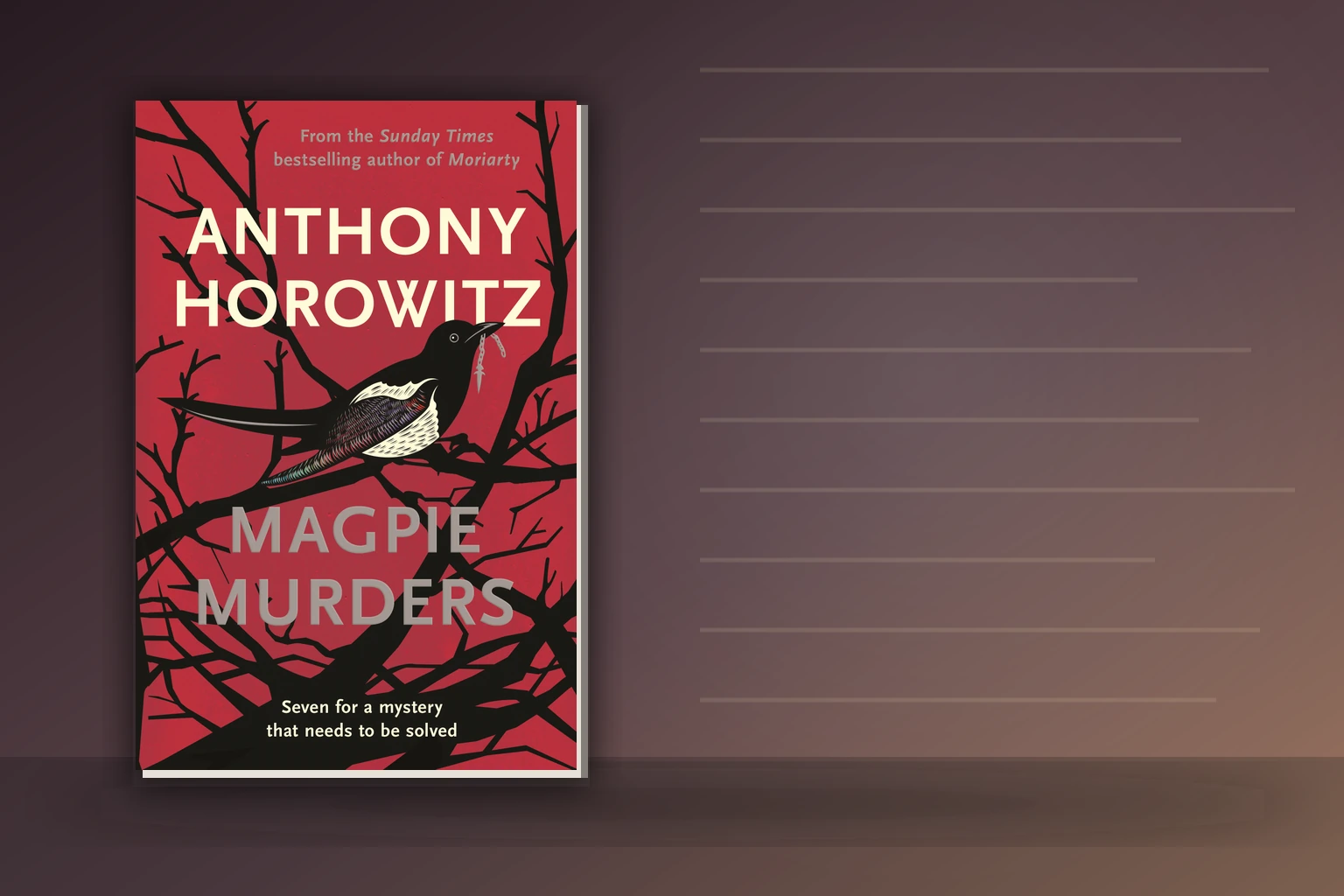
Magpie Murders: The Mystery Hidden Inside the Mystery
Anthony Horowitz puts a village whodunit inside an editor’s investigation, making the habits of crime fiction part of the puzzle. The pleasure lies in watching two kinds of evidence compete for attention.
The nested manuscript gives the classic whodunit a fresh critical frame and asks readers to examine how clues are made.
A detective story usually asks readers to look past the words on the page toward an imagined crime. Anthony Horowitz's Magpie Murders complicates that direction of attention. Editor Susan Ryeland receives a manuscript by successful crime writer Alan Conway. Inside it, his detective Atticus Pund moves through a murder mystery set in a 1950s English village. Yet the manuscript may carry another story, one connected to jealousy, ambition, greed, and murder beyond its fictional setting. The reader has to attend to the village puzzle and to the possibility that the book containing it is evidence. Horowitz's central idea is simple to describe and unusually fertile to think about: what if the detective novel itself needed investigating?
Susan's profession makes her more than a convenient guide into this arrangement. An editor is trained to notice patterns that a casual reader might accept as harmless style: a repeated detail, a strange omission, a change in emphasis, or a choice that seems too deliberate. Those habits are close to a detective's, although their ordinary purpose is to improve a manuscript rather than solve a crime. Placing Susan beside Conway's fiction changes the status of literary craft. A clue can be a device within the village mystery and, at the same time, a sign of the choices made by the person who wrote it. The manuscript has an author whose interests may not match those of its apparent hero.
The village setting is important because it comes with a familiar promise. A restricted community, a collection of possible suspects, and a patient investigator suggest that every relevant fact can eventually be arranged into a fair pattern. Horowitz draws on that expectation while putting it under pressure. Even when a reader knows the conventions, the question of what counts as a clue is less settled than it first appears. In a book within a book, a detail might matter to the invented crime, to the surrounding world, to both, or to neither. This doubling can sharpen attention without requiring a stream of arbitrary surprises. The form makes the reader conscious of the assumptions behind the pleasure of solving.
The two stories also invite different kinds of trust. Within the manuscript, a reader may temporarily accept the rules of Conway's invented world: people speak, conceal things, and leave traces that a detective can interpret. Outside it, Susan encounters a text produced for publication by a writer with his own relationships and motives. The published object that might have seemed transparent becomes something made by a particular person under particular pressures. That distinction is a productive one for a mystery. It asks whether the neatness we admire in a fictional solution is a property of the world being represented or an achievement of the storyteller controlling what we get to see.
Horowitz's choice of an editor also gives the premise a useful social dimension. Books arrive before readers as finished products, but they pass through decisions about what to include, emphasize, repair, and sell. The official description notes Susan's awareness that vintage crime fiction sells. That detail keeps the nested story from becoming only a clever formal exercise. An apparently traditional detective novel is also a commercial object, and its appeal can shape how people behave around it. The point is not that a market invalidates a puzzle. It is that a puzzle has a history of labor and interest behind its elegant surface.
There is an appealing tension between homage and scrutiny here. The Pye Hall mystery takes the conventions of an older English crime novel seriously enough for them to matter. Susan's surrounding investigation asks what those conventions might leave out and what a writer can conceal inside their reassuring order. Readers need not choose between enjoying a well-made puzzle and examining its construction. The second activity can deepen the first. When the apparent boundaries of a story shift, familiar devices regain some of their strangeness, and a clue becomes an act of communication as well as an object in the fictional room.
That design has an obvious cost. Two levels of investigation require a reader to hold separate questions in mind and to tolerate a change of scale when the story moves between them. Someone seeking the uninterrupted progress of one detective through one case may find the frame distracting. A puzzle about a manuscript can also draw attention toward mechanism at moments when a reader wants more room for ordinary human response. This is a limitation of the chosen form rather than a reason to dismiss it. The book's central wager is that the interruption itself will become part of the pleasure.
The ethical question is subtler than whether a novelist is allowed to borrow from life. Crime fiction routinely turns suffering into an intelligible pattern, and readers reasonably enjoy the clarity that pattern provides. Horowitz's setup makes the act of conversion visible. Someone writes; someone edits; someone reads; and the meanings they assign may have consequences outside the safety of the invented case. Susan's work stands at the point where an entertaining story might need to be treated as something more troubling. That shift gives the book its contemporary energy even as it draws upon an older detective tradition.
The premise is especially inviting to readers who like to revise their first interpretations. A detail that seemed decorative in the village story can acquire a new function when the larger frame comes into view. Equally, the outer investigation may make a reader reconsider the authority granted to the inner detective. This is not simply a contest to spot a concealed answer before Susan does. It is a chance to ask how a story directs curiosity, which questions it makes feel urgent, and which questions are easy to miss because the genre has taught us to look elsewhere.
Magpie Murders promises the satisfactions of detection while testing the habits that produce them. Its nested form may demand more patience than a single-track thriller, but that demand has a purpose. By making Susan Ryeland read professionally and investigate personally, Horowitz puts the making and reading of mysteries in the same field of inquiry. The result is a book whose most distinctive puzzle is not only what happened in a village or beyond it. It is how a carefully constructed story persuades us that we know where its borders lie.
EDITOR’S VERDICT
Tale24’s assessment
The nested manuscript gives the classic whodunit a fresh critical frame and asks readers to examine how clues are made.
Points to considerIts layered design asks for patience and may interrupt readers who prefer one continuous investigation.
Best for: Readers who enjoy classic detection, books about publishing, and mysteries that examine their own rules.
Editorial method: This is an independent assessment informed by the work and its official supporting information. AI tools may assist the drafting process; Tale24 reviews and takes responsibility for everything it publishes.