Literature & Thought · TALE24 REVIEW
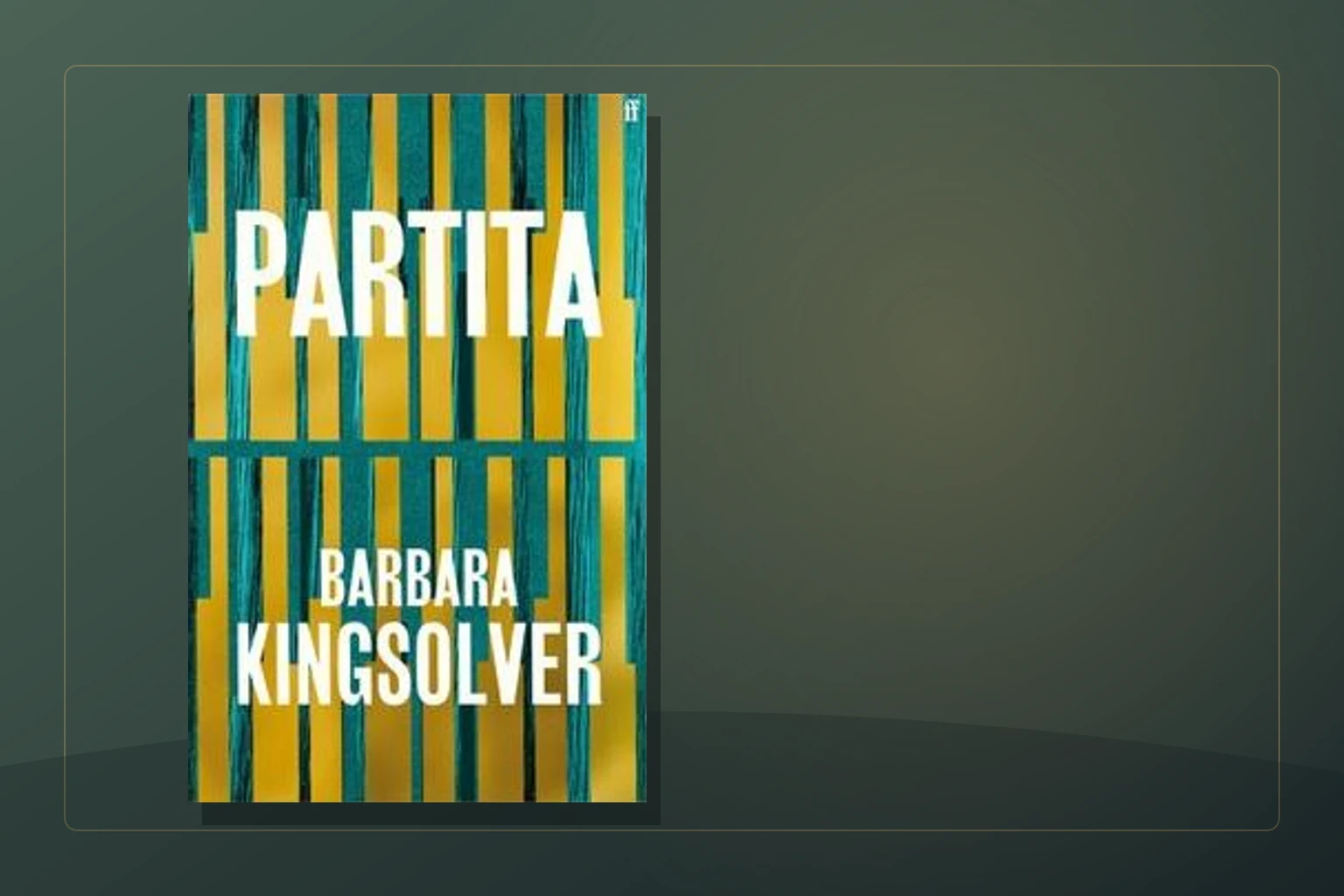
Partita: Barbara Kingsolver and the Music of an Unlived Life
A former pianist's unexpected reunion opens a question about art, class, and the lives we build around ambitions that never quite leave us.
A resonant premise that connects musical ambition, class, grief, and midlife reassessment.
The most arresting question in Barbara Kingsolver's Partita is not whether a former lover can rekindle an old romance. It is what happens when a person has spent decades treating an abandoned ambition as a settled fact, only to discover that the feeling behind it never disappeared. Livia Cable teaches piano and lives with her husband in the Tennessee farm country where she grew up. A call from Sigurd, a man from her conservatory years, makes an apparently stable life sound unfinished. The novel's public descriptions frame this reunion as a route back through music, class, family loss, and a younger self Livia has learned to keep at a distance.
That premise gives Kingsolver a more complicated subject than nostalgia. Livia was once Livia Bohusz, a scholarship student whose gift at the piano promised a way beyond a childhood on a farm shadowed by her brother Cyrus's death. The piano offered discipline, pleasure, and a possible future, yet talent alone could not cancel the pressures of money, grief, attachment, or the expectation that one should be grateful for whatever life remains. By the time Sigurd calls, Livia's modest work as a teacher suggests both continuity and contraction. She has not stopped making music; she has changed the scale on which she is allowed to imagine it.
The title is a useful key. A partita is a composition built from distinct movements, often dances, whose parts belong together without being identical. Publisher and trade descriptions indicate that Kingsolver moves between Livia's present and her years as a young musician. That structure appears especially apt for a story in which the past is not a neat explanation for the present. Every return to an earlier moment can alter the emotional weight of a later one. It may also challenge the easy idea that one decisive mistake produced every subsequent compromise. Lives rarely follow so clean a score.
The younger Livia's meeting with Sigurd at Indiana University matters partly because it brings different forms of ambition into contact. She has a scholarship and a rigorous art; he enters her life as a romantic possibility carrying his own convictions. The danger in such a story is that an absorbing lover will become a tidy answer to why a woman did not fulfill her promise. Kingsolver's stronger conceptual move, visible even in the book's framing, is to put desire beside other conditions: the distance between a farm and a conservatory, the unease of entering a more privileged social world, and the claims a family can exert on someone already marked by loss. Romance can intensify those pressures without single-handedly creating them.
Livia's present life deserves the same care. A farm, a marriage, and piano pupils are not merely symbols of defeat. Work that passes music to another person has value, and remaining close to home can be an active commitment. Yet the novel seems unwilling to let such truths become a consoling shortcut. If Livia tells herself that teaching is enough, is that a considered judgment or a way to avoid remembering what she wanted? If she reopens the past, does she seek Sigurd himself, or a chance to hear the ambitions she once silenced? The questions are compelling because several answers may be true at once.
Kingsolver's interest in class makes this more than a private midlife reckoning. Access to an artistic life depends on time, instruction, confidence, and the room to fail. A scholarship can open a door while leaving a student keenly aware that others arrived with social ease and family resources. Livia's movement from rural Tennessee into musical study therefore holds two strains of uncertainty: whether she can master the work, and whether she can imagine herself entitled to the world in which that work is valued. The second problem cannot be solved by practice alone.
The book also approaches grief as a long change in a family's language. Cyrus's death is part of Livia's childhood, according to Faber's account, and the silence that follows helps explain why music becomes a refuge. Music can express feeling without requiring the family to name it, but refuge can become a way of postponing conversation. That tension gives the art a double role. It is neither a magical cure nor an indulgence to be discarded when adult duties arrive. It is one of the means by which Livia understands experience, even when she cannot make experience obey its patterns.
Readers looking for a brisk romantic plot may find the novel's emphasis on memory and consequence more demanding. Publishers Weekly praises the characterization while finding some dialogue too explanatory; that is a useful caution for a book whose themes invite explicit reflection. The past-and-present design also risks making a reunion feel like a device unless the everyday texture of Livia's current life holds its own. These are judgments about the published critical response and premise, rather than claims to have examined every scene. They suggest that the best reason to pick up Partita is its moral and artistic question, not a promise of effortless escape.
That question is unusually resonant now. Contemporary culture often treats an unrealized calling as either a failure to be corrected or a dream one should simply outgrow. Kingsolver's setup makes room for a less convenient account: love for an art can survive changes in status, income, and family role, but survival does not erase regret. Livia's story asks whether returning to an earlier passion can enlarge the life she actually has, without pretending that time can be rewound or that other people owe her a different ending.
Partita looks most rewarding for readers who want a literary novel about the cost of adaptation: how a person can build a real life while continuing to mourn another. The romance supplies urgency, but music supplies the deeper measure. As Livia faces Sigurd's call, the choice is not simply between the past and the present. It is whether she can listen to both closely enough to make a more honest future.
EDITOR’S VERDICT
Tale24’s assessment
A resonant premise that connects musical ambition, class, grief, and midlife reassessment.
Points to considerThe reflective, two-period structure and occasional explanatory dialogue may slow readers seeking a brisk romance.
Best for: Readers of literary fiction about art, rural life, memory, and the complicated cost of compromise.
Editorial method: This is an independent assessment informed by the work and its official supporting information. AI tools may assist the drafting process; Tale24 reviews and takes responsibility for everything it publishes.