Literature & Thought · TALE24 REVIEW
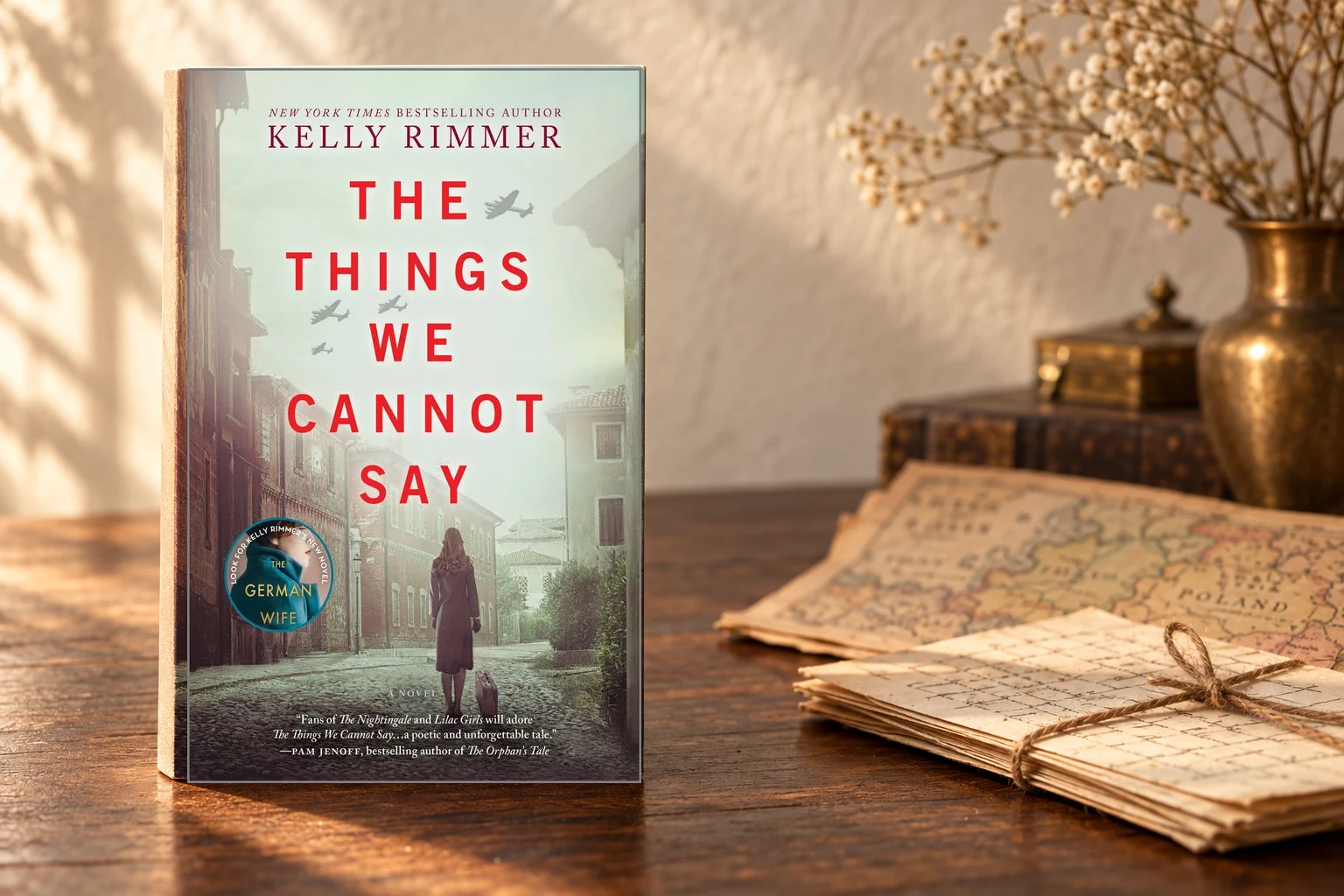
The Things We Cannot Say: The Cost of Silence Across Generations
Kelly Rimmer moves between wartime Poland and a modern family search to ask what silence protects, what it obscures, and how patiently another generation must listen.
A compelling dual timeline that links family memory, wartime uncertainty, and the difficult work of listening.
Kelly Rimmer's The Things We Cannot Say begins with a problem that is larger than a hidden family secret: what happens when someone urgently needs to speak, but history, illness, and habit have narrowed the ways she can be heard? The novel moves between Nazi-occupied Poland and a contemporary family trying to understand an elderly woman's past. That arrangement gives its mysteries emotional force, but it also invites a harder question. Is recovering the truth the same as understanding the choices made by the person who carried it?
In the historical strand, Alina Dziak is young, in love with Tomasz, and still able to imagine a future organized around their marriage. The Nazi occupation of her Polish village destroys the assumptions behind that future. Tomasz's disappearance changes waiting from a romantic interval into a form of uncertainty that can shape an entire life. Rimmer's premise is effective because it begins with plans that are ordinary and specific. War does not arrive as an abstract lesson; it enters a household whose members had expected to keep living much as they had before.
The contemporary strand follows Alice, whose responsibilities at home already demand more of her than she feels able to give. Her son Eddie's need for consistency and support is part of that pressure, while her relationship with her husband has its own strain. Then her beloved grandmother is hospitalized and struggles to communicate. A box of keepsakes and her grandmother's urgent request pull Alice toward Poland. The family investigation supplies a clear narrative engine, but it also changes the meaning of caregiving. Alice cannot simply perform the next useful task; she must learn to listen to a wish that is difficult to express and inconvenient to pursue.
The alternating timelines create a productive difference in knowledge. Readers can follow Alina's narrowing choices while Alice has only fragments to interpret. A photograph, a letter, and a small shoe are compelling because they are incomplete evidence, not because objects can explain a life by themselves. Their significance depends on whose story accompanies them. This is where the novel's title becomes more than a promise of revelations. Some things are unsaid because speaking is dangerous; others remain unsaid because a family grows used to a version of the past that seems settled. The same silence can protect, distort, and isolate.
Rimmer also uses the two settings to connect forms of powerlessness without pretending they are equivalent. Alina faces an occupying regime that divides neighbors and threatens lives. Alice faces exhaustion, family disagreement, and the fear of failing people who depend on her. These are radically different conditions. The point of the pairing is more persuasive when it shows how each woman must make choices under limits she did not choose, rather than asking us to measure one suffering against the other. The historical chapters carry the immediate danger; the present-day chapters show how an event can continue to shape descendants who know only a partial account.
That structure can make the book absorbing even for readers who know the broad outline of its wartime setting. One timeline asks what happened; the other asks how the survivors' silence has organized a family. The second question keeps the first from becoming a simple puzzle. It matters whether Alice finds an answer, but it also matters how she treats the person who has lived with it. Her grandmother's difficulty speaking gives the search a particular urgency. Time is limited, and patient attention becomes more valuable than the quick certainty that a family story might appear to offer.
The novel's emotional appeal is clear. A childhood attachment interrupted by war, an older relative reaching for words, and a granddaughter searching across borders are all powerful materials. Rimmer places them in a form that allows hope and dread to travel between chapters. Readers who enjoy historical fiction with a strong family mystery may appreciate that momentum. The book is less interested in withholding every fact until the end than in showing why learning a fact can alter the relationship between the people who hold it.
There is a trade-off in this design. A dual timeline can make each interruption feel deliberate, especially when one strand reaches a crisis just as the narrative turns away. Readers drawn primarily to Alina's wartime story may find Alice's domestic concerns comparatively slow; readers engaged by Alice's caregiving may wish the historical strand offered more room for ordinary life before danger takes over. The mystery framework can also encourage a tidy reading of a past that was neither tidy nor easily repaired. The strongest way to approach the novel is to resist treating every disclosure as a cure.
The wartime material asks for care from both writer and reader. Historical fiction can make a vast catastrophe legible through a small number of invented lives, but its intimate scale cannot stand in for the whole record. Rimmer's focus on Alina and Tomasz gives readers a route into the fear, separation, and compromised choices of occupation. It is an invitation to consider the pressure of that history, not a substitute for historical testimony. The book works best when its love story remains in tension with the violence around it rather than becoming an easy answer to that violence.
What finally gives The Things We Cannot Say its shape is the labor of translation between generations. Alice has to translate fragments into a possible account, a grandmother's gestures into a request, and inherited family knowledge into questions it may not be comfortable asking. Alina's strand reminds us that the original choices were made without the benefit of hindsight. The novel's considerable sentiment is strongest when it acknowledges that gap. Love may motivate the search, but love alone cannot make another person's past transparent.
For readers seeking an emotionally direct historical novel, Rimmer offers a strong combination of romance, family mystery, and intergenerational reckoning. Its shifts in time and heightened feeling will suit some readers more than others, and its revelations should not be mistaken for an argument that every silence can be neatly resolved. The lasting idea is quieter: when someone has spent a lifetime unable or unwilling to tell a story, listening well means making room for what remains difficult to say.
EDITOR’S VERDICT
Tale24’s assessment
A compelling dual timeline that links family memory, wartime uncertainty, and the difficult work of listening.
Points to considerThe alternating crises and heightened emotion may feel engineered to readers who prefer a quieter historical novel.
Best for: Readers of historical fiction and family mysteries interested in intergenerational memory and caregiving.
Editorial method: This is an independent assessment informed by the work and its official supporting information. AI tools may assist the drafting process; Tale24 reviews and takes responsibility for everything it publishes.