Literature & Thought · TALE24 REVIEW
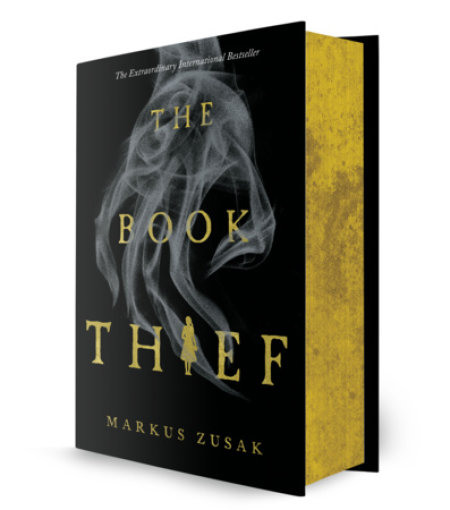
The Book Thief: Words Against the Language of War
Markus Zusak gives Death the narration and a foster child the books. The novel asks what reading can protect when public language is turned toward persecution.
An unusual narrative voice and a powerful link between literacy, care, and resistance.
In The Book Thief, the most consequential theft is not the removal of a book. It is a child's refusal to let a violent state decide which stories may survive. Markus Zusak places Liesel Meminger in Nazi Germany and gives the narration to Death, a figure who already knows how much a human life can lose. That unusual arrangement could have turned the novel into an exercise in cleverness. Instead, it makes a question about language unusually concrete: when official words are being used to organize hatred, what can a private act of reading still do?
The publisher's account introduces Liesel as a foster child living outside Munich in 1939. Her foster father helps her learn to read; she takes books when she encounters them and shares words with neighbors during air raids and with a Jewish man hidden in the basement. These are modest actions beside the scale of the war. Their smallness is precisely the point. Reading does not stop the bombing or erase the danger of sheltering someone. It gives frightened people a way to recognize one another as particular human beings rather than categories in a political speech.
Death's voice changes the expected shape of a wartime story. A conventional narrator might protect suspense by withholding the possibility of loss. Death cannot offer that comfort. This perspective shifts the reader's attention from the question of whether everyone will be safe to the question of what attention is owed to people whose safety cannot be promised. It also resists the false neatness of a heroic survival tale. The book can find wit, tenderness, and curiosity without pretending that these virtues guarantee a favorable outcome.
Zusak's most productive tension lies between the public force of language and its intimate use. A regime can fill streets and homes with slogans, repeat a lie until it sounds ordinary, and make a neighbor's identity seem like a threat. Liesel's growing literacy uses the same basic medium for another purpose. Words can be read aloud slowly, passed between people, or treasured because they carry the texture of a voice. The novel does not treat language as automatically good. Its interest is in the responsibility of the speaker and the listener: the same human capacity that spreads cruelty can help someone refuse it.
The foster home gives that idea a human scale. Liesel's relationship with her foster father is grounded in the patient work of learning, rather than in a sudden speech about moral courage. Literacy arrives through time spent together. That matters because the novel's ethical center is not an abstract declaration that books are precious. It is the labor of offering another person the tools to understand and answer the world. In a setting where public institutions are being bent toward exclusion, this domestic form of education becomes a quiet countercurrent.
The hidden man in the basement sharpens the stakes of such care. It would be easy to describe the arrangement as a simple emblem of goodness. Yet hiding anyone under a persecuting state also means fear, constraint, dependence, and the daily possibility of exposure. The book's premise asks readers to see solidarity as a practice with consequences, not as a flattering feeling. The language shared with him matters because a person kept out of public view must not also be erased from the household's moral imagination.
The novel's interest in stolen books is similarly richer than a slogan about the freedom to read. Ownership, access, and risk are unequal in Liesel's world. She cannot simply enter a safe library and expect every story to be available. Taking a book therefore becomes a way to claim a conversation from which she might otherwise be excluded. Still, the book is not valuable merely because it is rare or forbidden. Its meaning comes alive when it circulates: when a child learns from it, when a listener finds temporary shelter in its words, and when someone remembers that another voice exists beyond the language of power.
There is a possible limitation in the novel's chosen form. Death as narrator, together with the emphasis on the beauty of words, can make catastrophe feel shaped into an elegant design. Some readers may resist the lyrical distance created by that design, especially in a story set against historical atrocity. Others will find that the distance makes unbearable material readable without smoothing away its gravity. The most honest response is to notice both effects. Formal beauty is not a substitute for history; here it is a method for asking how to witness it without claiming mastery over it.
The Book Thief also deserves to be approached with care across generations. Its publisher classifies it as young adult historical fiction, but that shelf label does not make its treatment of war, persecution, and death light. Nor does the seriousness of its subject make it only a lesson assigned to students. Adult readers can find in its child-centered viewpoint a challenge to their own habits of explanation. Liesel is learning what words do at the same moment a society around her demonstrates their most dangerous use.
What remains most persuasive is the novel's refusal to equate hope with victory. A book read aloud cannot reverse public violence. It can make an hour of fear less lonely and help a person hold on to a self that official language tries to flatten. Zusak's narrative device keeps mortality visible while Liesel's acts of reading keep relationship visible. Between those two pressures, The Book Thief makes a measured case for literature: stories do not rescue everyone, but the ways we give, receive, and protect them reveal what kind of world we are willing to make together.
EDITOR’S VERDICT
Tale24’s assessment
An unusual narrative voice and a powerful link between literacy, care, and resistance.
Points to considerThe lyrical framing of historical catastrophe may create distance for some readers.
Best for: Readers of historical and young adult fiction interested in language, memory, and moral courage.
Editorial method: This is an independent assessment informed by the work and its official supporting information. AI tools may assist the drafting process; Tale24 reviews and takes responsibility for everything it publishes.