Literature & Thought · TALE24 REVIEW
The Shadow of the Wind: A Mystery About Keeping Books Alive
Daniel's search for a vanished writer turns postwar Barcelona into an archive of secrets. Zafón asks what readers owe to stories that nearly disappeared.
A richly layered Barcelona setting and an engrossing fusion of mystery and literary memory.
The Shadow of the Wind begins with a book that seems to have survived by accident. In postwar Barcelona, Daniel, the son of an antiquarian bookseller, discovers a novel by Julián Carax and learns that someone has been destroying the author's other works. Carlos Ruiz Zafón turns that premise into a mystery, but its deeper interest is the fragile chain by which stories reach a reader. A book can disappear through neglect as surely as through deliberate destruction. Daniel's search asks what changes when curiosity becomes a responsibility to people whose lives have been hidden.
The publisher places the opening in 1945, as the city is recovering from the Spanish Civil War. Daniel is also mourning his mother. The book he finds offers a route into another life at a moment when his own family history feels incomplete. This is not simply a romantic claim that literature heals grief. A novel can provide company without restoring what has been lost. Zafón's more interesting move is to let Daniel's private need for a story lead him toward the public histories and secrets that a city carries.
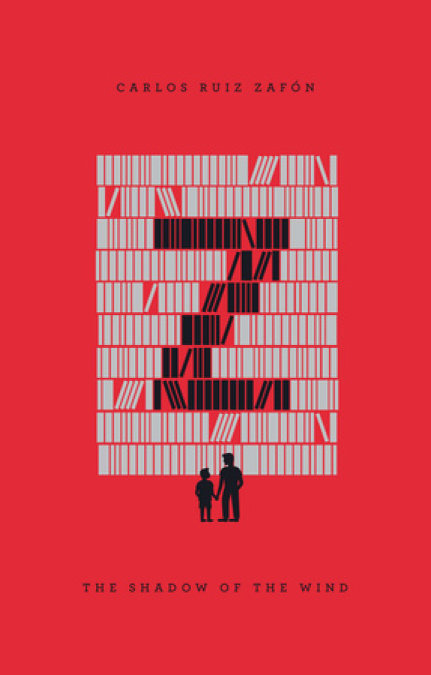
The Cemetery of Forgotten Books gives that move a memorable physical form. It is an archive imagined as a labyrinth, a place where preservation depends on somebody choosing a particular volume and caring for it. In the author's interview on the publisher's site, Zafón describes the setting as a metaphor for important people and ideas that ordinary life tends to neglect. The image works because it makes memory active. Books do not remain alive merely by sitting on shelves. Readers, booksellers, translators, and families have to make space for them.
Daniel's investigation is also a study in the difficulty of interpreting evidence. A missing copy, a rumor, or a hostile account cannot tell him everything about Carax. The mystery gives the reader the pleasure of following clues, but it continually raises the possibility that a story about someone else may be partial or self-serving. This is where the novel of books becomes more than a celebration of reading. To love a story is not necessarily to understand the person who wrote it, and to solve a mystery is not necessarily to settle every moral question it leaves behind.
Barcelona matters to that uncertainty. The publisher's description presents a city slowly emerging from war, while Zafón's interview explains that he wanted its historical layers to function as more than scenery. Streets, houses, and institutions can hold traces of what a community prefers not to discuss. A labyrinthine plot is therefore well suited to this place: Daniel does not move through a neutral map but through a landscape where private decisions have been shaped by public upheaval. The city becomes an archive with doors that open unevenly.
Zafón combines literary fiction with suspense, gothic atmosphere, romance, and the nested structure of a book within a book. These forms are not merely decorative ingredients. Suspense makes absence feel urgent; the gothic mode turns repression into a palpable mood; the embedded novel makes Daniel's act of reading part of the action rather than a pause from it. The book's scale invites the reader to move between close emotional attention and the pleasure of an elaborate design. That abundance is one reason the novel has remained a compelling recommendation for people who enjoy getting lost in a fictional world.
Yet abundance has a cost. A reader drawn primarily to the question of what happened to Carax may feel delayed by digressions, heightened coincidences, and shifts in tone. Readers who prefer understated realism may find the gothic machinery too visible. Zafón's stated ambition, however, is to make the modern novel draw on the sweep of nineteenth-century fiction while borrowing the pace and imagery of later storytelling. The question is less whether every turn seems probable than whether the design gives emotional weight to the act of searching. For many readers, it does.
The translated setting adds another layer to that experience. This English edition credits Lucia Graves as translator. A reader entering Barcelona through English is already taking part in the very movement across distance that the novel prizes. Translation cannot reproduce every association carried by a city, an idiom, or a literary tradition. It can nonetheless open a sustained encounter with them. The book's international reach should not make Barcelona interchangeable with any picturesque city of secrets. Its history and language are part of the pressure that gives the mystery shape.
The novel is especially strong when it refuses to let preservation become nostalgia alone. Rescuing a forgotten book may sound like an easy virtue, but memory can expose painful knowledge and unsettle the stories families tell about themselves. Daniel's attachment to Carax's work leads him into questions that are not settled by collecting a complete bibliography. What is owed to an author, to the people around that author, and to those who have inherited the consequences of their choices? Zafón makes the reader feel that the desire to know is inseparable from the risk of knowing.
The Shadow of the Wind is therefore more than a novel that flatters book lovers. It dramatizes the pleasures of reading while asking readers to notice how a story is preserved, suppressed, misremembered, and passed on. The mystery gives the pages momentum; the larger achievement is to make that momentum feel ethically charged. Daniel follows a vanished writer, but the novel's lasting question belongs to anyone who has ever found a book at the right moment: once a story has reached you, what kind of attention will you give it, and what will you allow it to change?
EDITOR’S VERDICT
Tale24’s assessment
A richly layered Barcelona setting and an engrossing fusion of mystery and literary memory.
Points to considerIts gothic turns and elaborate coincidences may overwhelm readers seeking quiet realism.
Best for: Readers who enjoy literary mysteries, historical settings, and novels about books.
Editorial method: This is an independent assessment informed by the work and its official supporting information. AI tools may assist the drafting process; Tale24 reviews and takes responsibility for everything it publishes.