Literature & Thought · TALE24 REVIEW
Tomorrow, and Tomorrow, and Tomorrow: The Work of Staying Friends
Gabrielle Zevin uses video games to ask what creative partners owe one another when affection, ambition, and ownership no longer move together.
A distinctive use of game design to examine creative partnership, credit, and lasting friendship.
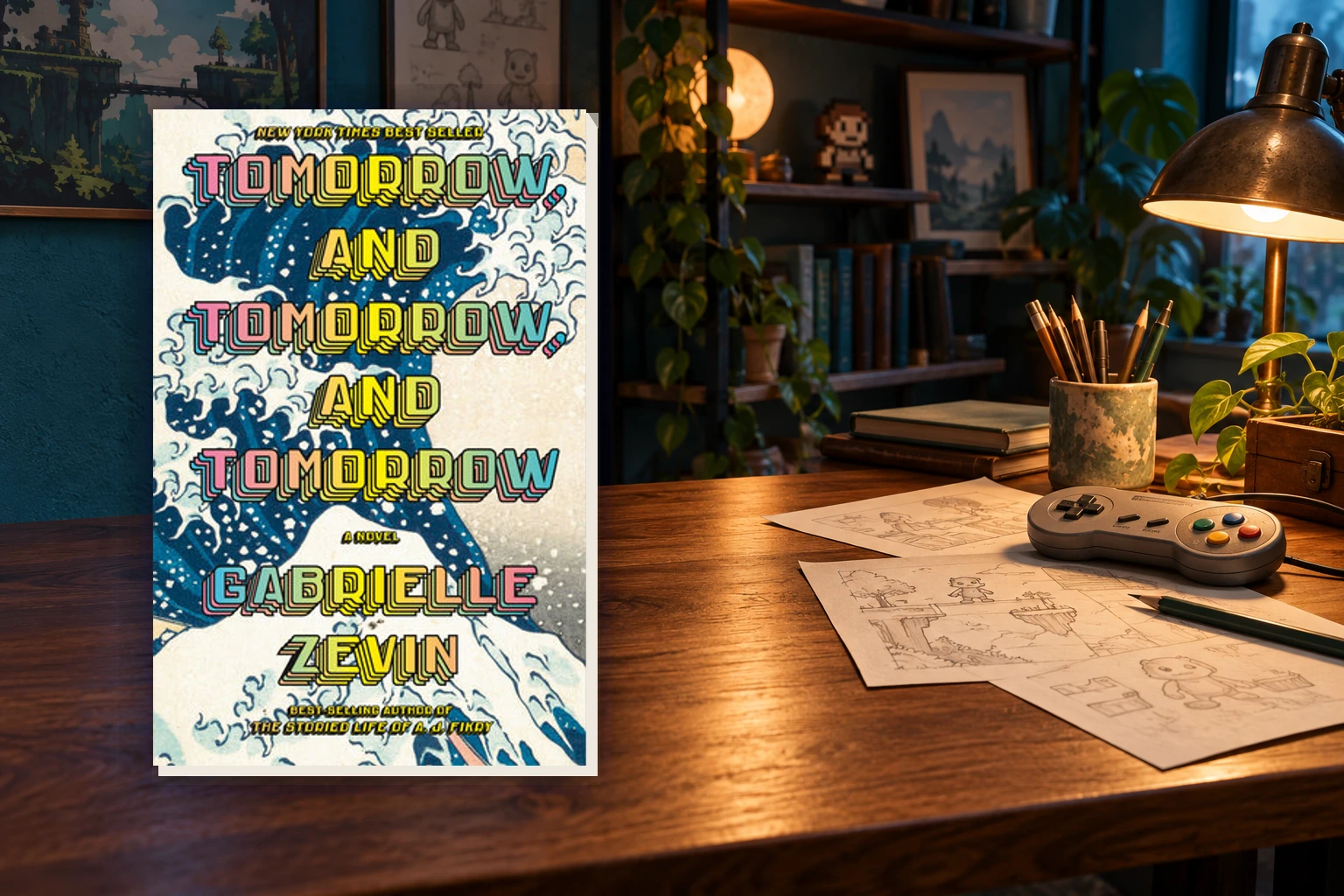
The most revealing word in Gabrielle Zevin’s Tomorrow, and Tomorrow, and Tomorrow may be “play.” Play sounds free, but making something that other people can play is work: hours of choices, compromises, criticism, and trust. Zevin’s novel follows Sam Masur and Sadie Green from a childhood connection to a celebrated partnership in video game design. Its durable subject is the friction between the open possibilities of a game and the narrowness that can enter a friendship when two people become responsible for the same creation.
The publisher describes a reunion on a subway platform during Sam’s college years, followed by the pair’s creation of a breakout game called Ichigo. That outline could support a tidy novel about talented young people succeeding early. Zevin’s premise instead makes success an awkward beginning. A shared project lets Sam and Sadie communicate with extraordinary intensity, yet it also gives them a new language for misunderstanding each other. When collaboration becomes a company and a public achievement, private gestures acquire professional consequences. A disagreement can be about an idea, an allocation of credit, or a need that neither partner knows how to state plainly.
This is why the game setting matters beyond novelty. A game is built from rules and possibilities; a friendship cannot be programmed so neatly. Players can restart, explore another path, or try a different strategy. People carry the knowledge of what they said and failed to say. The publisher’s interview with Zevin connects the title’s Shakespearean echo to the hope of beginning again. The novel’s emotional pressure comes from the limits of that hope. A restart can be imagined, and sometimes approached, but it cannot erase the history that made it necessary.
Zevin also treats creative labor as a relationship in its own right. The appeal of Sam and Sadie’s work lies in their ability to make a world together that neither could produce alone. That dependence is exhilarating and vulnerable. Readers who have made anything with another person will recognize the way a fruitful partnership can turn tiny judgments into signs of loyalty. Whose idea becomes central? Who takes a risk, and who absorbs the cost if it fails? The novel does not need to turn either creator into a simple villain to make those questions matter. Its interest is in the unevenness that can coexist with genuine affection.
The publisher places identity and disability among the book’s major concerns, and those subjects sharpen its account of design. Games can offer alternate bodies, extra lives, and temporary freedom from ordinary constraints. The attraction is real, especially when daily life imposes limits that cannot be wished away. Yet an invented world is never separate from its makers’ assumptions. A decision about what a player can do, what the game notices, or what it ignores can reveal the boundaries of its creators’ imaginations. Zevin’s fiction is at its best when the technology remains tied to the people who choose its rules.
The story’s long span, moving from Cambridge to California and through decades of change, provides another useful scale. What looks decisive to a young artist can look provisional later; what appears to be a minor hurt can become a habit of distance. The passage of time prevents the novel from treating one triumph or one rupture as a final definition of a person. It also allows friendship to remain difficult without becoming meaningless. Sam and Sadie are linked by shared work, but that work is neither proof that they understand each other nor a guarantee that they will continue to do so.
The book’s romantic vocabulary invites a productive correction. The publisher calls Sam and Sadie “often in love, but never lovers.” That distinction protects the story from the assumption that its deepest bond must resolve into a conventional couple. Creative intimacy can be passionate, jealous, sustaining, and disappointing without fitting the usual romantic arc. Zevin gives readers room to take a friendship seriously as an organizing force in adult life. The result is a love story in the broad sense: one concerned with attention, care, and the possibility that two people can keep choosing to meet after they have changed.
There is a risk in the novel’s very range. A thirty-year narrative that crosses artistic careers, personal loss, identity, and the cultural history of games can feel designed to contain every possible resonance. Some readers may prefer a quieter, narrower study of one partnership. Others may find the game vocabulary less intuitive at first. Zevin’s answer is to keep returning to recognizable human actions: making, withholding, forgiving, and attempting again. The technological setting works because those actions remain legible even to readers who have never cared about a console.
The novel also asks for a distinction between achievement and repair. A successful game can move millions of people and still leave its makers unable to solve an intimate problem. Likewise, a strained relationship can produce real art without justifying every injury sustained along the way. Holding both truths at once gives the book more weight than a celebration of brilliant creators. It asks readers to admire the worlds people build while noticing the people who must live beside those worlds.
Tomorrow, and Tomorrow, and Tomorrow is especially compelling when read as a novel about the maintenance of connection. Its games supply shape, color, and a language of second chances, but the most consequential choices remain outside the screen. Friendship requires an attention that no elegant system can automate. Zevin finds drama in the repeated decision to return, listen, and risk another imperfect attempt at understanding.
EDITOR’S VERDICT
Tale24’s assessment
A distinctive use of game design to examine creative partnership, credit, and lasting friendship.
Points to considerIts broad timeline and many thematic threads may feel expansive to readers seeking a tightly focused character study.
Best for: Readers of literary fiction about friendship, art, work, and the emotional life of technology.
Editorial method: This is an independent assessment informed by the work and its official supporting information. AI tools may assist the drafting process; Tale24 reviews and takes responsibility for everything it publishes.