Literature & Thought · TALE24 REVIEW
Trinh Cong Son and Bob Dylan: Shared Questions, Different Traditions
The comparison only makes sense when going through the differences in religion, history and literary tradition of the two artists.
Cross-cultural comparisons are rich in context and avoid surface similes
Calling Trinh Cong Son “Vietnam's Bob Dylan” creates a quick association, but also risks flattening two ideological journeys. Both wrote about war, love, loneliness and freedom; However, similar questions are raised from two very different cultures and historical experiences.
In Trinh Cong Son, the spirit of compassion, impermanence and Buddhist echoes contribute to the sad and quiet anti-war voice. In Dylan, the Judeo-Christian tradition, prophetic language, and apocalyptic imagery create a more thorny, questioning energy. Placing them side by side is therefore not to prove who is a version of whom, but to see how each artist has transformed his or her spiritual heritage.
The strength of interdisciplinary reading is to bring the lyrics back into historical, religious and literary contexts. The point to be careful is not to turn every artistic image into a fixed ideological code. Music survives on ambiguity; Good analysis should open listening rather than close off meaning.
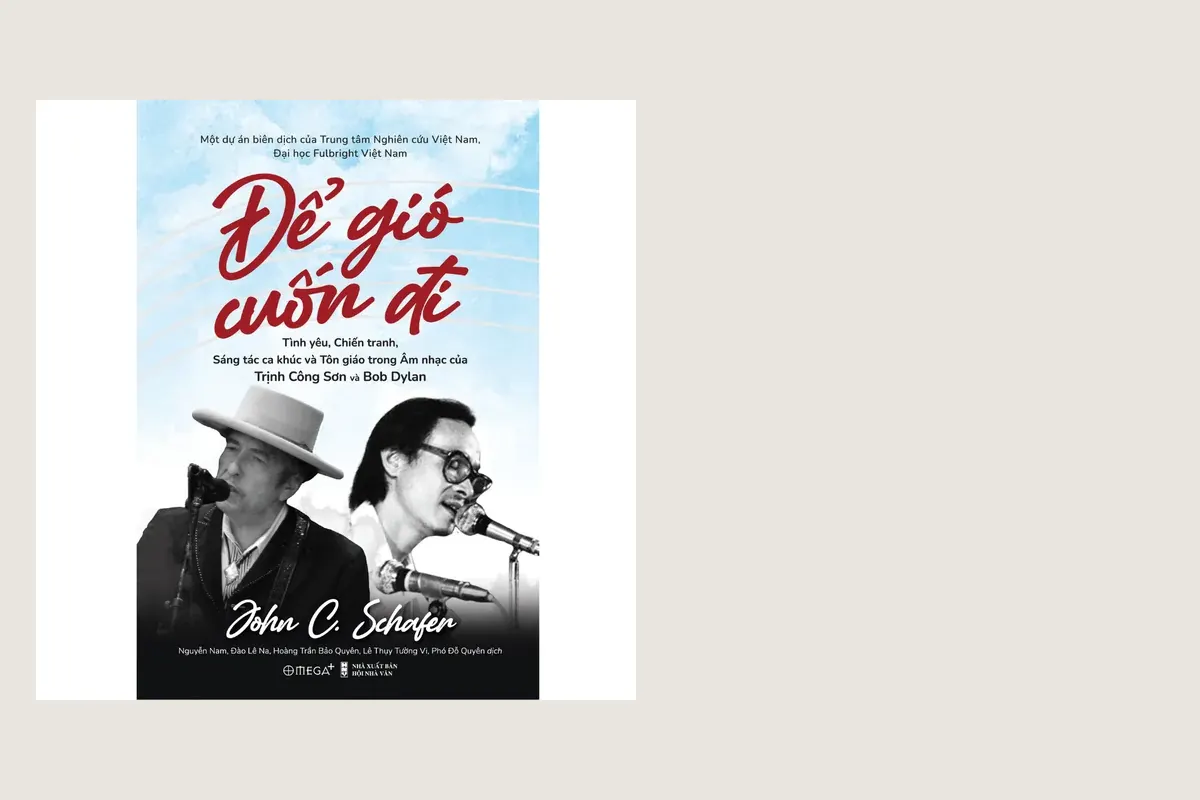
The comparison becomes more precise when it is treated as a question about translation across traditions. The publisher describes John C. Schafer's study as an essay collection on love, war, songwriting, and religion, and its contents separate those themes rather than presenting the musicians as interchangeable figures. That structure matters: a shared subject such as anti-war feeling does not establish a shared theology, audience, or political position. It gives the reader a reason to ask how musical form and inherited language shape different responses to similar historical pressures.
The “Vietnam's Bob Dylan” shorthand can open a conversation, but it can also make Dylan the measuring stick. A better comparison asks what each artist's songs do in their own linguistic and social setting: which images recur, what kinds of public feeling they make possible, and what ambiguities resist a neat label. Religious vocabulary is especially easy to overread. Buddhist resonance or biblical imagery may be relevant to interpretation, but a lyric should not be reduced to a doctrinal statement without close textual evidence and historical context.
The book's cross-disciplinary ambition is also its demand on readers. Those unfamiliar with Vietnamese musical history may need to pause over references, while readers approaching Dylan through English-language criticism may bring assumptions that do not travel cleanly. Treating the volume as a comparative framework, then following its references into the relevant histories, is more productive than using the pairing as a quick verdict on influence. The value lies in hearing both artists more distinctly after the comparison.
The publisher's thematic grouping offers a practical way to read the essays without forcing them into one conclusion. A reader can compare how each writer treats love, then return to war or religion and notice whether the same vocabulary changes meaning across contexts. This makes the book's form part of its argument: comparison is a set of repeated encounters, not a claim that the two songwriters form a perfect pair. It also helps prevent a single similarity from erasing differences in language, audience, and historical moment.
Music adds a further complication because songs circulate beyond the circumstances in which they were written. Listeners may adopt a song for a later movement, a private loss, or a different political moment. That afterlife can be significant without proving that the songwriter anticipated every later use. A careful discussion distinguishes the song's words and context from what later audiences make of it. This is particularly important when a song is treated as a direct statement of the artist's complete political or religious worldview.
For readers unfamiliar with either tradition, the best preparation is modest: listen to the works being discussed, notice recurring images before reading an interpretation, and then ask what the essay's historical framing adds. This does not replace scholarship or establish a definitive reading of a lyric. It gives the comparison something concrete to test. The book's success is not measured by whether it settles the “Vietnam's Bob Dylan” label, but by whether the label becomes too small to contain what the reader now hears.
The book's comparison also asks readers to think about how songs become public objects. A song may be written in a particular moment, performed for a particular audience, and later carried into situations its author did not control. Lyrics can be quoted, translated, covered, or remembered through changing political circumstances. Meaning is therefore neither sealed inside an original intention nor completely free of it. Good criticism makes room for the song's history and for the ways listeners extend it.
This is one reason a cultural comparison needs close attention to language. A translated line may preserve an image while changing rhythm, register, or association. A metaphor that sounds universal in translation may have local literary or religious echoes that a new audience cannot immediately hear. The comparison should make those gaps visible, not smooth them away. Readers can note when an essay relies on a translated lyric, whether it identifies the version under discussion, and what interpretive weight is placed on a particular word.
The same caution applies to claims of influence. Similar themes do not establish direct borrowing, and resemblance alone cannot tell us which artist shaped the other. Evidence about chronology, interviews, performance, or circulation would be needed for a historical claim of influence. Without that evidence, the strongest argument is interpretive: two bodies of work can illuminate different ways of answering related questions. That narrower claim is still worthwhile. It lets the reader compare artistic choices without turning a convenient label into an unsupported account of artistic lineage.
EDITOR’S VERDICT
Tale24’s assessment
Cross-cultural comparisons are rich in context and avoid surface similes
Points to considerThe large volume of references can slow the average reader down
Best for: Lover of music, culture and history of twentieth century ideas
Editorial method: This is an independent assessment informed by the work and its official supporting information. AI tools may assist the drafting process; Tale24 reviews and takes responsibility for everything it publishes.
KEEP READING