Literature & Thought · TALE24 REVIEW
We Were Liars: The Cost of a Family Secret
E. Lockhart’s island mystery builds a portrait of privilege, damaged trust, and a family’s guarded truths without giving away its defining revelation.
The island setting and compressed mystery join a powerful ending to questions about privilege and family silence.
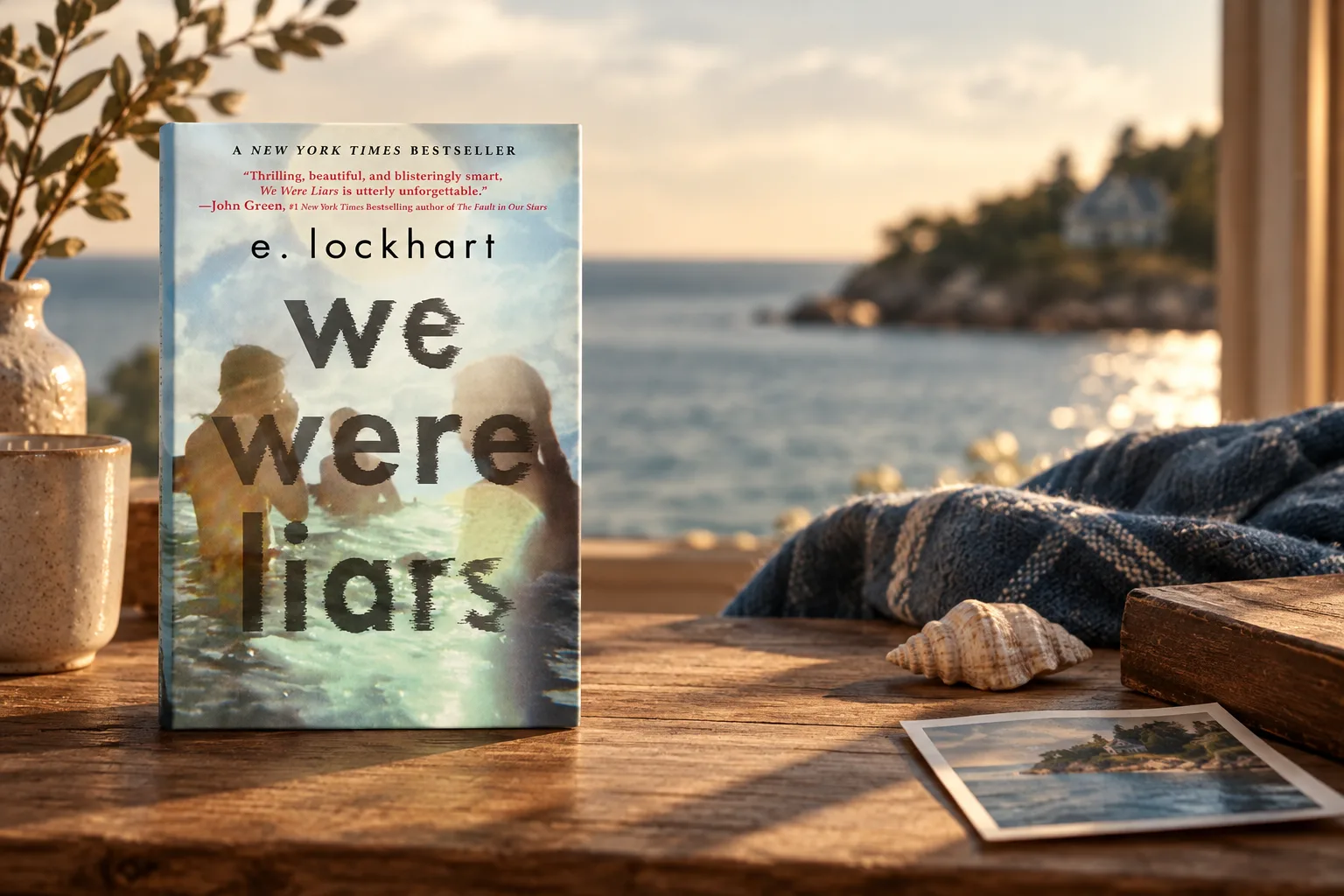
The quickest way to spoil E. Lockhart’s We Were Liars is to treat its ending as the only thing it has to offer. The publisher advertises a wealthy family, a private island, four young friends, an accident, and a secret. Professional reviews also call attention to a startling final revelation. Those facts establish the book’s appeal, but they leave a more interesting question open: why does a beautiful setting make a family’s refusal to speak plainly feel so threatening? The novel’s emotional charge appears to depend on the distance between an idealized summer and the damage hidden beneath it. A responsible review can examine that design without revealing what readers are meant to discover for themselves.
The island is a useful setting for a story about privilege. A private place can look like safety from outside, a summer world removed from ordinary obligations. Yet privacy also gives a family control over which accounts circulate and which do not. The publisher’s description places a distinguished family alongside a group whose friendship turns destructive. It is reasonable to read that pairing as a warning against confusing a polished environment with a healthy one. The island’s beauty is part of the pressure: when everything seems arranged for happiness, admitting harm can become harder. Wealth can protect appearances even when it cannot protect the people living inside them.
Four young friends form the group called the Liars. Their name announces a problem of trust before the publisher tells us the nature of any particular lie. It can suggest play, mutual loyalty, self-protection, or a shared decision not to name something painful. Those possibilities matter in young adult fiction, where friendship may offer a refuge from adult authority while also creating its own demands for belonging. The premise describes affection and destructiveness in the same circle. That tension gives readers more to consider than a mechanical hunt for clues: what does a group owe to one another when a story that binds it together may also be false?
The public description calls the central girl brilliant and damaged, and it mentions an accident. Those are enough facts to suggest that a reader’s access to events is constrained. A damaged perspective may make certainty difficult; it need not make the person at its center less worthy of care. Mystery often invites suspicion toward a character who cannot provide a complete account, but a humane reading asks what it costs to demand perfect clarity from someone in distress. Lockhart’s premise keeps the emotional and investigative questions close together. Readers want to know what happened, yet their wish for an answer may run ahead of their attention to the person who must live with it.
The publisher and several professional critics emphasize the force of the ending, with Booklist describing spare, precise prose and Publishers Weekly highlighting a tragic family drama. That reception supports discussing the book as a crafted experience rather than simply a viral surprise. Brevity and withholding can create speed; they can also make a reader supply meaning in the gaps. The more a story withholds, the more each image of family life bears interpretive weight. A late reversal works best when it changes the meaning of earlier choices, not when it asks for applause because information was kept secret. Readers can judge for themselves how fairly the novel meets that standard after finishing it.
The family’s social position sharpens the book’s ethical stakes. A distinguished public identity is a performance, and younger members may inherit expectations along with material security. The publisher’s compressed list of lies, love, an accident, and a secret suggests that personal loyalty competes with the desire to see events clearly. If adults control the terms of respectability, the young may learn to speak indirectly or to rebel without knowing what comes next. This is an interpretation of the available premise, not a disclosure of the plot’s hidden facts. It helps explain why the novel can prompt discussion about privilege even among readers who disagree about its final twist.
There is another reason to protect the ending. A spoiler can turn a shared reading experience into a test of who knew the answer first. A conversation about We Were Liars can instead ask how readers understood its atmosphere before the final pages, and whether that understanding changed afterward. Did the island feel welcoming, isolating, or both? When did affection begin to look like obligation? These questions let readers compare reactions without requiring anyone to expose the revelation to someone who has not read the book. The emotional aftermath, rather than the bare fact of surprise, is where the discussion becomes interesting.
The book also has limits. A structure built around concealment may frustrate readers who prefer a mystery in which they can openly test each clue as it arrives. The publisher’s terse description and critics’ emphasis on a dramatic ending suggest an experience shaped by disorientation. Some readers will find that unsettling in a productive way; others may feel that secrecy narrows their connection to the characters. The story’s brevity, often cited as part of its momentum, can make the family’s wider social world feel less available than in a longer realist novel. These are questions of taste and form, not reasons to dismiss its achievement.
Its young adult classification should not be treated as a promise of emotional simplicity. The official synopsis names love, damage, and family destruction, while professional reviewers describe tragedy and a difficult surprise. Readers looking for light summer escapism should know that the island setting carries darker material. At the same time, the book’s appeal to older readers, noted by the Wall Street Journal review quoted by the publisher, makes sense. The tension between the stories families tell publicly and what younger members understand privately is not confined to adolescence. Neither is the problem of caring for someone whose account you cannot entirely verify.
We Were Liars is strongest when considered as a book about the cost of preserving an attractive story. The private island and the four friends give the mystery a memorable surface; the accident and guarded family history disturb it. Its ending deserves to be encountered without advance explanation, but it should not eclipse the choices that make readers want to discuss it. The novel asks how beauty, affection, and status can coexist with harm, and what a young person must do when the account she has been given no longer holds. That question can stay with a reader after the shock has passed.
EDITOR’S VERDICT
Tale24’s assessment
The island setting and compressed mystery join a powerful ending to questions about privilege and family silence.
Points to considerReaders who prefer an open clue trail may find the novel’s withholding and disorientation frustrating.
Best for: Readers of emotionally intense young adult mysteries and book clubs seeking a spoiler-aware discussion.
Editorial method: This is an independent assessment informed by the work and its official supporting information. AI tools may assist the drafting process; Tale24 reviews and takes responsibility for everything it publishes.