Literature & Thought · CRITICAL ESSAY
The French Illusion: When a Honeymoon Becomes an Intelligence Trap
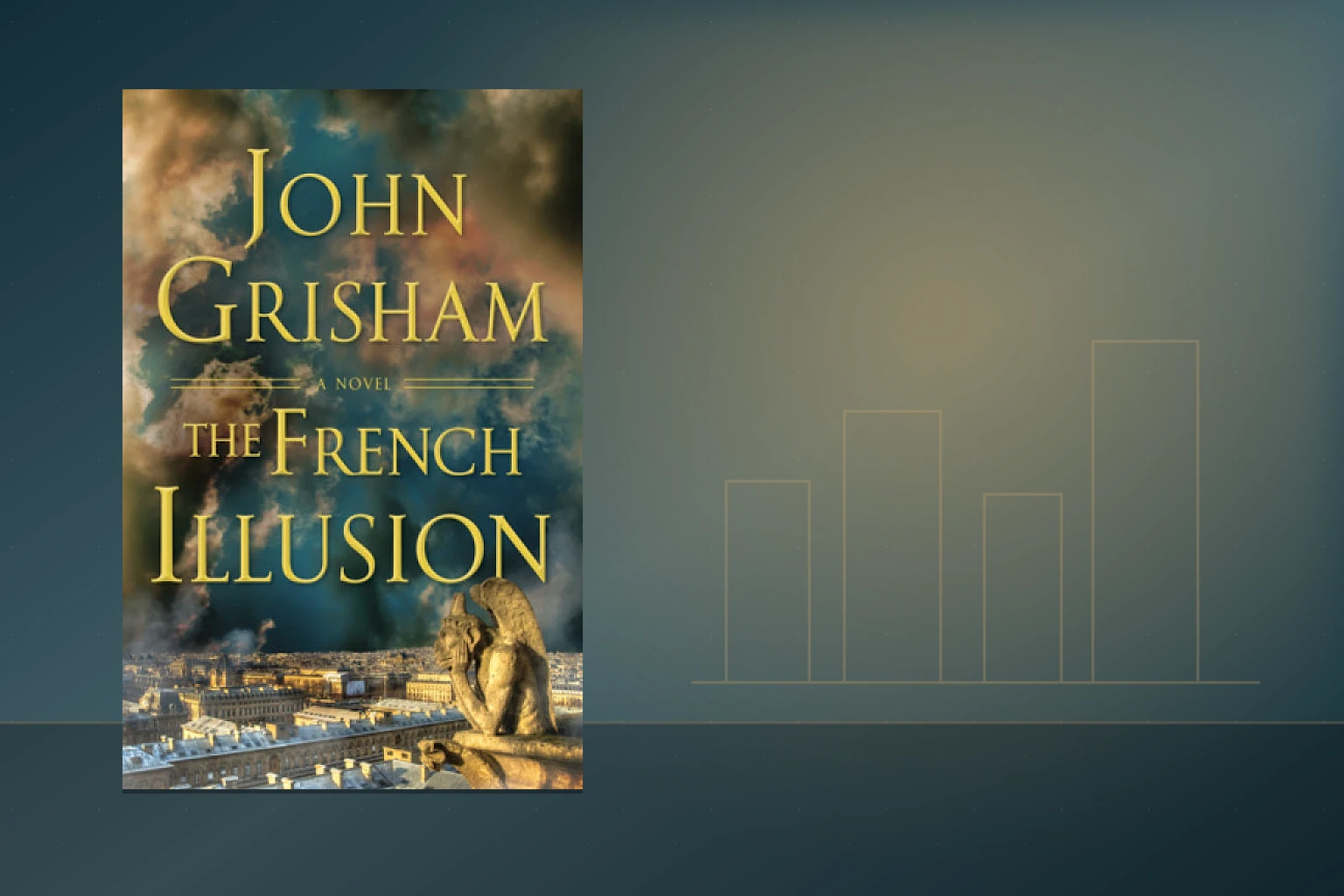
John Grisham's The French Illusion turns a honeymoon kidnapping into a contest between family trust and institutional strategy. Its parallel plots create suspense, while independent critics raise a fair question about the depth of its characters.
Clear international stakes and a striking shift from honeymoon to espionage
The French Illusion begins with a cruel reversal of the honeymoon story. Paul and Chelsea Tanner travel to Paris as newlyweds, with a future that seems newly open. A day trip into the French countryside ends in their kidnapping. The premise makes a familiar travel fantasy feel suddenly fragile: the freedom to move, explore, and trust strangers disappears when someone else controls the route. John Grisham then widens the frame. The couple's disappearance is not an isolated crime, and the search draws the FBI, CIA, and French intelligence into the same investigation. A private crisis becomes an international operation.
Kirkus's account reveals a concrete imbalance beneath the honeymoon premise: the two families face the ransom demands with very different resources. That makes money more than a numerical obstacle. The expectation that payment buys safety becomes another promise the victims cannot enforce. Later, the intelligence operation turns marriage itself into a performance intended to attract the kidnappers. Private commitment and institutional deception thus occupy the same narrative device. The contrast gives Grisham's move into espionage a recognizable ethical center: people must place trust in arrangements whose real terms they cannot see. It also complicates the simple opposition between innocent travelers and secretive agencies. Both family rescue and official strategy depend on uncertain information, while the people carrying the greatest risk have the least control over how success is defined.
The presence of a young lawyer sharpens that question. According to the publisher, the lawyer is recruited as bait in an elaborate CIA operation. The word bait matters because it reduces a trained professional to a position of exposure. Legal work normally suggests argument, procedure, and a chance to challenge an account of events. Bait has no such control over the moment when danger arrives. Grisham, whose reputation rests largely on legal fiction, brings a figure associated with evidence and rules into the less transparent world of espionage. Readers may come for the chase, but the setup invites them to think about what professional judgment can do when a mission depends on uncertainty.
The French setting is more than an attractive backdrop to the story's opening. A honeymoon abroad carries a particular confidence: the travelers can be outsiders because they expect their unfamiliar surroundings to remain welcoming. Once Paul and Chelsea are taken, unfamiliarity changes meaning. Language, geography, and jurisdiction may all complicate the search. None of that requires us to imagine a specific chase scene or secret passage. The verified premise already joins tourism's sense of possibility to the vulnerability of being far from home. It is an efficient way to turn a widely recognizable experience into the source of suspense.
Grisham also has room to make the cross-border investigation more than a parade of acronyms. Three named agencies imply different chains of command and different ideas about what information should be shared. In a thriller, coordination can create momentum, while hesitation can create danger. Yet the most useful tension is not simply whether officials are competent. It is whether a case can retain its human center as it acquires strategic importance. Paul and Chelsea are the reason for the search; a widening operation risks making them pieces of a larger puzzle. A strong version of this story would keep that imbalance visible even while its plot accelerates.
The title adds a suggestive layer without giving away a mystery. An illusion can be a deliberate deception, but it can also be an expectation a person brings to an experience. The Tanners' imagined honeymoon and the reality of their predicament sit on opposite sides of that word. So might the belief that an official plan is necessarily safer than personal improvisation. These are interpretive possibilities, not claims about a hidden twist. The useful question for a reader is how the novel turns apparently reliable surfaces into things that have to be tested: a beautiful destination, an institutional promise, or an account offered at exactly the right time.
The book arrives with a commercial thriller's clear invitation. Doubleday published it in September 2026, and the publisher presents it as a 352-page spy suspense novel. Grisham has said that espionage writers including John le Carré, Ken Follett, Robert Ludlum, and Len Deighton influenced him. That lineage suggests an interest in hidden motives and competing loyalties, although this book must be judged on the choices it makes for itself. It is useful context for readers who know Grisham chiefly through courtrooms. The emphasis here shifts from a case argued in public to an operation whose crucial decisions may occur out of view.
Publishers Weekly offers a more specific reservation than the fear that a large plot might crowd out character: it finds the characterization thinner than in Grisham's strongest work, while praising the suspense generated by parallel storylines. Those judgments can coexist. Cutting between endangered captives and institutional pursuit lets readers recognize connections that neither side fully understands, but that momentum may give less room to the texture of a marriage or an investigator's doubts. This is the relevant bargain for prospective readers. The book's appeal lies in coordination, pressure, and competing information; a desire for deep domestic characterization may not be answered by the same narrative machinery. The distinction makes the recommendation more precise than calling the book simply fast or cinematic.
What makes The French Illusion appealing is the way its simple opening keeps generating harder questions. A honeymoon is supposed to belong to two people; a kidnapping brings strangers into their most intimate plans; an intelligence operation may ask another person to step into danger for reasons they cannot fully inspect. Each change of scale tests the distance between trust and control. The novel should suit readers who want a brisk international thriller with a legal professional caught inside the machinery of espionage. Its most promising suspense lies not only in who committed the crime, but in what it takes to find the truth without losing sight of the people at its center.
CRITICAL PERSPECTIVE
Tale24’s assessment
Clear international stakes and a striking shift from honeymoon to espionage
Points to considerThe suspense-driven parallel narratives may leave less room for characterization; the abduction and torture material is disturbing.
Best for: Readers of international spy thrillers and Grisham’s legal fiction
Editorial method: This is Tale24’s original analysis of the published material and attributed criticism. The sources and evidence limits are listed below.
READING AND RESEARCH
Sources and scope
This essay combines the published material and the attributed sources below. It does not claim firsthand reading of the complete book.
- Kirkus: The French IllusionIndependent review
- Publishers Weekly: The French IllusionIndependent review
Sources checked November 5, 2026.
KEEP READING