Science & Nature · TALE24 REVIEW
Everything Is Tuberculosis: A Disease Shaped by Choice
John Green connects one young patient's story to the long history of tuberculosis. The book's challenge is to see a treatable infection as a question of access, attention, and collective choice.
Connects a human story to the social conditions that determine whether medical knowledge reaches patients
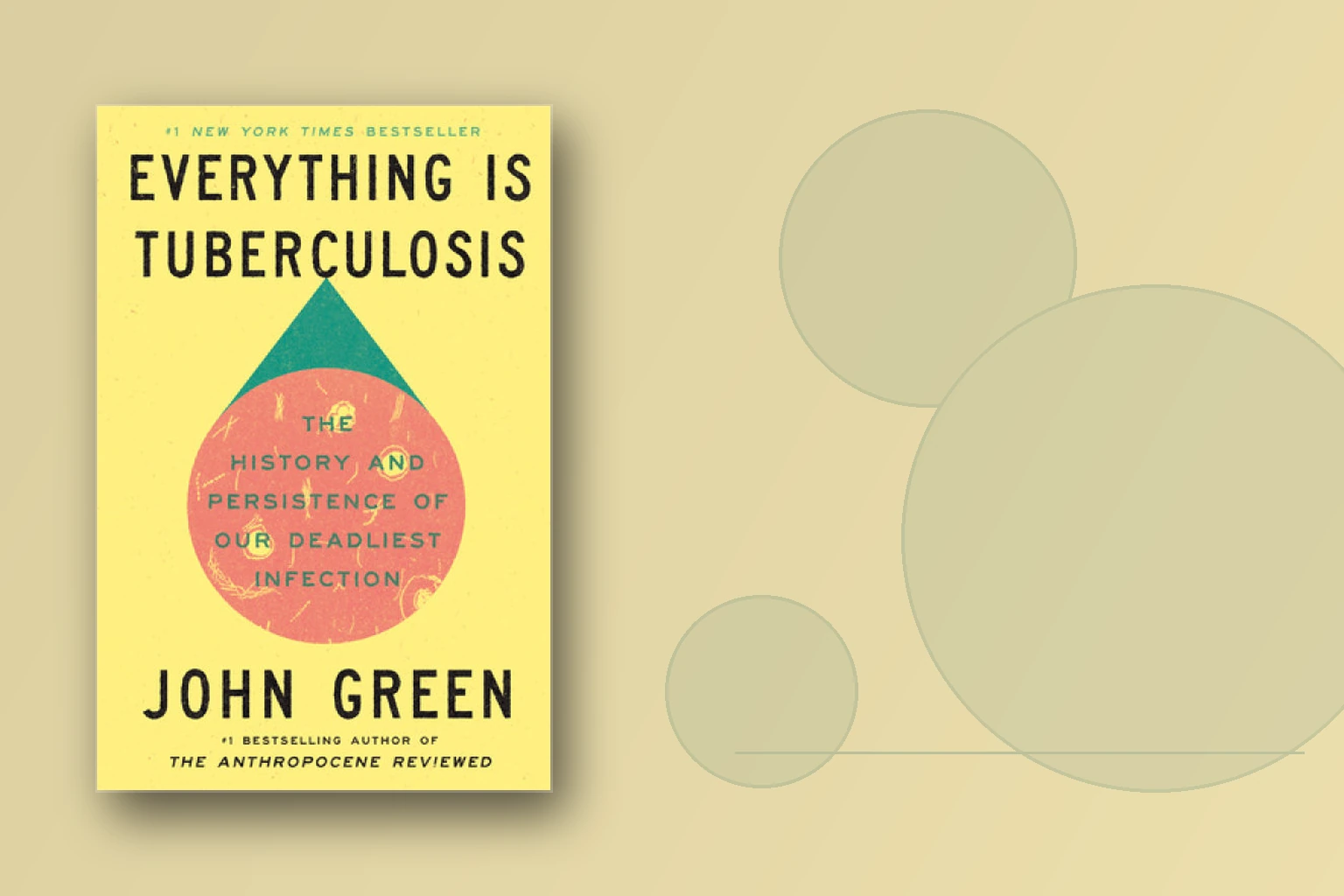
A disease can have a known cause and still be allowed to devastate lives. That gap between medical knowledge and human outcome is the ground John Green covers in Everything Is Tuberculosis. His book begins from a relationship with Henry Reider, a young patient he met at Lakka Government Hospital in Sierra Leone in 2019, and expands toward the science and social history of tuberculosis. The movement matters. Green does not present one boy as a statistic dressed up for sympathy; he asks what a statistic hides about the decisions that determine whose illness receives sustained attention.
The publisher describes tuberculosis as preventable and curable, while also noting that it kills more than a million people a year. That apparent contradiction is the book’s engine. If treatment exists, persistence cannot be explained by biology alone. Access to diagnosis, medicine, and dependable care varies across borders and within them. Green’s focus on inequity makes the title less a claim that every problem literally traces back to one bacterium than an insistence that the story of this disease touches many parts of our world. Housing, resources, political priorities, and the value placed on different lives become part of its history.
There is a risk in any nonfiction book that follows an individual patient while arguing for systemic change. A person can be made into an illustration of a policy problem, their particularity disappearing beneath the writer’s message. Green’s stated friendship with Henry raises that standard of care even higher. The most responsible way to receive the book is to keep Henry in view as someone with a life beyond his diagnosis. The narrative frame promises emotional proximity, but readers should also notice the asymmetry between a celebrated writer who can tell the story and a patient whose experience is being told. Ethical attention requires more than feeling moved.
Green also revisits the cultural stories attached to tuberculosis. The publisher notes its earlier romanticization as an illness of poets and its present association with poverty. Neither frame is innocent. Romantic language can make suffering seem beautiful from a safe distance; a label tied to poverty can make the people affected seem remote or somehow responsible for the conditions around them. The shift between those images exposes how easily a society changes the story it tells about a disease without changing the care it offers. A history of tuberculosis is therefore also a history of what observers have preferred to see.
Science writing has to translate complex processes without flattening them. Green’s accessible approach appears designed for readers who may know the name of the infection but little of its continuing reach. The book’s promise is not a clinical manual. It is a way to connect biological facts with questions of time, money, trust, and public obligation. That distinction is useful: learning that a treatment exists is only the first step toward asking whether a person can actually receive and complete it. Medical possibility and lived availability are separate measures, and Green keeps pressing on the space between them.
The compactness of the hardcover edition, listed by the publisher at 208 pages, gives this argument urgency. A relatively short book can bring a broad audience into a subject many readers may have treated as historical. It can also compress large differences among countries, health systems, and patients. Anyone looking for a comprehensive technical account of tuberculosis research or an exhaustive comparison of public health programs will need more specialized sources afterward. That limitation need not weaken the book’s central task. Its value lies in making readers recognize why those sources and programs matter in the first place.
Green is already known for fiction that treats young people’s vulnerability with seriousness. Here the stakes are nonfictional, and the familiar warmth of his voice must answer to a different standard: accuracy and respect for the person whose story gives the argument its center. The publisher presents Henry’s experience alongside science and history, a combination that can resist two common failures. One is an abstract discussion of mortality that never evokes an individual life. The other is a moving personal story that leaves the machinery of preventable suffering unexplained. The book’s strongest idea is that feeling and explanation should sharpen each other.
Its advocacy is also open to challenge. A clear moral case can tempt a writer to present a complicated field as a simple matter of will. Health systems must deal with logistics, resources, and difficult tradeoffs. Yet complexity should not become a way to evade responsibility. Green’s argument, as the publisher frames it, asks readers to hold both truths together: the work is hard, and the outcomes are shaped by choices. Acknowledging practical barriers is a reason to examine them closely, not proof that inequity is natural or inevitable.
Everything Is Tuberculosis is an invitation to revise where we place the boundary of a medical story. The bacterium is real, and the scientific work around it is indispensable. So are the human systems that decide how widely knowledge and treatment travel. Green’s account turns attention outward from a single hospital encounter without asking us to forget the person who made the subject immediate for him. Readers may finish with more questions than a short book can answer. That is a useful result if those questions are more specific than vague concern: who has care, who is waiting, and what choices have made that difference seem acceptable?
EDITOR’S VERDICT
Tale24’s assessment
Connects a human story to the social conditions that determine whether medical knowledge reaches patients
Points to considerIts brief, advocacy-driven form cannot serve as a comprehensive technical history of tuberculosis care
Best for: General readers of narrative nonfiction, public health, science writing, and social history
Editorial method: This is an independent assessment informed by the work and its official supporting information. AI tools may assist the drafting process; Tale24 reviews and takes responsibility for everything it publishes.