Literature & Thought · TALE24 REVIEW
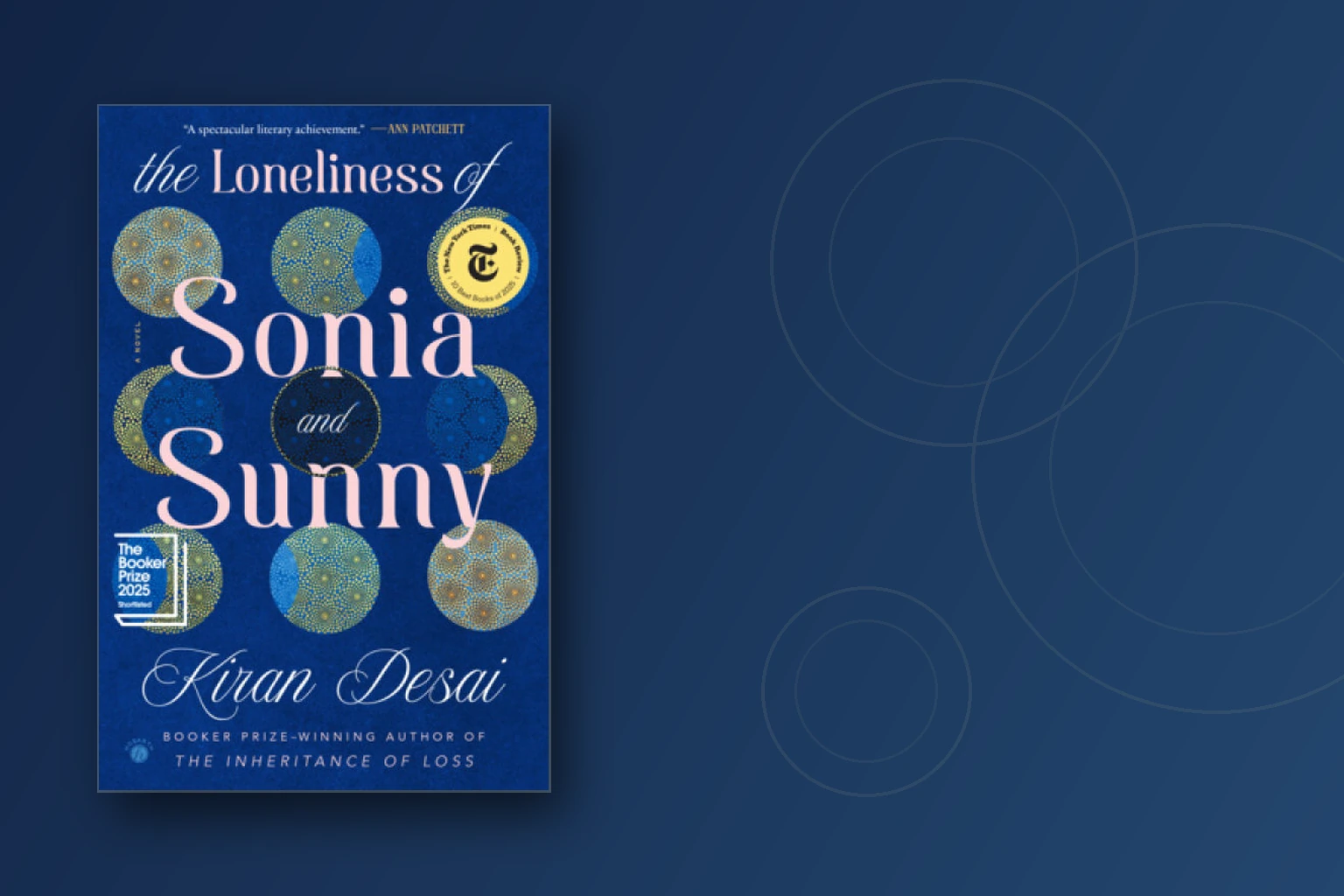
The Loneliness of Sonia and Sunny: Love Across Inherited Distance
Kiran Desai places a possible romance inside families and histories that refuse to stay in the background. The novel asks whether intimacy can grow without pretending those pressures have vanished.
An ambitious romance that lets family history, migration, and artistic identity complicate intimacy
A family can introduce two people before they have had the chance to meet each other. In Kiran Desai’s The Loneliness of Sonia and Sunny, the protagonists’ grandparents once attempted to arrange their match. By the time Sonia and Sunny glimpse one another on an overnight train, attraction is tangled with embarrassment. The older generation has already placed a story around them, and they must decide whether there is room inside it for a relationship of their own. That tension makes this expansive novel more than a romance with a large supporting cast. It asks how love begins when the language for it has been inherited.
Sonia is an aspiring novelist who studied in Vermont and has returned to her family in India. The publisher describes her as fearing a dark spell connected to an artist she once turned to for intimacy and inspiration. Sunny is a journalist living in New York, trying to put distance between himself and an imperious mother and a family marked by conflict. These outlines are not interchangeable versions of homesickness. Sonia’s return and Sunny’s departure pull in different directions, and each must sort personal desire from obligations and fears that preceded the other. The novel’s scale allows those forces to remain visible rather than reducing them to obstacles in a tidy courtship.
The title is unusually exact about its emotional subject. It does not promise that two lonely people will cancel out each other’s solitude. Sonia and Sunny carry private histories that attention from a partner cannot simply erase. A relationship can offer recognition, but it can also reveal the distance between what one person needs and what another can understand. Desai’s interest in that distance keeps the love story from becoming a cure-all. The possibility of happiness is compelling because the novel takes seriously the difficulty of reaching it, not because it pretends the difficulty was a misunderstanding waiting for one perfect conversation.
The book’s movement between India and the United States gives that difficulty a broader geography. To cross a border is to change the terms on which a person is read by others: accent, profession, family expectation, and social standing can acquire a different weight. The publisher and Booker Prize materials identify country, class, race, and history as forces shaping the novel’s lives. Those are not merely background topics for a couple to discuss. They alter the choices available to each person and the stories families tell about what success should look like. Desire is never entirely private when the world assigns costs to the lives people want.
Sonia’s wish to write gives the novel another useful pressure point. A novelist tries to turn experience into form, but not every experience is safe or easy to narrate. The troubling artist in her past complicates any simple association between creativity and liberation. Sunny’s work as a journalist suggests a different relationship to narrative: reporting asks him to observe and explain a world from which he may also feel estranged. These professions offer a way to think about the book’s larger question of who gets to interpret a life. The point is not that either character can solve loneliness by telling the right story, but that stories can hold people close or make them feel misread.
An epic of this length asks more from readers than a concentrated love plot. At 688 pages in the publisher’s hardcover listing, The Loneliness of Sonia and Sunny makes space for generations, places, and competing accounts of what a family owes its members. That room is a strength when it prevents easy judgments. A controlling relative may also be acting from a history of fear; a younger person’s wish to leave can coexist with a need to belong. Such complexity can slow the central romance, and readers who want every scene to move Sonia and Sunny toward one another may find the novel’s wider attention demanding. Its amplitude is part of its argument: no couple meets in an empty room.
Desai’s earlier The Inheritance of Loss won the Booker Prize, while this novel was shortlisted in 2025. Those facts explain the anticipation around a long-awaited return, but they are not a substitute for reading the new work on its own terms. Here the apparent grandeur of a transcontinental saga is grounded in an intimate embarrassment: two people must encounter each other after relatives have already imagined their future. That small social awkwardness does more than make a memorable opening situation. It establishes the difference between being loved as a person and being selected as the answer to someone else’s hopes.
The novel’s ambition also invites scrutiny. A book that reaches for romance, family history, art, migration, and modern alienation may sometimes feel crowded, especially to readers drawn by its central pair. Yet the crowding serves an honest purpose. Loneliness is rarely a condition produced by an absence of people; it can be felt most keenly amid relatives, expectations, and well-meant advice. Desai’s many social worlds make that paradox legible. The question is whether Sonia and Sunny can hear one another within the noise, not whether the noise can be wished away.
The Loneliness of Sonia and Sunny is best approached as a generous, patient novel about the work of seeing another person. Its romantic promise is real, but it carries no guarantee of escape from class, family, memory, or geography. For readers willing to follow a long arc, that refusal of an easy rescue is what gives the title its pull. Love may not end loneliness. It may begin when two people stop asking the other to make every inherited distance disappear and attempt, instead, to cross a little of it together.
EDITOR’S VERDICT
Tale24’s assessment
An ambitious romance that lets family history, migration, and artistic identity complicate intimacy
Points to considerIts broad, 688-page scope may feel slow to readers seeking a tightly focused love story
Best for: Readers of literary family sagas, migration fiction, and patient, idea-rich romances
Editorial method: This is an independent assessment informed by the work and its official supporting information. AI tools may assist the drafting process; Tale24 reviews and takes responsibility for everything it publishes.