Literature & Thought · TALE24 REVIEW
More Dragons, Less Main Plot: What Threshing Day Offers Empyrean Fans
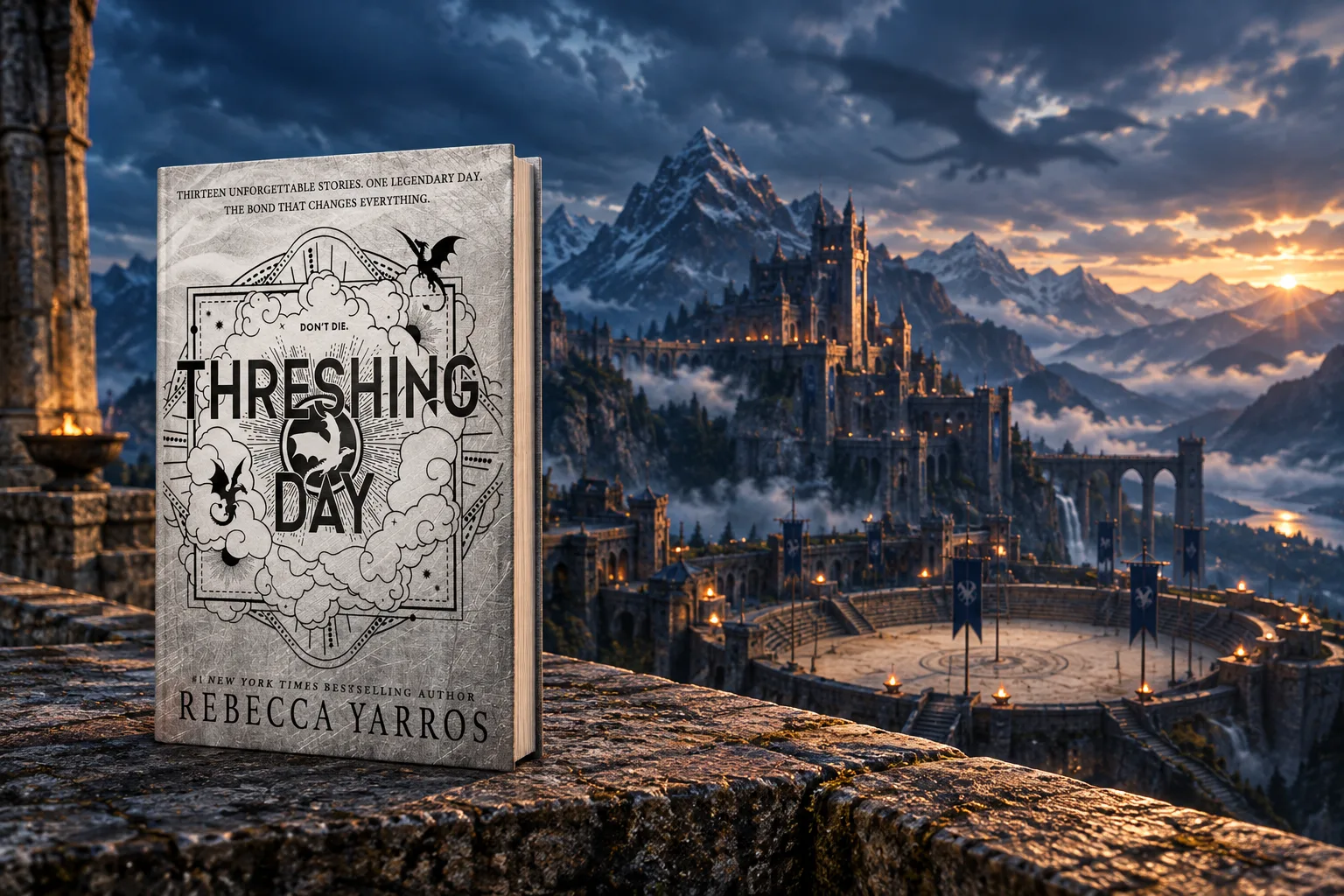
Threshing Day offers 13 character perspectives and illustrations from Rebecca Yarros’s Empyrean world, but it is a companion collection rather than a plot-driven sequel. That distinction makes it a treat for established fans—and a poor starting point for newcomers.
A clearly focused companion premise; 13 character perspectives expand the series’ range; illustrations add a visual dimension for existing fans.
A companion book has a different promise from a sequel. A sequel moves the central story forward; a companion volume invites readers to spend more time inside a world they already know. Rebecca Yarros’s Threshing Day makes that distinction unusually important. Its official description presents 13 stories from 13 characters about dragon bonds on Threshing Day, while Kirkus describes an illustrated collection without an overarching plot and cautions that it is not for new readers. The right question, then, is not whether this book replaces the next Empyrean novel. It is whether returning fans want more angles on the world they have chosen to inhabit.
The number 13 gives the collection its basic shape. Instead of following one continuous narrative, the book distributes attention across a group of characters and perspectives. That structure can make a fictional world feel broader: the same defining event or custom can be approached from different positions, and a reader’s understanding can become less dependent on one central viewpoint. In a series where dragon bonds are a major part of the setting, a collection organized around Threshing Day has a clear thematic center. The form promises variation within a recognizable frame.
That variety is also the main tradeoff. Without an overarching plot, momentum cannot come from one escalating chain of events in the way it does in a conventional novel. Readers have to find their satisfaction in shifts of perspective, added texture, and the pleasure of revisiting an established setting. For some, that is exactly the appeal: familiar characters and customs can be interesting precisely because the main series has already made them matter. For others, the collection may feel more like an assortment of extras than an essential next chapter.
Kirkus’s warning that Threshing Day is not for new readers is useful consumer guidance. A book can be technically readable without prior knowledge and still work best after the reader understands its world. Companion fiction often depends on recognition: a name, institution, relationship, or ritual carries more emotional weight when the reader already knows why it matters. The official premise itself places the stories inside the Empyrean setting rather than introducing it from scratch. Someone curious about Yarros’s fantasy world will likely get more from starting with the primary series, then returning to this collection when its references have context.
For series readers, the anthology format provides a different kind of access. A long fantasy series tends to direct attention toward the main line of conflict. Side stories can loosen that focus and let other characters occupy the center, at least briefly. Threshing Day’s stated premise gives each of 13 characters a story connected to the same occasion, creating an opportunity to compare how people experience a shared world. The appeal is not necessarily new lore in the encyclopedic sense; it is the change in scale that comes from letting more voices participate.
The book’s illustrations matter to that experience as well. A companion volume can use images to make a return to the fictional world feel tangible, giving the reader a visual pause between stories. The presence of illustrations also signals that this edition is meant to be handled as an object for fans, not simply consumed as another installment in a sequence. For a reader who enjoys collecting series material, visual presentation may contribute to the pleasure. For one who primarily wants plot progression, illustrations will not compensate for the deliberate absence of a single through-line.
This makes Threshing Day a particularly clear case of matching the purchase to the reader’s expectations. If someone has finished the main books and wants to linger with familiar characters, a multi-voice collection can extend that attachment without pretending to be the next major plot movement. If someone is waiting for the central story to advance, the format could disappoint. The publisher’s description centers the collection on the ritual and its characters, while Kirkus explicitly identifies the lack of an overarching plot. Those are not small-print qualifications; they define what the book is.
There is a strong demand signal around the title. On the AP/Publishers Weekly hardcover fiction list dated October 29-30, 2026, the standard edition ranked second, and a deluxe edition also ranked highly. That shows substantial current interest in the Empyrean world. It does not tell us whether a reader will prefer a collection to a novel, and it cannot promise future sales or satisfaction. But it does suggest there is an active audience for additional material, which is exactly the audience this kind of book serves best.
The question for a potential buyer is how much they value breadth over forward motion. Thirteen perspectives offer a wider invitation into the setting, but they also divide the book into separate units. Readers who enjoy anthologies and character-focused additions may welcome that rhythm. Readers who want one sustained arc may find it fragmented. Since the available descriptions do not detail every story, it would be unfair to claim that all entries work equally well or to promise particular character revelations. The more reliable recommendation comes from the format itself: expect a set of connected companion stories, not a full-length plot engine.
Threshing Day sounds like an affectionate return to the Empyrean world with a specific audience in mind. Its 13-character structure, shared occasion, and illustrations offer established readers a chance to revisit the series from multiple directions. The lack of a central plot is a real limitation for anyone expecting a conventional sequel, and the book is a poor first introduction for newcomers. Fans who already know the world and want more of its voices are the readers most likely to find this collection worthwhile. For them, the value is not in moving the story farther down the road; it is in spending longer among the people and bonds that made the journey matter.
EDITOR’S VERDICT
Tale24’s assessment
A clearly focused companion premise; 13 character perspectives expand the series’ range; illustrations add a visual dimension for existing fans.
Points to considerThere is no overarching plot, so it may feel fragmented to readers seeking a conventional sequel; newcomers lack the context the collection assumes.
Best for: Readers already familiar with Rebecca Yarros’s Empyrean books who want additional character perspectives and illustrated companion material.
Editorial method: This is an independent assessment informed by the work and its official supporting information. AI tools may assist the drafting process; Tale24 reviews and takes responsibility for everything it publishes.