Psychology & Skills · CRITICAL ESSAY
Mindset: What Endures After the Replication Debates
Carol Dweck's popular framework transformed American schools and coaching, yet peer-reviewed meta-analyses and her own warnings against 'false growth mindset' clarify where its claims actually hold.
Translates attribution and praise research into clear, memorable habits for parents, teachers, and coaches supporting resilience.
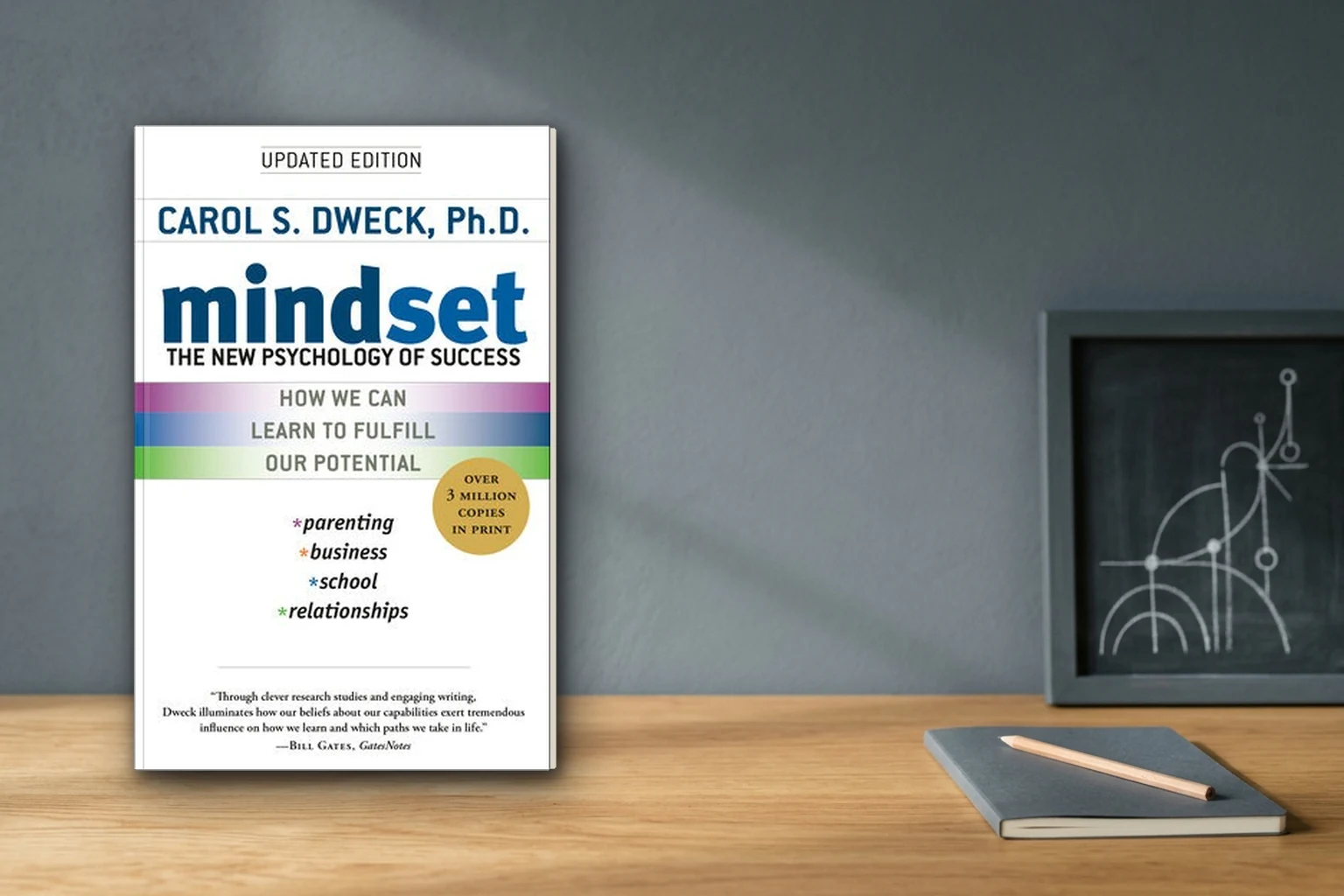
Few works of academic psychology have crossed into everyday American institutions with the speed of Carol S. Dweck's Mindset: The New Psychology of Success. First released in hardcover in 2006 and published in Ballantine Books' verified 320-page trade paperback edition, the Stanford psychologist's bestseller became a multi-million-copy staple across K-12 classrooms, athletic programs, and corporate leadership seminars. Yet nearly two decades of follow-up trials, replication scrutiny, and institutional misapplication now allow a much clearer assessment than early enthusiasm permitted.
Examining Mindset alongside peer-reviewed meta-analyses and Dweck's own corrective essays separates its durable insight from its inflated mythology. The book offers a genuinely illuminating model of how praise and personal beliefs about intelligence shape persistence under difficulty, but it cannot carry the weight of a standalone remedy for educational inequality or organizational performance.
Implicit Theories of Ability Across Eight Chapters
Dweck's central thesis rests on a deceptively clean distinction between two implicit self-theories. People operating inside a fixed mindset assume intelligence, talent, and moral character are static qualities carved in stone; consequently, they feel pressured to look smart at all costs, avoid hard tasks where mistakes might expose limits, treat intense effort as proof of low natural ability, and read failure as an enduring judgment on personal worth. By contrast, a growth mindset treats foundational capacities as starting points that can be cultivated through sustained effort, effective learning strategies, and skilled mentorship, turning setbacks into diagnostic signals rather than personal verdicts.
Structured across eight chapters, the book moves steadily from developmental psychology experiments into applied arenas. The opening three chapters—"The Mindsets," "Inside the Mindsets," and "The Truth About Ability and Accomplishment"—contrast those inner experiences and dismantle the myth of effortless genius, spotlighting Dweck's influential experiments showing that children praised for innate cleverness ("You're so smart!") grew anxious, risk-averse, and fragile when faced with harder puzzles, whereas peers praised for strategy and effort embraced challenge and persisted longer.
Chapters 4 through 6 extend that model outward into sports—profiling persistent champions such as Michael Jordan and Mia Hamm—corporate leadership, where Dweck contrasts ego-driven governance at Chrysler under Lee Iacocca against Lou Gerstner's long-term learning culture at IBM, and intimate relationships. Chapters 7 and 8 then guide parents, teachers, coaches, and adult learners in delivering process-centered feedback, spotting personal fixed-mindset triggers, and cultivating concrete behavioral shifts rather than empty pep talks.
Why the Core Feedback Insight Resonated
Upon publication in 2006, trade reviewers welcomed Dweck's blend of research rigor and accessibility, with Publishers Weekly calling Mindset "A serious, practical book." Its immediate appeal came from reframing everyday classroom and family habits without demanding esoteric jargon: praising a child's process, curiosity, and strategic adjustments instead of handing out fragile trait labels ("gifted," "not a math person") made psychological attribution theory tangible to millions of non-specialists.
Subsequent large-scale field experiments summarized by the American Psychological Association's Monitor on Psychology offered qualified backing for targeted versions of this premise. National randomized controlled trials co-led by Dweck and collaborators indicated modest, focused gains—nudging grades upward and encouraging advanced coursework enrollment—chiefly among lower-achieving adolescents navigating high-pressure school transitions. Where learners doubted their belonging or feared looking incapable, reframing ability as malleable helped keep them engaged long enough for effective teaching to stick.
Meta-Analytic Reality Check and Effect Sizes
Outside those targeted settings, however, a decade of rigorous quantitative synthesis has sharply curtailed sweeping popular promises that mindset workshops reliably transform academic achievement across the board. In 2018, Sisk and colleagues reported in Psychological Science only a weak correlation between mindset beliefs and academic achievement (r around 0.10) alongside a tiny average intervention effect (d around 0.08). Even more soberingly, Brooke Macnamara and Alexander Burgoyne's 2023 meta-analysis in Psychological Bulletin—evaluating sixty-three intervention studies encompassing 97,672 participants—found a tiny initial mean effect (d = 0.05) that fell to statistical nonsignificance once analyses adjusted for publication bias or restricted the sample to higher-quality study designs.
Macnamara and Burgoyne also observed that investigators with financial or professional stakes in mindset programs tended to publish noticeably larger effects than independent evaluators—an important caution whenever commercial consulting borrows academic authority. Counter-commentaries from scholars such as Jeni Burnette and colleagues contend that grand population averages can mask meaningful benefits within specific high-risk subgroups facing tough transitions when classroom environments genuinely support learning. Even granting that nuance, the empirical consensus makes one conclusion unmistakable: mindset interventions yield modest, conditional nudges rather than transformative miracles, and several corporate and sports anecdotes in Dweck's middle chapters read far more tidily than the controlled statistical record.
False Growth Mindset and Classroom Misuse
To her credit, Dweck became one of the sharpest critics of how institutions vulgarized her work. In a widely cited September 2015 commentary for Education Week, she warned directly against "false growth mindset"—the widespread tendency among well-meaning schools to hand out hollow participation praise for fruitless effort without teaching better learning strategies, to pretend anyone can achieve anything on sheer willpower alone, or to treat growth mindset as an all-or-nothing moral badge when real human beings constantly shift between fixed triggers and growth responses.
Worse still, misapplied mindset slogans can become an excuse for institutional neglect, subtly blaming struggling students' attitudes when schools lack qualified instruction, tutoring, safe facilities, or equitable funding. Reading Mindset today requires holding that structural caveat front and center so psychological encouragement never turns into covert victim-blaming.
Verdict for Contemporary Readers
Mindset remains most effective not as a grand theory of human success, but as a practical diagnostic lens for feedback, coaching, and self-talk. Its narrative profiles occasionally oversimplify complex executives and athletes to fit a tidy dichotomy, and its empirical effect sizes are far smaller than keynote culture once implied. Reading the book responsibly means treating belief about intelligence as an enabling condition rather than a substitute for material resources, domain instruction, or social support.
For teachers, parents, youth coaches, managers, and general readers seeking clearer ways to respond when learners hit a wall, the Ballantine paperback remains well worth reading—provided it is paired with the meta-analytic realism of Macnamara and Burgoyne and Dweck's own 2015 cautions. Beliefs about learning matter most when paired with solid pedagogy, honest strategy coaching, and environments built to reward sustained, well-guided inquiry rather than hollow slogans.
Across nearly twenty years of educational adoption, the enduring contribution of Mindset lies in shifting everyday conversations away from brittle labels toward workable practice habits. Once readers strip away inflated corporate self-help promises, Dweck's core observation remains remarkably useful: how adults name struggle directly influences whether learners interpret early mistakes as dead ends or workable starting points.
CRITICAL PERSPECTIVE
Tale24’s assessment
Translates attribution and praise research into clear, memorable habits for parents, teachers, and coaches supporting resilience.
Points to considerRecent large-scale meta-analyses report tiny average intervention effects after bias correction, and simplified binary slogans invite 'false growth mindset.'
Best for: Educators, parents, coaches, managers, and readers seeking evidence-grounded frameworks for feedback without hype.
Editorial method: This is Tale24’s original analysis of the published material and attributed criticism. AI tools may assist the drafting process; Tale24 reviews and takes responsibility for everything it publishes.
READING AND RESEARCH
Sources and edition scope
Bibliographic details and textual claims in this review were checked against the edition and reference records below (Mindset: The New Psychology of Success by Carol S. Dweck). Commercial retailer links are kept separate from editorial verification.
- penguinrandomhouse.com — mindset by carol s dweck phd / 9780345472328 Publisher's edition record
- pubmed.ncbi.nlm.nih.gov — 36326645 Library & bibliographic record
- apa.org — 04 / career lab mindset Editorial reference
- edweek.org — 2015 / 09 Editorial reference
Sources checked November 23, 2026.
KEEP READING