
Read with greater care
Understand every story more deeply

100%

Editorial independence

No sponsorship is accepted to alter the conclusions or scores of reviews.

No disguised advertising
2

Review stages

Every draft is checked for clarity, sourcing, and the limits of its claims before publication.

AI-assisted, human-accountable
100

Point review scale

Our transparent score reflects depth, argument quality, originality, and practical value.

A consistent evaluation framework

EDITOR’S PICKS

In-depth reviews and essays

Carefully read, researched, and challenged by the Tale24 editorial team.
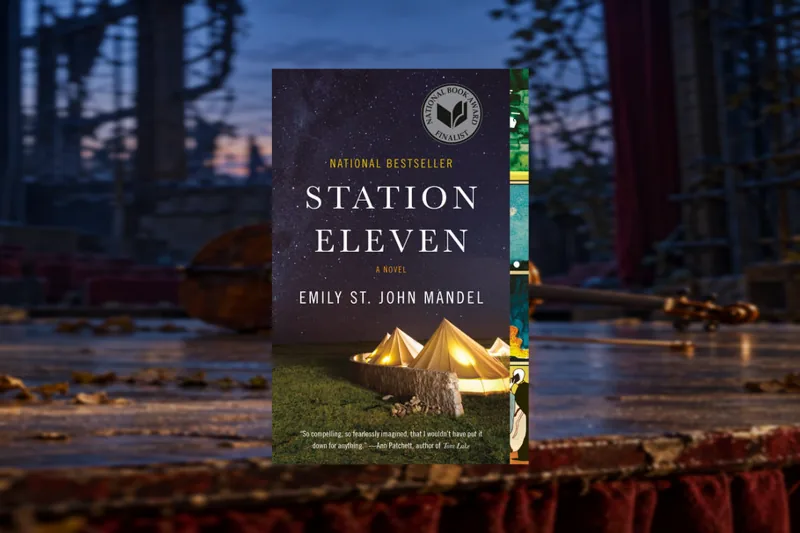
Illustration for article Station Eleven: Why Art Survives the End of a World
Literary Science Fiction• 6 minutes of reading

Station Eleven: Why Art Survives the End of a World

Through a traveling theater company and a fractured timeline, Emily St. John Mandel asks what culture preserves when ordinary systems disappear.

Elegant time structure and an unusually humane view of post-collapse culture
Noteworthy pointElegant time structure and an unusually humane view of post-collapse cultureLimitations to noteReaders wanting detailed survival logistics may find the practical world lightly drawn
Tale24 Score94/100Best for: Readers of literary speculative fiction, theater, and stories about cultural memoryRead the review
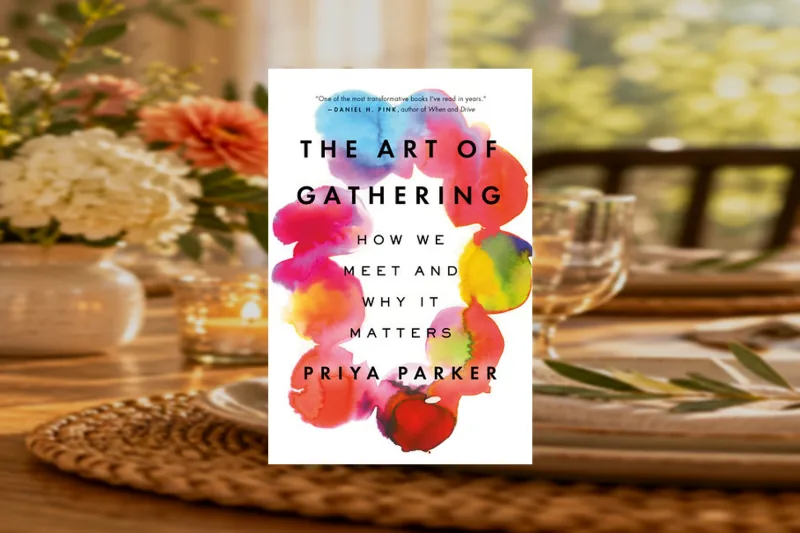
Illustration for article The Art of Gathering: Purpose Before Protocol
Culture & Society• 6 minutes of reading

The Art of Gathering: Purpose Before Protocol

Priya Parker shows how clear purpose and thoughtful hosting can make meetings and celebrations more meaningful than routine formats allow.

Concrete lens for seeing how purpose, invitation, and format shape group experience

Noteworthy pointConcrete lens for seeing how purpose, invitation, and format shape group experienceLimitations to noteIts deliberate approach can feel too engineered for casual or spontaneous occasions
Tale24 Score90/100Best for: Hosts, facilitators, managers, teachers, and community organizersRead the review
Illustration for article Norwegian Wood: Love, Memory, and Those Left Behind
World literature• 5 minutes of reading

Norwegian Wood: Love, Memory, and Those Left Behind

A way to read Norwegian Wood that goes beyond the label of a sad love story, paying attention to memory, mental health and the distance between people that is not easy to overcome.

The atmosphere is rich in evocation, the characters are full of contradictions, and the way of writing about memories has a rare nostalgia

Noteworthy pointThe atmosphere is rich in evocation, the characters are full of contradictions, and the way of writing about memories has a rare nostalgiaLimitations to noteSome sexual choices and depictions of mental health need to be read critically
Tale24 Score92/100Best for: Readers love mature novels, Japanese literature, and stories about memory and lossRead the review
Illustration for article The Stranger: Can Honesty Survive an Absurd World?
Literature & Thought• 5 minutes of reading

The Stranger: Can Honesty Survive an Absurd World?

Rereading Albert Camus's short novel from Meursault's silence, the strange trial and the sense of distance between people and common conventions.

The style is restrained, the structure is tight and opens up many moral questions beyond its very short capacity

Noteworthy pointThe style is restrained, the structure is tight and opens up many moral questions beyond its very short capacityLimitations to noteThe character of the victim is erased in the colonial context, requiring readers to add historical perspective
Tale24 Score94/100Best for: Readers love existential literature, philosophy and argumentative short novelsRead the review
Illustration for article Dune: a sci-fi epic about ecology, power and heroic myth
Science fiction• 9 minutes of reading

Dune: a sci-fi epic about ecology, power and heroic myth

A close look at Arrakis as an ecological system, the politics of spice, and the risks of turning a gifted leader into a promised savior.

Worldbuilding is rich in systems and ecology, closely tied to politics and multi-layered themes of power

Noteworthy pointWorldbuilding is rich in systems and ecology, closely tied to politics and multi-layered themes of powerLimitations to noteTerminology is thick, the opening pace is slow, and some cultural material needs to be read critically
Tale24 Score96/100Best for: Readers love science fiction, politics, ecology, and large-scale fictional worldsRead the review
Illustration for article George Orwell's 1984: how does power control language and truth?
Dystopian literature• 6 minutes of reading

George Orwell's 1984: how does power control language and truth?

Analyzing 1984 through surveillance, memory, language and mechanisms that make people doubt their own experiences.

Build a consistent power mechanism and deeply analyze the relationship between language, memory, and truth

Noteworthy pointBuild a consistent power mechanism and deeply analyze the relationship between language, memory, and truthLimitations to noteThe heavy atmosphere and political commentary can slow down the pace of the story
Tale24 Score97/100Best for: Reader of classic literature, media, politics, and technological ethicsRead the review
Illustration for article The Little Prince: A Story About Friendship and Responsibility
Classic literature• 6 minutes of reading

The Little Prince: A Story About Friendship and Responsibility

Reread The Little Prince through themes of loneliness, domesticity, responsibility, and the ability to see what's important beneath appearances.

The language is clear, the symbols are evocative, and there are multiple levels of reading according to age

Noteworthy pointThe language is clear, the symbols are evocative, and there are multiple levels of reading according to ageLimitations to noteEasily reduced to a collection of inspirational sentences when separated from the story line
Tale24 Score95/100Best for: Readers of all ages want to re-read a short work with many echoesRead the review
Illustration for article Sapiens: Reading a Sweeping History with a Critical Eye
History & Thought• 6 minutes of reading

Sapiens: Reading a Sweeping History with a Critical Eye

Assess the narrative power of Sapiens, and show why grand generalizations need to be contrasted with specialized research.

Broad vision, engaging storytelling and asking many big questions about institutions and progress

Noteworthy pointBroad vision, engaging storytelling and asking many big questions about institutions and progressLimitations to noteStrong generalizations, sometimes blurring academic debate and regional differences
Tale24 Score88/100Best for: Readers are introduced to world history and enjoy interdisciplinary thinkingRead the review
Illustration for article Reading Vietnamese History Beyond the Timeline
History & Culture• 6 minutes of reading

Reading Vietnamese History Beyond the Timeline

To understand the past, readers need to put politics next to economics, beliefs, language and daily life.

Expanding history to culture, society and methods of reading sources

Noteworthy pointExpanding history to culture, society and methods of reading sourcesLimitations to noteThe broad category requires readers to build their own prioritized roadmaps
Tale24 Score92/100Best for: People who want to start reading Vietnamese history in a critical wayRead the review
Illustration for article Trinh Cong Son and Bob Dylan: Shared Questions, Different Traditions
Culture & Thought• 6 minutes of reading

Trinh Cong Son and Bob Dylan: Shared Questions, Different Traditions

The comparison only makes sense when going through the differences in religion, history and literary tradition of the two artists.

Cross-cultural comparisons are rich in context and avoid surface similes
Noteworthy pointCross-cultural comparisons are rich in context and avoid surface similesLimitations to noteThe large volume of references can slow the average reader down
Tale24 Score95/100Best for: Lover of music, culture and history of twentieth century ideasRead the review

TALE24 EDITORIAL PROCESS

Human judgment behind every review

Each article moves through research, editing and publication checks. The responsible editor remains accountable for the final work.

01

Research

Establish the source and question

Check the book details, material facts and the review's critical angle.

02

Editing

Test the argument

Distinguish evidence from opinion and make the strengths and limits clear.

03

Publication

Check the reader experience

Verify images, metadata, links and the article's final presentation.

TALE24 METHODOLOGY

Three Pillars of Content

Critical standards help readers select worthwhile ideas in an age of information overload.

01

Refining the Essence

The summary is concise but does not impoverish the value of the original work. The context and core ideas are always preserved.

Save time, double the depth
02

Multidimensional Criticism

Evaluate the pros and cons with a fair attitude, not commercial flattery.

Never compromise with superficiality
03

Consistent Scoring

A 100-point scale with clear criteria helps readers choose the right book for their goals.

A transparent editorial framework
EDITORIAL MANIFESTO • TALE24 MANIFESTCIRCULATE WITH READERS
“We believe that in an era of quick quotes, the patience to fully understand an idea is the rarest but most valuable quality.”

Tale24 is not born to encourage you to read more in quantity. Our mission is to be a quiet critical companion: distilling valuable ideas, deciphering the layers of meaning behind words, and courageously questioning the obvious.

APPROVED BYTale24 Editorial Board Quality independent appraisal
Committed to real content & advertising transparency

Tale24 separates editorial content from advertising. Automated advertising does not change the critical conclusions.

Learn about the disclosure policy